Kabrina Ashley with Onramp Consulting
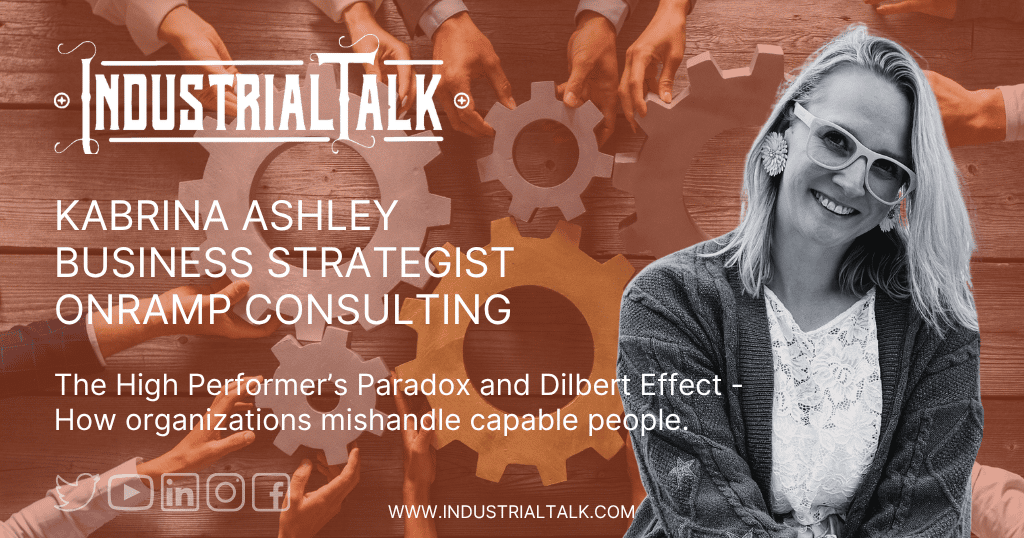
Industrial Talk is talking to Kabrina Ashley, Consultant at Onramp Consulting about “The High Performer's Paradox and Dilbert Effect “.
Overview
The conversation highlights the importance of the Barcelona Cybersecurity Congress from November 3-5, 2023, and the need for cybersecurity professionals to attend. The discussion then shifts to the Industrial Talk Podcast, celebrating industry professionals and addressing the “high performers paradox” and the “Dilbert effect.” Kabrina Ashley from On Ramp Consulting discusses her background in leadership and training, emphasizing the need for soft skills and the challenges of retaining high performers. She advocates for better leadership practices, work-life balance, and continuous training to improve organizational performance and employee retention.
Outline
Barcelona Cybersecurity Congress Announcement
- Scott emphasizes the importance of attending the Barcelona Cybersecurity Congress from November 3 to 5.
- The event is organized by Farah and promises networking with top cybersecurity professionals.
- Scott mentions their own participation and encourages listeners to mark their calendars.
- The event is highlighted as a must-attend for anyone serious about cybersecurity.
Introduction to Industrial Talk Podcast
- Scott welcomes listeners, celebrating industry professionals for their boldness and innovation.
- The podcast aims to highlight the contributions of industry professionals and their daily problem-solving efforts.
- Scott introduces the guest, Kabrina Ashley, and mentions the importance of filling out a form to help tell the story.
Discussion on High Performers Paradox and Dilbert Effect
- Scott introduces the topic of high performers paradox and Dilbert effect, expressing interest in the conversation.
- The conversation focuses on how organizations mishandle their most capable people.
- Scott emphasizes the importance of not mishandling capable people and offers solutions on Industrial Talk.
- The segment includes a reminder about the Barcelona Cybersecurity Congress and the need for cybersecurity awareness.
Kabrina Ashley's Background and Consulting Journey
- Scott and Kabrina Ashley discuss her background, including her time at Disney and her transition to consulting.
- Kabrina shares her experience creating a curriculum for guests with disabilities at Disney.
- She explains her transition to writing curriculum for various businesses and her focus on leadership studies.
- The conversation touches on the importance of soft skills and the challenges of teaching them.
The Importance of Soft Skills and AI Integration
- Kabrina explains the historical context of hard and soft skills, emphasizing the need for soft skills.
- She discusses the impact of AI on communication and the importance of maintaining human interaction.
- The conversation highlights the challenges of integrating AI without losing the human touch.
- Kabrina shares her approach to teaching AI skills while maintaining soft skills training.
Challenges of High Performers and Organizational Culture
- Kabrina discusses the challenges of high performers being overburdened and the impact on organizational culture.
- She explains the concept of the S curve and the importance of promoting high performers.
- The conversation touches on the impact of high performers leaving and the loss of tribal knowledge.
- Kabrina emphasizes the need for companies to create better work-life balance and training opportunities.
Strategies for Retaining High Performers
- Kabrina outlines strategies for retaining high performers, including better training and work-life balance.
- She discusses the importance of recognizing and promoting high performers.
- The conversation highlights the financial impact of losing high performers and the need for better retention strategies.
- Kabrina shares her approach to conducting audits and secret shopper-style evaluations to identify issues.
The Role of Leadership in High Performers Retention
- Kabrina emphasizes the role of leadership in retaining high performers and creating a positive work environment.
- She discusses the importance of leaders being sensitive to the needs and cues of their team members.
- The conversation highlights the challenges of leadership transitions and the need for training and support.
- Kabrina shares her experience with the Aligned Leadership Lab and the importance of personal branding.
Conclusion and Call to Action
- Scott wraps up the conversation, emphasizing the importance of retaining high performers and the role of Industrial Talk.
- The segment includes reminders about the Barcelona Cybersecurity Congress and the importance of cybersecurity.
- Scott encourages listeners to connect with Kabrina and take advantage of her resources.
- The conversation ends with a call to action for listeners to improve their organizational culture and retain high performers.
If interested in being on the Industrial Talk show, simply contact us and let's have a quick conversation.
Finally, get your exclusive free access to the Industrial Academy and a series on “Why You Need To Podcast” for Greater Success in 2026. All links designed for keeping you current in this rapidly changing Industrial Market. Learn! Grow! Enjoy!
KABRINA ASHLEYS' CONTACT INFORMATION:
Personal LinkedIn: https://www.linkedin.com/in/kabrina-ashley/
Company LinkedIn: https://www.linkedin.com/company/kabrina-ashley
Company Website: https://kabrinaashley.com/
PODCAST VIDEO:
THE STRATEGIC REASON “WHY YOU NEED TO PODCAST”:
OTHER GREAT INDUSTRIAL RESOURCES:
NEOM: https://www.neom.com/en-us
Hexagon: https://hexagon.com/
Arduino: https://www.arduino.cc/
Fictiv: https://www.fictiv.com/
Hitachi Vantara: https://www.hitachivantara.com/en-us/home.html
Industrial Marketing Solutions: https://industrialtalk.com/industrial-marketing/
Industrial Academy: https://industrialtalk.com/industrial-academy/
Industrial Dojo: https://industrialtalk.com/industrial_dojo/
We the 15: https://www.wethe15.org/
YOUR INDUSTRIAL DIGITAL TOOLBOX:
LifterLMS: Get One Month Free for $1 – https://lifterlms.com/
Active Campaign: Active Campaign Link
Social Jukebox: https://www.socialjukebox.com/
Industrial Academy (One Month Free Access And One Free License For Future Industrial Leader):

Business Beatitude the Book
Do you desire a more joy-filled, deeply-enduring sense of accomplishment and success? Live your business the way you want to live with the BUSINESS BEATITUDES…The Bridge connecting sacrifice to success. YOU NEED THE BUSINESS BEATITUDES!
TAP INTO YOUR INDUSTRIAL SOUL, RESERVE YOUR COPY NOW! BE BOLD. BE BRAVE. DARE GREATLY AND CHANGE THE WORLD. GET THE BUSINESS BEATITUDES!
Reserve My Copy and My 25% Discount
Transcript
SUMMARY KEYWORDS
Barcelona Cybersecurity Congress, industrial professionals, high performers paradox, Dilbert effect, leadership studies, soft skills, AI integration, work-life balance, organizational culture, talent retention, training programs, communication skills, management strategies, personal branding.
All right, before we get into the conversation, I want you to be aware of a conference that you need to put on your calendar, and you have time. It is the Barcelona Cyber Security Congress. It is necessary. You need to up your cybersecurity game. You're connected, you need to make sure that you're protected. Right here, this event, Barcelona Cybersecurity Congress. It is November 3 through the.. you have time, November 3 through the fifth this year in Barcelona. And I'm telling you right now, the team at Farah who put this particular Congress on the best. You will not be disappointed, and you know what else you get to do. You get to network with some of the best cybersecurity professionals from around the world. You need to do this. You need to put this one on your calendar. All of the contact, all of the information is out on Industrial Talk. I'm going to be there, I'm going to be broadcasting, I'm going to be talking cybersecurity with the best in the world, so be there. Put this one on your calendar, that is November 3 through the fifth. I'll see you there.
Welcome to the Industrial Talk Podcast with Scott Mackenzie. Scott is a passionate industry professional dedicated to transferring cutting-edge industry-focused innovations and trends, while highlighting the men and women who keep the world moving. So, put on your hard hat, grab your work boots, and let's go. As
always, welcome to Industrial Talk. Thank you very much for joining the number one industrial related podcast in the universe that celebrates you, industry professionals all around the world, you're bold, you're brave, you dare greatly, you innovate, you collaborate, you're solving problems each and every day, you're making the world a better place. That's why we celebrate you on Industrial Talk. You are the heroes in this story. We have a great conversation, and it's, it's Kabrina, is her name, and I'm looking at the form that she filled out, because if you're going to be on the Industrial Talk podcast, you have a form to fill out, you know why you have a form to fill out, because I need your help to tell the story and to tell it according to your needs, it is on Ramp Consulting, Kabrina Ashley is the name, and it's an interesting conversation. This one's really piqued my interest, which I gonna tell you, it's gonna pique your interest as well. High performing paradox, high performance performers paradox. I'm reading the form right there, and I'm doing a bad job anyway. High performers paradox, the Dilbert effect, and you're saying to yourself, Scott, I don't know what that is. Yeah, you do, and you're gonna hear about it, because Kabrina is going to tell us about it. All right, let's get cracking. Yeah, I just butchered that. Here's a form I can't even follow. The form, such as life, I try, but she didn't disappoint. It's a heck of a conversation. Really enjoyed it. And yeah, you are. And the little sub topic here is that how organizations, and I'm reading, if you're looking at the video on off to the side, how organizations systematically mishandle their most capable people. Come on, we need you to succeed. You need to listen to this. You don't, don't mishandle your capable people. Solutions right here on Industrial Talk, Caprina delivering the Sage Insights. All right, here's a couple of things that I want to make sure. First off, if you're in the world of cybersecurity, you need to be at the Barcelona Cyber Security Confer, uh, Congress. It was in the beginning, so you need to do that. Put that on your calendar. It's time. Make it happen, and you know what? You will not be disappointed. Fabulous people, fabulous event, fabulous location. It's fabulous. Yeah, how about that? For how about that for a segue. The other thing that we're doing on Industrial Talk, as you know, Industrial Talk is a platform that elevates and amplifies your voice. We're a marketing company. Yep, we're a media company. Yep, we're a PR company, yep, because we're all focused on one, being able to sort of tell that story to inspire the next generation of industrial leaders, you know, why we need to do that, we need to succeed, and we need to do it, what we're doing is we're working with these technical colleges, these the universities that are really focused in on industrial related education and being able to tell that story, we need to, we need to be able to reach that next generation, and here are programs that are really geared. Toward that industrial opportunity, we need skilled people, we need instructors and people helping this next wave of smart people to come into industry. We don't do it, we don't do it, and then we fail, and we don't want that, so we here at Industrial Talk, we are promoting many of these organizations, and we are looking for your support too, as well. Please, we need to get this information out. The latest one is because this, this one geeked me out big time. It is the Alignment Training Center in Florida. Anyway, fast forward, because I'm a past lineman, I like it, but the reality is, is that these are great careers. The reality is it's changed since I was a lineman, and how I became that journeyman, and and how the utilities need to support this. Do you need to support this? We need linemen, that is something that we cannot automate out. You still need people to climb, you still need people to change those arms out, you still need people to build those towers. There's no way.
And as we continue to talk about the demand, the increased demand for power, the increased demand for grid, and the expansion of that grid, we need people. You're not going to robot your way through this anyway. That's the latest and greatest working with Penn State, working with this organization, and more to come. So, please be on the lookout. Please do your part to support Kabrina. Is in the hot seat. We're going to be talking about again, how you - you, maybe not you, but I'm pointing at you - that systematically mishandling their most capable people, Dilbert effect. All right, let's get on with the conversation. Kabrina, welcome to Industrial Talk. Thank you very much for finding time in your busy schedule to chirp and talk about what we're going to be talking about. For let's see, on Ramp Consulting. See, I have bad glasses. See, I told you I'm having a hard time seeing your, your form here, and I have to look up, and never mind, it's my problem, not your problem, listener, it's my problem. Bad eyes.
Yeah, well, thanks for having me. I'm excited to have this conversation,
and I like your glasses. Thank you. Yeah, I'm a glass fan, of course, I don't have good eyes, but I like yours. Absolutely wonderful. All right, before we get into the chat about on-ramp consulting and what we're going to be talking about, I like the Dilbert effect. It's on your form, and you did a great job filling out that form.
Thank you. There's
a lot of information. Anyway, before we get going in that, give us a little background. Where do you come from, there, Kabrina? And then, and then we'll just go from there. How's that?
Yeah, absolutely. So we call Nashville home. I've kind of been a little bit of everywhere all over the country, lived in California for a bit, and I was right in Anaheim. I actually worked at Disney, and I did Disney training for cast members there.
We were in Yorba Linda.
Oh, very fun. Yeah, I loved it out there, and life just didn't quite take me back like I thought it was going to. I ended up getting married, having a couple of kids, and then started having people reach out to me and being like, "Hey, will you do this consulting thing that you were doing when you were at Disney? And I was like, oh, okay, maybe that is a path, because you know there's so many jobs that we do in life that we don't really realize our jobs, and then we're like, oh, somebody should have told us that there was more than police officer and firefighter and teacher when we were in school,
yeah, yeah, yeah, now there's a, there's a lot more,
yeah, exactly. I
just have to mention, and now that you got that Disney pedigree, you're back, the back part, if you're out on video, you can tell that it's sort of got that design and style, unlike mine, she's got class,
see, but you've got all the fun little things in the back, they're still good things to look at.
There you go. Thank you for making me feel better about myself. So, you were with Disney, moved out to Nashville, got married, couple of kids, that's fantastic. And now you're doing consulting just out of the blue. And what were you if I came to you and I said, hey Karina, hey, you need to do some, because what, why would I say that to you? What did you do at Disney, or wherever you were? What did you do to say, hey, I can consult?
Yeah, so when I was at Disney, I actually created the whole entire program, so it was my boss and I that worked in. Services for guests with disabilities, and so very young in my career, I was tasked with creating basically a curriculum of how do we train people for people with disabilities that are coming into the park, and how do we protect the cast members, but also protect the guests as they're coming in, and there wasn't anything at the time, so I ended up writing all of the pamphlets, creating all the curriculum, doing all the audits on attractions, so that when parents brought kids in with autism, for example, we knew all of those things, so there was a lot of processes and working through how do people work together, and then how do we get people to actually understand these concepts, because nobody wants to go into training, nobody goes, "Oh my god, we get to go do this training today. Most people are like, "Okay, well, this is just another checkbox that I have to do, and it doesn't matter if you're at the most magical place on earth or you are doing it at any other corporation. This is something that I have to talk with people about every time I come into a training, is how do we get this to stick long term. So then after I was at Disney, I actually ended up writing curriculum for dozens of different businesses, because I was helping anybody from entrepreneurs all the way to Fortune 100 in how do we teach people. So that was how people started coming,
you just teach people the approach of just training, teaching,
yeah,
or whatever it might be, whatever the objective might be
exactly. And so my background is in leadership studies, and always thought that I was going to be doing corporate turnarounds when I was in college, and kind of have roundaboutly ended up back there, but more talking about it from generational pieces that I've studied, as well as how do we lead in the world that we live in now. So, I have a huge tech background, and one of the things that I've realized, being in tech for as long as I have, is that people - we kind of talked about this before we started - they rely on tech so much that they miss the soft skills along the way, so as somebody who's very passionate about soft skills, I started researching it. And do you realize why soft skills and hard skills are called what they are?
No, you need to share that with me.
Yeah, so hard skills are called hard skills because of the military, so they were the ones that named this hard skill soft skill. Anything that had to do with metal working was considered a hard skill. Everything else was a soft skill.
Oh,
that's so..
yeah. So we ended up
blurred, I see.
Yeah,
and in the world of technology, there's some soft skill. know. Yeah,
so we ended up teaching everybody for generations that if you just get these hard skills, do the hard skills, learn the hard skills. Even when I was in college, they were like, as long as you have the hard skills, the soft skills are like, you know, you'll figure them out as you go. The problem was, is that the soft skills are actually the harder ones to learn and to implement long term, and so these are things like communication. How do you know when somebody wants to leave a conversation? How do we understand body language? And so we're not learning any of these things at any point. So now I don't
learn any
of that. Did we? I don't know.
Yeah,
I never took a class saying soft skills.
Well, it's because everybody's kind of poo pooed on it for so many years that now everybody's like, oh, we need innovative people, out of the box thinkers. Out of the box thinking and innovation are both soft skills, though.
Yeah, that's true. Disruptive thinking,
yes. Well, and having people that are willing to fail and fail forward, and then also having companies that are training people to be like it's okay to fail, and you're not going to lose your job for trying this new thing.
That's a tough one. That's a tough.. I agree with you. I'm always an advocate for failing. Got to move forward, and if you're moving forward, you're going to fail, you're going to, you're going to make mistakes, and and it's always been a way where companies would just really come down hard, and they want perfection, and and then you, then you create a culture that is, you know, afraid, yeah, you don't move forward with that. Yeah,
well, but then we get the Blackberry effect, where Blackberry was at the edge of its, as far as innovation, and then it stopped innovating, and you started to see all these other companies come in, like Apple, and they were like, no, we don't need that, no, that's silly, no, that's not going to last, and those new innovations are what we use today.
Yeah, no, that's that's true. There's, there's a lot of history there, that's for sure. All right, see, I can, I can go on and on about that, and you're sticking if there was a topic of conversation last week when I was at this, but. Particular event, it was always AI. I'm not sure if AI is good or bad, or I think it's a great tool, but from a, from a soft skill perspective,
yeah, I mean, from a soft skill perspective, you can learn things from AI, but it's asking the right questions. The quality of your life is determined by the quality of the question that you ask, and a lot of people, it's like any machine, bad shit in, bad shit out. And so, how do we get better things into the system, whether that's our mindset, the way that we're training our people, the way that we're leading the people around us, or AI, then we have a better chance of getting good stuff on the other end.
See, I think, I think, and I all use me as an example, and I, I quickly stopped it, and I realized, you know, my mind and yours, it's always it's the human side, right? We have to communicate properly. We have to be able to do certain things, and I found myself, I'm going, "Hey, hey, I can write this email and use AI, and AI do the email for me. All I have to do is scribble down some chicken scratch, and AI, in its magic, and you know, creates an email,
then I
realized I quickly realized that that part of my brain was dying, that struggle, that that that ability to communicate. I'm not the best emails, you know, they wear me out, but I do it nonetheless. But the reality is, is that it dies, and then all of a sudden I become more of a I'm not doing what I need to do, and I think that I think with AI, and I believe it's a good tool, but I still believe that there was going to be a hunger for the human interaction, greater hunger,
we're seeing that with all of the studies that are coming out on isolation and the rise in suicide and things like that, a lot of people, even here where I live, there's a big effort to be like, hey, we live in a really nice county and we still are having all of these issues, why is that the issue, and it's because people don't know how to talk to each other, people don't know how to communicate at work. We used to have, like, work best friends. We used to have a culture of hanging out, at least having some kind of community-ish fill, whether you were best friends with the people that you worked with or not. And there's goods and there's bads to that. Like, I'm very much against, we're all family here when it comes to business as well, because that can be a very toxic environment, so there's a balance between all of these things, and when I'm, we teach AI classes, because we've got a lot of people that are like, I don't know what I'm doing, I don't want to learn it, because I'm going to lose my job, but in not learning it, they lose their job, and so it's a catch 22 for a lot of people, so we've had people come to us and go, I don't even know how to talk to this thing, and I was like, great, we're going to learn communication skills at the same time that we're learning AI skills, because you have to think about AI like talking to a very capable teenager that you wouldn't trust to leave your child with, and the more that you can think about it, like that, you're having a better conversation with how to use the system and getting better responses out, but then on top of that, you have to couple that with how am I making sure that this isn't taking over the people piece and that I'm using this to give myself more time to have the people piece,
yeah, yeah, that's discipline, that's discipline, you know, as well as I do, that that AI, and I've used it, it's compressed my research down to nothing, right, there it is, that's great enough, I, you know, am I 100% there? No, maybe I'm 80% there, but I got enough, I'm good to go, right, and it's compressed by time, and that's what's that's what's happening in companies where what would take eight hours is down to hour, and now they have all this available time to do stuff, and you're absolutely spot on. Do they just go back in and dive deeper into tech, and and not, not create that human component, that's a tough one. I don't know how you, I don't know how you manage that.
Yeah, well, and it comes down to now we're instead of giving people more work-life balance or trying to actually train our people to the next thing in business, because there's not a whole lot of foresight beyond AI. We're like AI is the new frontier, and nobody has an answer for me when I ask the question of what's after this. What is the frontier after this? And yes, yes, absolutely, there's definitely some of that, but what does that mean for
us? Yeah, what
does that mean for companies? How are we selling to people? If anybody can pick up AI and do anything, why do I want that? I ask this question all the time. Tell me why I should spend my time, my money, my effort, my energy on this thing that you're telling me to do. If I can just pick this up and do it myself, why does somebody want to work for you? Why do you? Why would you have the best performer on your team,
which, which leads into your, your form? You've got, you've got this. Is interesting, because I have a form, and if you ever want to be on my show, you have to fill this form out. Now, some put more information than others, but this is to you, who's ever listening. Do you want to be on a show that I got it for now. What we have here is you've got part of that, which we want to talk about, and this is interesting. I want to see how you, you segue high performer, the high performance or performers paradox, and the Dilbert effect take us through that. What does that mean?
Yeah, so let's start with the Dilbert effect, because I know a lot of people are going to be like, 'You mean like the comic strip, and I'm absolutely talking about the comic strip, and the reason that I bring this in is because of the fact that most people have seen those comic strips of Dilbert and work-life pieces that they bring in, and so he actually came in and was like, "Hey, here's what I'm seeing: the most incompetent people get promoted to managerial positions because of the fact that people just don't want to deal with them, and there is some truth to this, as much as we want to make this satire. There's some truth to the fact that people that are not competent in whatever they're doing get moved out of the position because that person in that department doesn't want to deal with them, so it's easier to pass that buck off to somebody else than it is to just handle it and deal with that situation. The influx is the high performers paradox, and so this is what I've come up with over the last 13 years of being in business, is that the highest performers end up linchpining themselves into a position because they're really good at it, they get more efficient, so then their leader goes, oh well, Bob can do that, look at all the things that he's already doing. So then they give him one more thing, and then he figures out a system to go around that. Maybe that's using AI, maybe that's using different systems that he's learned over the years to get those things done. Now Bob gets another thing on his plate, and another thing, and then all of a sudden Bob's like, so why did Larry get promoted, and I didn't. We've all had this moment where somebody's been, yeah, somebody's been promoted, and we're like, what do you mean that person got promoted? Because I'm more qualified, I have more experience. Look at all the things that I'm doing, and the problem is, is because you're the linchpin in that situation. Now it takes two or three people to do your job.
Yeah, that's that's a most unfortunate culture. People are people see that what what we're dealing with and what industry is dealing with is that Bob being given all this responsibility, and because Bob is efficient with doing Bob stuff, then Bob decides that he wants to retire. Then there's all this tribal knowledge going out the door, and the company itself has a problem.
Yeah, absolutely. And that,
yeah, it happens all the time, and even when you have a high performer who's not retiring, we're seeing a lot of people - it's called the S curve. So, there's a certain amount of - if you envision a giant S, there's a spot in there where you want to keep people in the middle of that S, that means that as soon as they get closer to the top, we need to promote them, because of the fact that when we don't, they're getting bored, they're getting overworked, they have all of these other pieces, and so now we're taking all of that tribal knowledge and leaving the company, we're going to competitors, we're going to other companies, we're starting our own, we're seeing a lot of gig economy right now, because these high performers are like what we just were talking about. If I can do it myself, why do I need you? The insurance isn't that good. The retirement's not really there anymore. There's not really a lot of excuses for us to live within that anymore. So companies are forced to be better, have better community and better benefits for their people.
Yeah, yeah, you're painting quite the picture. So, with all of that reality, and it is reality, we see it all the time. I know it, I sense it. Maybe some this. Sort of, I'll, you know, pivot a little bit. I still want to go down this road, but I pivot. It's to your point about, well, why I can do it myself. I don't need this company. And what I find is that you have larger companies who have sort of the sort of that golden handshake, you can't leave because it's hard to go on your own if you're, and so it puts smaller companies at a disadvantage, because well, you're a smaller company, you're not paying them, there's no, there they have less golden hand or handcuffs than maybe larger companies, so that sort of in a weird impacts that small to mid size, where a lot of the innovation and, and disruption can come from. It impacts that, and I don't know, I just.. I digress. Completely wrong, you're the professional, I can be completely wrong, but I just sort of see it that way.
Yeah, I mean, we see some of that, absolutely, and it really depends on how you're viewing the company, so big companies, they have the advantage of having a little bit more of that SOP. Hey, here's what we do, here's the process, here's the connections that we have. Smaller companies have the advantage of moving quickly, being able to have ideas, and not having the same red tape that big companies have. But you're right about the golden handcuffs. I know lots of people that are like, I'd leave, but my stock vests in three months, and then you get another set of stocks that vest in another three months.
Yeah, yeah, and sort of in an unusual way, from a big company's perspective, are they are they getting the value and extracting the value as much as they can from the individual to be able to sort of think differently, yeah, it's really interesting. So, with all that said, with the accuracy of how we painted this picture, what do we do? How do we, how do we start chipping away at creating a solution for this thing?
Well, we have to look at it from two different perspectives, because obviously the person who's the high performer, anybody who's in leadership, high performing, if you're looking into leadership as a person, you have different objectives than a company does. The company cares about ROI, stockholders, all of those pieces. So now we have to, I have the job of talking to the companies and going in. Hey, what if we could make your high performers perform better and give you better outputs, but then I have to come in and say that's done by putting in things like rest, better training, giving your people the chances that they deserve, and a lot of companies they subscribe to this whole idea of if they're not the right person, let's get them off the bus, and it's not always getting people off the bus, it's moving their seat on the bus.
Okay, continue.
So, what we do is I come in and I do basically a huge audit of what's going on within a company, and I have conversations with people. I do it very much like a secret shopper, so nobody knows anybody's names. I'm not telling on anybody, because I know what it's like to be in that position on the other end, and figuring out what is actually happening, because most of the time when we do training, we see a problem and we put a band aid on it. We go, oh, hey, we're not reaching the ROI. Yeah,
let me, let me interrupt real quick. Let's say I'm the, the owner or the executive in that department. How do I even approach you? I must be, I must, somebody must be seeing that we've got a problem here, and it could be manifesting itself into whatever reduction here, inefficiencies there, but I see something that really sort of it, and then I say, "Hey, Kabrina, come on in and do this.
Yeah, so most of the time, unfortunately, people don't reach out to me until things are really bad, they've lost two or three of their highest performers, they're struggling, the ROI is going down the drain, they've lost this knowledge that they haven't been paying attention to, because somebody's just been making it work, and so we just are doing the day to day, and so I try and get in when people are like, you know, Joe has been taking a few more days off than he normally does, or hey, you know, he hasn't been raising his hand or pushing back like he used to.
Well, you have to be sensitive, has to be just sort of dialed in and noticing the, the, the changes. Those are subtle, they're subtle,
they are, but
they're not, they're not known for being, you know, sensitive.
Yeah, well, and if we look at sensitive in the traditional way of, like, oh, that's that's soft, and so this goes back to that soft versus hard skill, but just realizing and trying to wield this. As almost a superpower, so when I talk to people about people, will come up to me and they'll say, How do I know when I have taken up too much time of somebody's, and I'm always like, look at their toes, are their toes pointed out, because if somebody points their toes away from you, you'll realize this the next time you go to a conference, you start to point your toes away because you want to leave, and some people just don't get that they do not see that cue, and so being able to say, what are those cues? How do I utilize those to my best potential and use them as the superpower that they are of what is the body language, what are people saying, what are they doing, what words are they using in order for me to lead these people better, my job as a leader is to promote people. If a lot of people in leadership pride themselves on the fact that they haven't promoted people, and I should be trying to be the person who's like, yeah, you're the next best thing for this, you're the next best thing for this, and that's what companies need to be pulling in at this point in time is accolades for the people that are doing the job that they need to be doing, so they can keep them.
Yeah, now that makes sense. By unfortunately, my body language is always to the right or the left, it doesn't matter. So you come and talk to me, I'm already trying, and I lean my head back like that's the last thing to leave the year. It's so funny, yeah. My body language is pretty, pretty obvious, but it's so funny, because, but again, so, so take us through. Here you go. I want soft, I want soft skills, I want my people. I, I, you come in, you paint the picture, you go to me, you come back to me, and say, you got issues, and here are the issues, blah blah blah blah blah, dude, dude, dude, dude, and me, I have to be humble enough to be able to say, I hear what you're saying, Kabrina, I like it, I don't, you know, it's painful, but I like it. What's that next step? So, it's like you get, you get everybody shaking their heads and saying, "Boy, she nailed it. Now, what?
Yeah, so it normally starts with that person, because if they can be in that spot, most people are not at that spot right away.
No, they're not.
They have to be eased into it, of like, you know, here's the things that I see that you're doing well. Here's a lot of the places that are things are breaking, and then we sandwich it back with something else that's happening that you're doing well at, because we want to get that buy-in from the but then we also have to go to that next set of leaders, so you've got your high, your person who owns the company, for example, and then you've got all of those managers and leaders that are right under them. Those are the people that make a lot of the decisions that cascade down to those people that are like, I'm leaving, this is not happening. So then it goes, How do we get those people to start recognizing some of these pieces, so that it's not just me saying here's the thing that's going wrong, it's other leaders going, oh, hey, I'm catching it earlier, if I can catch it earlier, I can stop it faster, and we tend to just kind of let things slide for forever and go
festering, it's called management by Fester to let it fester.
Well, we're like, you know, if they leave it, that's on them. If they do this, that's on them. But then we look at the numbers, and that's normally where I get people, is you know, that's totally fine. If you want to let these high performers that you have leave, awesome, they could leave tomorrow, they will take all this knowledge with them, and it's going to cost you at least 50% of their salary, if not more, to replace them for that first year. So now we're not just paying for Judy, who's coming in, that $100,000 now we're paying 150 to $200,000 for her first year, just to train her and get her back up to speed, and then hope to God that she can figure out exactly what Joey, who just left, was doing.
Yeah, and that whole knowledge going to your competition, whatever it might be over there.
Well, because if you're hiring and somebody goes, hey, you know, I'm coming from GE, and I've got all these great ideas that they told me no about. Do you want to hear about them? As a competitor who's trying to catch up, you're going to go, 'Oh my god, yeah, tell us all about them. You can leave this, we're going to add some extra pension and all these other pieces to your benefits package, because we want that knowledge,
yeah, yeah, I, I point to the leader to be able to have that level of insights into their organizations, and yet the problem and the challenge all. Always gets down to that leader is busy, that person's busy. Everybody gains value from being really busy. It might not be productive busy, but they're just busy, and to be able to have that level of insights, I think it pays big dividends. I believe the other thing that I think is a secondary, everybody complains about it in industry, and that's it's I can't find people, but if you create a culture, what you're, what you're painting and what you're talking about, then finding talent can still be a challenge, don't get me wrong, but finding talent maybe make it be a little easier. That story, you have to be able to sort of go out there and in and make it happen.
Well, and you can't just tell the story, you have to actually be doing it in
its action.
Well, and one of the things that I see a lot is that leaders are like, well, how am I supposed to know this? Nobody ever talked to me about this, nobody ever trained me on this, and it's one of the reasons that my team and I came up with the Aligned Leadership Lab is because we had so many people coming to us going, I just got promoted and I have no idea what I'm doing. I'm trying to just do the day to day, still do the job that I was doing, and lead these people that I was just going out and getting beers with, and now I'm in charge of if I fire my friends or not. Like, how do I do this?
It
very much tends to mess with people's minds of I was here yesterday. Now Monday I'm here, and I'm like, okay, what do I even do besides just the job that's in front of me?
Yeah, sadly it's a common tale. It is. It's it's fertile ground for your solutions there, yeah. And it's so funny you're having, we're talking about this, and I've been very fortunate to be a part of a number of organizations, and yeah, yeah, it happens all the time,
yeah. And it's every industry, like people ask you, yeah, they'll ask me, what industry should you work in, and I was like, anything that has an org chart, because everybody has leaders, and if you have a leader and you have a manager, and anybody can say, I have a bad boss, I'm your girl, because this is the thing, of, we don't think about the fact that leading is something that we don't just do when we have the title, we're doing it all the time. I lead myself when I decide to get out and work out in the morning. I lead myself when I, how I interact with my boss at the moment, how I interact with the CEO of a company, because you never know any of these interactions can change your life in an instant.
Okay, one last question.
Yeah,
what are the roadblocks? I mean, it makes sense. It's sound, it's sound management strategy, whatever. It's sound advice, sage advice. Why? Why are we? Why are we still talking about this challenge,
because we've always
done it this way. The
number one challenge that I come across is we've always done it this way. People aren't going to want to do this. Why would anybody want to learn these things? Is this actually going to help us get any more money? This sounds really nice, but does it really work?
Yeah, yeah. No, you're again fertile opportunity for you, your wonderful company. All right, there's a couple of things that I want to point out to you listeners. We got a couple of free giveaways here, all from her, from their website, not sure it's your name, it's your name. How come hold it, hold it, how come it's on Ramp Consulting, the company name, but it's your name on the URL, which is pretty cool, by the way. I tried to get Scott Mackenzie, and I couldn't find it, I couldn't get it.
Yeah, so the reason that we chose to do that is because of the fact that most people, they'll see me speak, they'll listen to me on a podcast, and so they're always like, it's Kabrina, but what company is it? It's harder to find the company when you tend to be the face of it, and this is something that we work with with our CEOs as well, because that personal branding and that community and that culture is all part of this.
I like, I think that's all I care about. All of a sudden, no, I'm see, I can't get my URL. I tried.
You could be the Scott Mackenzie.
No, as well as I do, that that gets, that gets cumbersome. All right, we have. Uh, two two free giveaways go out to uh Kabrina ashley.com
Assassin. The judge just set
Kabrina ashley.com The one is forward slash clarity. It'll all be out in industrial talk, so don't don't try to write this down. So don't worry about it. The Clarity Kickstart, five brain-based questions to rewire your leadership. That's cool. That's what is 15 in 15 minutes. Okay, don't come to me and say you don't have time, it's just 15 minutes right there. And the other one she just sent Capri to ashley.com forward slash no. How to say no as high performers, which is always tough, and I still fail at that. I always say yes. I don't even know what all means.
Yeah, it's a hard one.
That's what you should have done on your URL. Cannot,
yeah, really
cause a problem. So those two offers are going to be out on Industrial Talk. Kabrina, you are wonderful.
Thank you. Is great having a conversation with you.
I suspect that to get a hold of you, just go to Kabrina ashley.com and you'll be able to do. Are you out on LinkedIn?
I am. LinkedIn is where I hang out all the time. I've got a weekly newsletter, and love to have a conversation with you.
All right, see, here's the list: we're going to have those free offers. We're going to have her website, of course, and then we're going to also have her LinkedIn stat card out on Industrial Talk. So reach out to her, she knows what she's talking about. And yes, you have a challenge in your organization, just FYI. I just.. I just know, I just pointed at you in the video, so that's exactly the case. Kabrina, wonderful.
Yeah,
absolutely spectacular.
Thank you. So, are you great having a conversation with you?
All right, we're gonna wrap it up on the other side. We're gonna have all, once again, all the contact information for Kabrina out on industrial talk, so stay tuned. We will be right back.
You're listening to the Industrial Talk Podcast Network.
Yep, what did I tell you? Yep, yeah, you need, you need to connect with her again. Everything's out on industrial talk. Yeah, you do. You don't want to mishandle the most capable individuals in your organization. You want to, you want to retain them. That's that's the reality of it. Yeah, you want them to go away. I want you to succeed. It's in my heart, in my heart, succeed. That's what industrial talk is all about. All right, a couple of things. The Barcelona Cybersecurity Congress, put that on your calendar. You will not be disappointed. Just step by on, just telling you right now, great people, great organization, great event. I said fabulous last time. Now it's just great. You need to do that, so look into it, because that, that is a wonderful, wonderful. And, and if you're in the world of connected assets, yeah, you better have your cyber security game down. You do, you just, you do all right again. Two industrial talk wants you to succeed again. We're a media company, right here, right here, a marketing company, right here, right here, as well as a PR. We want you to get your message out. You have to tell that message. You have to tell your story. We have to get more eyeballs on what you do, so go out to industrial talk, reach out to me. Let's have a conversation, because you will not be disappointed. I'm telling you right now, you will not be disappointed. All right, be bold, be brave, dare greatly, as I always say, Kabrina. You need to hang out with her, do so. You will just do it, because we want you to succeed, and hang out with people that want you to succeed too. Kabrina, hang out. All right, we're gonna have another great conversation shortly on Industrial Talks. So always stay tuned.