Brian Romano with The Arthur G. Russell Company
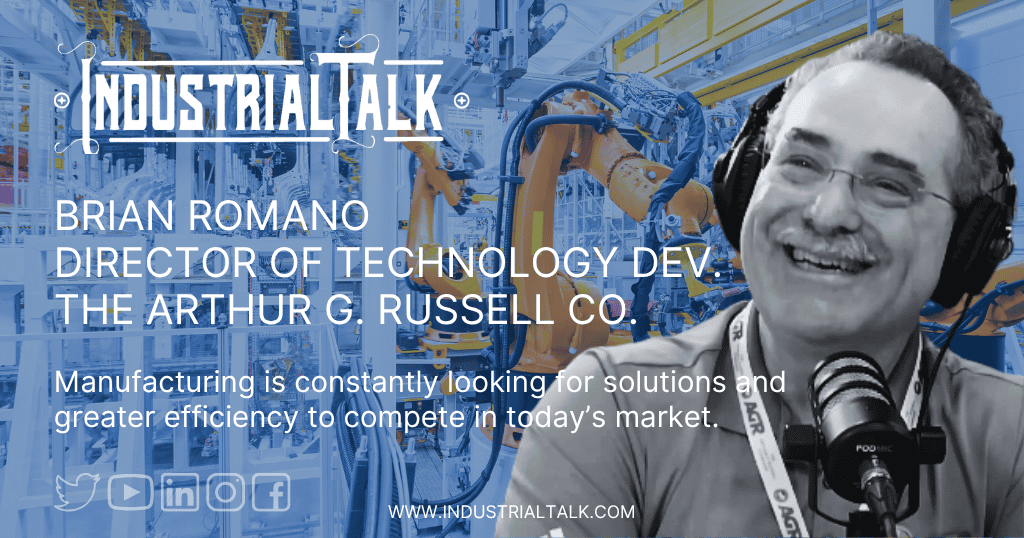
Industrial Talk is onsite at MD&M West and talking to Brian Romano, Director of Technology Development at Arthur G. Russell about “Automation Solutions”.
Overview
Brian Romano from Arthur G. Russell discussed the company's focus on custom-designed automation, particularly for the medical device industry. Romano highlighted the importance of nimble solutions due to rapid market changes and technological advancements. He emphasized the need for continuous learning and training within the workforce, mentioning initiatives like a mini MBA and augmented reality glasses for remote support. Romano also noted the significant skills gap in automation, with only 16,000 graduates annually against 60,000 job openings. He stressed the importance of staying ahead in technology to maintain U.S. manufacturing leadership.
Outline
MD&M West and Industrial Talk Introduction
- Scott introduces the episode of Industrial Talk, sponsored by MD&M West and News and Brews, highlighting the innovation and energy at the event.
- Scott thanks listeners for joining the top industrial podcast, celebrating industry professionals who solve problems and innovate daily.
- Scott introduces Brian Romano from Arthur G. Russell, noting his unique qualities and the importance of meeting him.
Brian Romano's Background and Company Overview
- Brian shares his background, mentioning his 45 years in control systems and automation, and his extensive educational qualifications.
- Brian discusses his previous roles, including owning a company and starting a division, all within the automation field.
- Scott and Brian talk about the importance of continuous learning and staying ahead in the rapidly changing field of automation.
- Brian explains Arthur G. Russell's focus on custom-designed automation, particularly for the medical device industry, and their commitment to solving customer needs from proof of principle to full-scale automation.
Market Needs and Company Adaptation
- Scott and Brian discuss the changing market needs, emphasizing the importance of nimble solutions due to rapid technological advancements.
- Brian highlights the company's acquisition of a company last year to better meet customer needs from low-end solutions to full automation.
- Scott and Brian agree on the necessity of having flexible and adaptable solutions to meet market demands quickly.
- Brian shares his experience of attending MD&M West for the third year, noting the increasing interest in nimble and technologically advanced solutions.
Education and Training for the Next Generation
- Scott and Brian discuss the role of education institutions in preparing the next generation of automation engineers.
- Brian mentions his involvement as an adjunct university professor, aiming to train the next generation of control systems engineers.
- Brian highlights the disparity between the number of openings for automation jobs and the number of graduates, emphasizing the need to close this gap.
- Scott expresses concern about the impact of this gap on the manufacturing industry's ability to innovate and respond to market demands.
Impact of Technology and AI on Manufacturing
- Scott and Brian discuss the rapid adoption of AI and new technology in manufacturing, noting its transformative impact.
- Brian emphasizes the importance of staying ahead of technological changes to maintain the US's leadership in manufacturing.
- Scott and Brian agree on the need for continuous learning and adaptation to keep up with the fast-paced market.
- Brian shares his experience with AI and predictive analytics in Arthur G. Russell's machines, highlighting the benefits of remote support and monitoring.
Arthur G. Russell's Support Program
- Brian explains Arthur G. Russell's support program, which includes augmented reality glasses for remote support.
- Brian describes how the glasses allow for real-time interaction with customers, providing visual guidance and access to manuals and diagrams.
- Scott and Speaker 3 discuss the advantages of augmented reality in various industries, including Boeing's use of the technology for cabling.
- Brian highlights the importance of remote support and monitoring in preventing downtime and maintaining equipment.
Training and Development at Arthur G. Russell
- Scott and Brian discuss the company's efforts to train and develop their workforce to meet the evolving needs of the market.
- Brian mentions various training methods, including lunch and learns, seminars, and webinars, to keep employees updated on new technologies.
- Brian shares his initiative to send employees for a mini MBA to understand the business side of engineering.
- Scott emphasizes the importance of having a skilled workforce to respond quickly to market demands and innovations.
Conclusion and Contact Information
- Scott thanks Brian Romano for the insightful conversation and highlights the importance of connecting with industry professionals like him.
- Brian provides his contact information, encouraging listeners to connect with him on LinkedIn.
- Scott reiterates the value of attending events like MD&M West to meet industry leaders and learn about innovative solutions.
- Scott concludes the podcast by promoting Industrial Talk's media company, which helps tell the stories of industry professionals and their solutions.
If interested in being on the Industrial Talk show, simply contact us and let's have a quick conversation.
Finally, get your exclusive free access to the Industrial Academy and a series on “Why You Need To Podcast” for Greater Success in 2026. All links designed for keeping you current in this rapidly changing Industrial Market. Learn! Grow! Enjoy!
BRIAN RAMANO'S CONTACT INFORMATION:
Personal LinkedIn: https://www.linkedin.com/in/brian-romano-as-bs-ms-mba-phd/
Company LinkedIn: https://www.linkedin.com/company/arthurgrussell/
Company Website: https://arthurgrussell.com/
PODCAST VIDEO:
THE STRATEGIC REASON “WHY YOU NEED TO PODCAST”:
OTHER GREAT INDUSTRIAL RESOURCES:
NEOM: https://www.neom.com/en-us
Hexagon: https://hexagon.com/
Arduino: https://www.arduino.cc/
Fictiv: https://www.fictiv.com/
Hitachi Vantara: https://www.hitachivantara.com/en-us/home.html
Industrial Marketing Solutions: https://industrialtalk.com/industrial-marketing/
Industrial Academy: https://industrialtalk.com/industrial-academy/
Industrial Dojo: https://industrialtalk.com/industrial_dojo/
We the 15: https://www.wethe15.org/
YOUR INDUSTRIAL DIGITAL TOOLBOX:
LifterLMS: Get One Month Free for $1 – https://lifterlms.com/
Active Campaign: Active Campaign Link
Social Jukebox: https://www.socialjukebox.com/
Industrial Academy (One Month Free Access And One Free License For Future Industrial Leader):

Business Beatitude the Book
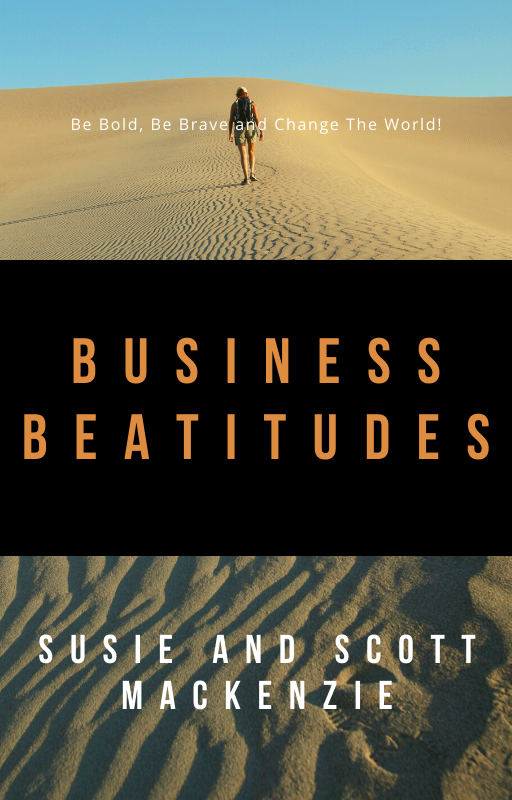
Do you desire a more joy-filled, deeply-enduring sense of accomplishment and success? Live your business the way you want to live with the BUSINESS BEATITUDES…The Bridge connecting sacrifice to success. YOU NEED THE BUSINESS BEATITUDES!
TAP INTO YOUR INDUSTRIAL SOUL, RESERVE YOUR COPY NOW! BE BOLD. BE BRAVE. DARE GREATLY AND CHANGE THE WORLD. GET THE BUSINESS BEATITUDES!
Reserve My Copy and My 25% Discount
Transcript
SUMMARY KEYWORDS
Industrial Talk, MD&M West, automation, packaging, plastics, design, innovation, manufacturing, Brian Romano, Arthur G. Russell, control systems, AI, augmented reality, predictive analytics, workforce training.
Hey, this episode of Industrial Talk is proudly brought to you by MD&M West and the incredible News and Brews team. MD&M West delivered big medtech, automation, packaging, plastics, and design all came together under one roof. The innovation, the energy, the conversation - it was everything that makes this industry extraordinary. I was on the floor capturing the stories, the breakthroughs, and the leaders who are shaping the future. Thanks for tuning in and celebrating the people driving industrial innovation. Industrial Talk powered by MD&M West and the News and Brews team.
Welcome to the Industrial Talk podcast with Scott Mackenzie. Scott is a passionate industry professional dedicated to transferring cutting-edge, industry-focused innovations and trends, while highlighting the men and women who keep the world moving, so put on your hard hat, grab your work boots, and let's go.
All right, once again, welcome to Industrial Talk. Thank you very much for joining the number one industrial-related podcast in the universe that celebrates industry professionals all around the world. You're bold, you're brave, you dare greatly, you innovate, you collaborate, you're solving problems each and every day. It is a great market out there, that's why we celebrate you, because you're making the world a better place. We're broadcasting from MD&M West, Anaheim, California, is the location. We're part of the News and Brews crew, and we're telling the story. We're telling the story of all of these wonderful professionals that have solutions that help you and make you a success in the world of manufacturing and beyond. I guess I could use that anyway. You went, if you were here, and if you're here, great, you get to meet people like Brian, but if you're not here, I'm sorry, you don't get to meet Brian, and Brian is one of those guys that you want to meet. He's definitely a an individual. Brian Romano, Arthur G. Russell is the company. Let's get cracking with the conversation. Yeah, how are you doing?
I'm doing well. How about you?
Thank you for finding the podcast.
It was a chore.
Yeah, when you're, when you're in this particular environment, where this is this is a concourse A or whatever hall A, and then it goes all the way to D G E, whatever it is, and everyone's chock full of solutions. Yeah, yeah, it's big, but we're still in the same hall.
Yes, yep,
which is not bad. You having a good conference?
Yes, we are.
Why
busy good applications coming in, looking for solutions, real solutions. It's, it's, it's different than it has been the last couple years. And this is really good.
Of course, I have to ask the question, what's the difference?
People's attitudes are coming with applications that are coming with real, real needs. Last couple years, you can see it kind of building, and now it seems like it's a real thing.
What are the market needs? What are they coming to you? This is, this is interesting, because I want to know.
So it's funny, we've kind of tailored what we do to expand how we can help our customers. We acquired a company last year, and it was to kind of dovetail in what we're seeing is the customer's needs coming from what could be proof of principle going through semi automatic all the way to full scale automation, and by the acquisition we're able to accomplish all of those things like
one stop shop, hey I've got this vision, and as this vision's broad and beautiful and bold, and I need a help.
And once you understand their problems and their issues, and you help them, even at the low end, you're, you've gained a partner for life.
So, what again? I'm gonna, we'll get into you, Arthur, and what do you guys do from a market perspective, you've been coming. How often you've been coming here?
This is my third year. The company's been coming for quite a while.
Well, yeah, apparently it's been around for a little while. I agree with that three year seasoned involvement. What are people just gravitating to now? What is it? Is it they're more into, hey, I've got to expand. I've got the market is there, I got to expand, I got to do what? What is what's that flavor? What's that excitement? What are we talking about?
People are changing their methods, if you will. They're they're not looking at the 30 year product so much anymore. The evolution, the minute you put some level of technology in a product, there is a shelf life, and you sometimes you don't necessarily need the 30 year machine that's going to run, you need something that might be applicable between now and five years.
See, and I hear what you're saying, that's exactly right, you need. You brought up a great point. It needs to be nimble, and because the market changes so drastically, so quickly, and the technology and the innovation changes so rapidly, you need to have that nimble solution, or you, you won't be able to respond to absolutely market demands.
Absolutely.
Oh, seeing that, just, yeah, it just, but that's so true. You're on, you're on point. That I AGRee with you. I, I've always recognized the necessity that that things are happening quickly. Okay, I got it. Yep, on point. But you burn out, bring up a good point, and that's just the nature of the market now.
It is.
Before we get into that conversation a little bit more, Brian, give us a little background on on who you are.
Okay, how far? No, I go. Very out of care. I was born in, yeah, I'm.. I've been in the same field, control systems, process and automation control systems, since my June, the end of my junior year in high school. It was kind of happened, Scott. Seriously, I've been doing this for 45 years, and it is, it's a, it's a great path. I've never varied from the field. It has always become a passion of mine. I started young at loving electronics. It was kind of happenstance, how it all came to be. But I have become a lifelong learner along the way. I owned a company before coming to AGR. I was a systems integrator. I started a division of a company before that, always in the automation field. I have an associate's, a bachelor's, master's of science in applied computer science in modeling and simulation. I have an MBA with a data analytics concentration, and a PhD in technology and innovation, so right
off the bat you're smarter than me.
It was not because I wanted to hang diplomas on the wall while they're there, that's not the reason. It's always been a means to an end. I've always wanted to be the leader in the field, no more. I don't want to have anybody say, hey, you can't do that because you don't know this field, as you said, is ever changing, always changing. Technology changes. You need to be in the front, or you're going to be left behind. And the only way that I felt I could do that is just to continue to evolve.
Let's talk about education real quick. We're going to, we'll get into the other stuff. Do you think, given your background, given your educational background, do you think existing education institutions, the MA, the model that exists out there, there are they nimble enough to be able to respond to the demands of the marketplace and to be able to prepare that next generation of leaders?
Not yet, but it's changing. Part of the reason I did the PhD is I teach it to look as an adjunct university at hard work, by the way. It is two universities, but the reason I did it is I wanted to train the next generation. I can't find qualified control systems engineers. If I can't make them, if I can't find them, I got to make them, I got to build them. So, going to two institutions, we develop it. I'm part of the International Society of Automation, and their leadership. I bring guidance and leadership to them, trying to guide what automation looks like, bringing all that information to schools. So, to your point, to answer your question, it is changing. ISA and people like them are helping to guide institutions and show them what's needed for the next generation of engineers. If I don't have the numbers exactly right, but it's some, you'll get, you'll get the scale of it. There's like 60,000 openings for automation, and we're graduating 16,000 or some, some number similar to that. So you can see there's a disparity in those numbers, and unless we figure out a way to close that gap, it's, it becomes tougher and tougher.
And see, I, my concern, just FYI, if we don't do that well, then this exciting time in manufacturing, and all this automation, and all of this incredible solutions out there will be hampered, absolutely impacted, and we will not be able to move as swiftly as we can, and as swiftly as the market will allow, right. You know, there's sometimes where you're just way ahead of your skis, and it's like, yeah, not yet, right, but, but I think right now it's, it's faster. There's, there's just a need, and I was talking to somebody about power generation, and, and with these data centers, they can't get enough generation. Period. I just can't. I need it now. I need it yesterday. And so that speed, that urgency, and I AGRee with you 100% Now, with your background, too, you've, you've seen a lot of changes that are especially now everybody's talking about how do I automate more. I need to,
yes, yeah, it's between you had mentioned it kind of jokingly, but not really. I mean, the impact of new technology, AI, if you want to call it that, what, what can it. Do to augment, it's a tool that we can stand on. It's not something to be afraid of. It's, it's part, it's already here, it's already part of it. So, technology is changing, you need to stay in front of it and apply it. It's the only way that the US can stay as a world leader in manufacturing. There's, it's, it is,
it's the only way, and what's what I always struggle with is, again, there's this velocity that exists out there in the marketplace, and all of these, these solutions, case in point, AI was was talked about one day, and then AI was happening, and it just was like a switch, and then now we're here, and I still believe we're just scratching the surface, but all of a sudden it has promulgated throughout manufacturing, throughout industry as a whole, and it's just that fast. I don't see how humans, the consumption of that, I mean, I just. I. it's way too much.
It's intimidating sometimes. It's
intimidating. Okay, let's get into.. let's get into AGR. Okay, Arthur G Russell, what problems are you solving? The
world's manufacturing.. no, we're an 80 year old company. We've been. we've grown and developed. What we do well is custom-designed automation. We about 80 90% of our customers are medical device, hence why we're here. But what we do is we answer customers' questions and their needs. They come to us and say, "Hey, can you? And we, we try to provide a well-rounded application-specific system that solves their, their needs. We do it from proof of principle all the way through to the full side, but it's done specifically. Excuse me. For them,
give me an example. I'm a company, and I come to you, and I have this incredible dream, this this vision, this whatever, and I, I believe it's the market needs it, and so blah blah blah, so I can come to you, say, "Hi, I have this, this dream, here it is, it sort of doesn't have much meat on the bones, but it's you get the principle, and then I can come to you, and then you're sort of that full service capabilities of being able to see that growth. Yeah,
yeah, one of the things it's this company is different than ones that I've worked for in the past. One of the things they commit to is we've got an R&D lab, and what, what that really is in that case is a means to be able to take the company's ideas, the customers' ideas, and bring them to life in a small way to begin with. Hey, we bring it in, and can you glue this? Can you inspect it? Can can you assemble it in a certain way? And before we commit to it, we want to make sure we can do what we say we can do. So we do a proof of principle, help bring that idea to life, and then from there develop the processes. If the customer already doesn't have it, include those in the integration of the manufacturing assembly machine.
It, I can't imagine that you've seen a lot of changes, a lot of, and that puts pressure on your organization to be able to be as nimble as the the dreams and visions of your client space. Yes,
and all of those things that:your organization, given the nature of what's taking place in the market, how are you training your existing workforce, given the fact that they need additional skills and abilities? Because it's the market demands that
it does, so several ways. Number one is me being in the front, trying to bring some of that, gathering the vendors who have it, bring, doing lunch and learns, sending them out for three day seminars, offering classes. One of my, my chief engineer, for instance, ISA offers what's called a mini MBA, and one of the things that I'm an advocate of, having been a business owner, it's not only the manufacturing side and the technical side, you have to. Have a small business element to understand that there is a business side to engineering that sometimes you have to put a limit on what you're doing, and having that business acumen is huge. So I sent them out for a six week class on on the mini MBA, so he came back with his eyes open, saying I never really tied the two sides together, so those are some of the things that we try to do, is identify the good things, yet the good education, being able to send them to seminars, webinars, local universities, whatever is necessary.
Yeah, because I don't see how you can be nimble, respond to the market demands, because there are brilliant people out there, they're dreaming big, and they, they're constantly, they're consuming stuff, and therefore are interested in knowing how I can take this next level innovation and be able to benefit my organization, because I'm looking at the market, and the market appears to be demanding more of whatever xyz, and I need that, and what I hear, AGR what I hear is that you're able to to assist me as a company, give me that that bolt on capability, and then when I'm when you don't leave me, right? Yeah, I'm there, you're there for support eventually, right? You just, I mean, okay. Here's your, here's your solution. Hey, see ya. Yeah,
you know, it's funny going back. It kind of melds to our points that we've been talking about together. One point is having the ability to provide the customer information, but then being able to support it after, after the fact with the whole skills workforce gap. Our customers are also having this issue, so they can't. They have a hard time supporting their own equipment, maintaining their own equipment. They're leaning on companies like ours who make it to provide some of that support. One of the things I did when I came to AGR was to help develop a, an interface, a data interface, saying, "Okay, here, mr. Customer, here's your power cable? Here's your ethernet cable. Here's a nice little screen. You get all sorts of data. Company said that's cool, but we're not quite ready. We have other fish to fry. We got other issues. So, being able to provide them support was kind of a bigger, a bigger issue. So, we developed the support program, and it might sound cheesy, but it's not one of that's one of the items for the support program is augmented reality glasses.
Okay, that's a whole another conversation. I think that's.. I Agree. Go ahead, talk to me, because I've interviewed people with augmented reality. Go for.. there
you go. So it is, for lack of a better term, just a straightforward meeting. I can virtually be on your site in minutes. Part of the support program is we have access to the machine if they allow us. If not, we come in with jump drives or whatever. But one of the things is they don the augmented reality glasses. There's a webcam in the center of the glasses. I see what you see. Part of it, it's a meeting, so I hear we can talk in a meeting format, I can draw on their screen, so they can see where, if they're looking at something, I can say, 'Hey, go see that valve over there, go draw, and I can draw on it, and then head to the valve.
Can you pull up diAGRams and say, 'Okay, here you go. This is the maintenance procedure associated with that asset.
Yep, videos, manuals, yep, put them up so they can see it. The one big thing you could do that with a cell phone today, no big deal. However, being able to do it with both hands free, so you can do what you got to do, is big. The other thing is, is you, if somebody's holding a cell phone in front of them, and, and you say, 'Hey, look right, they look right, and the cell phone stays in the center, so having it as part of the glasses is a game changer. I'm telling you,
I had a conversation, and Boeing is using them, and Boeing is using them from the perspective of their, their line maps, so they're able to go through the cabling associated with whatever their plane is, right? All they have to do is put the glasses on, and they're saying, okay, I got to work on whatever the cable is, look up there, it is, it highlights, it knows which one, as opposed to pulling out all of the line maps on trying to find the cable, and hopefully you get the cable that you need to work on.
Yep, so as part of that going on with the support program, our machines have evolved. We now collect data, which enables the AI. We have edge computers on our machines. Yeah, absolutely. Collect the data, being able to run it through an AI engine, doing predictive analytics, all of that part of that is we also provide remote support, but we provide remote monitoring to help build preventative maintenance trips. So I'm
all in there. Are you part of SMRP?
No,
society maintenance and reliability professionals. Okay.
No, should be though.
Yeah, you should never mind. That's see, there's just that's a whole another conversation, because with all of this wonderful technology, with all of this stuff, we have the need for maintaining it and keeping it up and pulling that data and analyzing the data. So that it makes sense, absolutely. All right, Brian, how do people get a hold of you?
LinkedIn, my LinkedIn profile, look me up at Brian Romano, Arthur G. Russell.
Yeah, there you go. You were absolutely spectacular.
I appreciate that. Always,
that was, that was fun. Okay, we were just scratching the surface. Oh, absolutely. There, there is definitely the, the tip of the iceberg conversation here. Well, wonderful. Thank you very much for being on Industrial Talk. All right, once again, we're, we're going to have all the contact information for Brian out on Industrial Talk. You need to connect with him, he is a wealth of knowledge, both breadth and width. I have never used that, I just decided to pull that up, gives you why that good. All right, we're broadcasting from MD&M West, a great conference. It's for manufacturers, and then some. If you're not here, you're missing out. You don't get to meet people like Brian, but if you are here, all right, connect with Brian. It is what it is. We're part of the News and Brews crew. So, stay tuned. We will be right back.
You're listening to the Industrial Talk Podcast Network. Network,
you know what never gets old, having conversations about manufacturing, having conversations around industry, having conversations around the individuals, the people who are truly passionate about your success? Brian Romano, the company is Arthur G Russell. Now you got a stack card. I didn't want to mess it up right there. Get what's so nice is a hey, I'm a business. I've got this idea. I want to be able to sort of execute upon it. I don't have the bench, I don't have the team right now, but I need somebody, some organization to help me along with this vision, and then be able to deliver something that has greater value in the marketplace, AGR team, AGR, Brian, they're all passionate, that was MD&M West, part of the news and brews crew, as you can see, I'm pointing to it right there, it was incredible on the poor, talking to incredible professionals focused on solutions. All right, Industrial Talk is here for you. We market, we have a media company, we can tell your story, we can bring eyeballs to your solutions, because you know why, because we want you to succeed. You need to succeed. We need to bring more attention to what you do. That means telling your story, that means doing what Brian did, and getting on industrial talk. You go out to industrial talk, you connect with me, we talk about how that week, how we can do that for you, and you know what, it works. It works every time. We're here for you. Go out to industrial talk, talk to me. Let's get your name, your solutions in front of eyeballs. All right, people, be brave, dare greatly put MD&M West on your calendar for next year, and you get to meet great people like Brian, who are focused on changing the world. We're gonna have aanother great conversation coming from this event shortly, so stay.
