Mark Rubeo with Penn State University – Behrend ACE Program
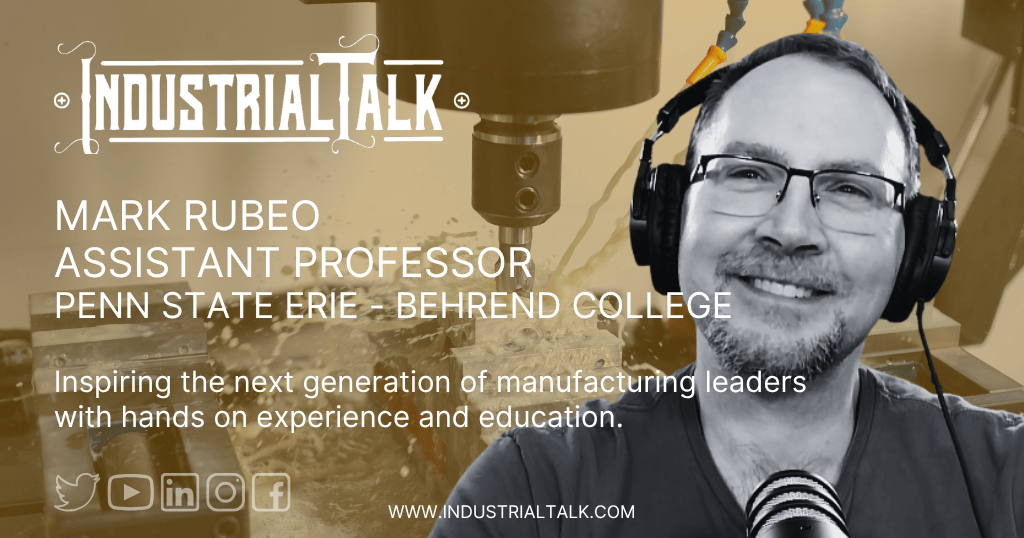
Industrial Talk is onsite at Penn State and talking to Dr. Mark Rubeo, Associate Professor of Mechanical Engineering with Penn State about “Educating the Future Industrial Leaders”.
Overview
Scott Mackenzie hosts the Industrial Talk podcast, celebrating industry professionals and their innovations. At Penn State University, the ACE (America's Cutting Edge) program, led by Mark Rubeo, addresses the shortage of skilled workers in manufacturing. The program, designed pre-COVID by Tony Schmitz and his team, uses a hub and spoke model to provide training across the US. Rubeo, an assistant professor with a CNC machinist background, emphasizes the importance of manufacturing knowledge for mechanical designers. The ACE program aims to excite and educate future technicians and engineers, fostering a sense of accomplishment and high-tech skills in manufacturing.
Outline
Introduction to Industrial Talk Podcast
- Scott welcomes listeners to the number one industrial-related podcast, celebrating industry professionals worldwide.
- The podcast is broadcasting on-site at Penn State University, specifically at the Baron campus in Erie, Pennsylvania.
- Scott humorously mentions the OSHA hazard of cables and the presence of snacks and coffee in Mark's class.
Mark's Background and Role at Penn State
- Mark introduces himself as an assistant professor of mechanical engineering at Penn State Behrend.
- He began his career as a CNC machinist, was laid off during the 2008 recession, and returned to school to earn a mechanical engineering degree.
- Mark completed his graduate studies in precision manufacturing and measurement science in Charlotte, North Carolina.
- He worked as a senior mechanical engineer in New Hampshire before returning to academia at Penn State Behrend in 2021.
The ACE Program and Its Origins
- Mark explains the ACE program, which stands for America's Cutting Edge, designed to address the shortage of skilled workers in manufacturing.
- The program was conceptualized pre-COVID by his former PhD advisor, Tony Schmitz, and his graduate students.
- A workshop at the NSF involved academia and industry professionals to identify the training needs in machining.
- The ACE program was piloted in Knoxville, Tennessee, and has since expanded using a hub and spoke model.
Challenges and Goals of the ACE Program
- The ACE program aims to interest and educate people in the manufacturing field, from technicians to engineers.
- Scott emphasizes the importance of companies investing in training to address the shortage of skilled workers.
- Mark suggests using the ACE program as a pre-apprenticeship to filter out those not interested in the field before investing in in-house apprenticeships.
- The program is designed to be a week-long training to gauge interest and aptitude in the manufacturing field.
Importance of Apprenticeships and Skilled Trades
- Scott and Mark discuss the decline of apprenticeship programs and the need to revive them to ensure future success in manufacturing.
- Mark highlights the benefits of apprenticeships, including the transfer of knowledge and skills from experienced workers to the younger generation.
- The federal government is recognizing the critical shortage of workers and investing in changing the narrative around manufacturing.
- Manufacturing is presented as a high-tech field that offers fulfilling and well-paying careers.
Future of the ACE Program and Industry Collaboration
- Mark outlines the goal of the ACE program to excite people about manufacturing and get them into the industry.
- The program tracks outcomes and feedback to ensure it is effective in achieving its goals.
- Mark emphasizes the importance of industry collaboration and support in expanding the ACE program.
- The hub and spoke model allows for efficient training across the US, with Penn State Behrend serving as a central hub.
Mark's Role in Expanding the ACE Program
- Mark is involved in training instructors and setting up ACE programs at other locations, such as Ohio State and LSU.
- He collaborates with local industry to provide tours and real-world experiences for students.
- The ACE program aims to highlight the high-tech nature of manufacturing and the camaraderie among professionals.
- Mark's background and experience in both industry and academia lend credibility and expertise to the program.
Contact Information and Final Thoughts
- Mark provides his contact information for those interested in the ACE program, including his email and LinkedIn profile.
- Scott encourages listeners to reach out to Mark and other industry professionals to learn more about manufacturing careers.
- The podcast concludes with a call to support programs like Penn State's ACE program to inspire the next generation of industrial leaders.
- Scott emphasizes the importance of storytelling in industry to inspire and attract new talent.
If interested in being on the Industrial Talk show, simply contact us and let's have a quick conversation.
Finally, get your exclusive free access to the Industrial Academy and a series on “Why You Need To Podcast” for Greater Success in 2026. All links designed for keeping you current in this rapidly changing Industrial Market. Learn! Grow! Enjoy!
DR. MARK RUBEO'S CONTACT INFORMATION:
Email: mar349@psu.edu
ACE Website: https://www.americascuttingedge.org/
LinkedIn Profile: https://www.linkedin.com/in/markrubeo/
Company Website: https://behrend.psu.edu/
PODCAST VIDEO:
THE STRATEGIC REASON “WHY YOU NEED TO PODCAST”:
OTHER GREAT INDUSTRIAL RESOURCES:
NEOM: https://www.neom.com/en-us
Hexagon: https://hexagon.com/
Arduino: https://www.arduino.cc/
Fictiv: https://www.fictiv.com/
Hitachi Vantara: https://www.hitachivantara.com/en-us/home.html
Industrial Marketing Solutions: https://industrialtalk.com/industrial-marketing/
Industrial Academy: https://industrialtalk.com/industrial-academy/
Industrial Dojo: https://industrialtalk.com/industrial_dojo/
We the 15: https://www.wethe15.org/
YOUR INDUSTRIAL DIGITAL TOOLBOX:
LifterLMS: Get One Month Free for $1 – https://lifterlms.com/
Active Campaign: Active Campaign Link
Social Jukebox: https://www.socialjukebox.com/
Industrial Academy (One Month Free Access And One Free License For Future Industrial Leader):

Business Beatitude the Book
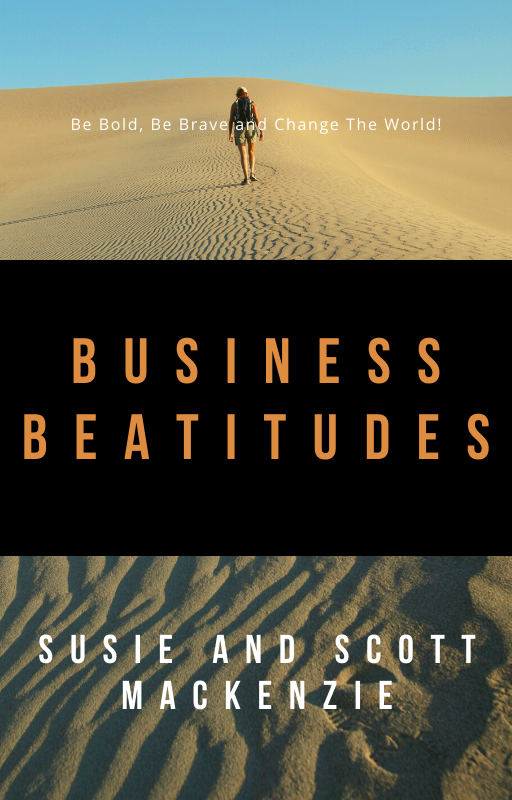
Do you desire a more joy-filled, deeply-enduring sense of accomplishment and success? Live your business the way you want to live with the BUSINESS BEATITUDES…The Bridge connecting sacrifice to success. YOU NEED THE BUSINESS BEATITUDES!
TAP INTO YOUR INDUSTRIAL SOUL, RESERVE YOUR COPY NOW! BE BOLD. BE BRAVE. DARE GREATLY AND CHANGE THE WORLD. GET THE BUSINESS BEATITUDES!
Reserve My Copy and My 25% Discount
Transcript
SUMMARY KEYWORDS
Industrial Talk, Penn State University, manufacturing training, ACE program, skilled workers, apprenticeship, mechanical engineering, CNC machinist, precision manufacturing, manufacturing shortage, high-tech field, industry collaboration, workforce development, manufacturing innovation, hands-on training.
Scott,
welcome to the Industrial Talk podcast with Scott Mackenzie. Scott is a passionate industry professional dedicated to transferring cutting-edge, industry-focused innovations and trends, while highlighting the men and women who keep the world moving. So, put on your hard hat, grab your work boots, and let's go. All
right, once again, welcome to Industrial Talk. Thank you very much for joining the number one Numero Uno Industrial Related podcast in the universe that celebrates you industry professionals all around the world. You're bold, you're brave, you dare greatly, you innovate, you collaborate, you're solving problems each and every day. That's why we celebrate you on Industrial Talk. That's why you are the heroes in the story. We are broadcasting on site right here, right now. You can tell if you're out on the video that we have cables everywhere. It is an OSHA hazard, but we don't really care about that. And we are on site at Penn State University. Where's the town? Erie, Pennsylvania. I got it, Erie, Pennsylvania. But what's the name of this campus? Behrend, Behrend, I can't remember that, and I'm terribly sorry about that. I just want to just sort of swag over and just go, "Hey, Penn State, leave it at that. But anyway, we're here on site, and we are celebrating all of the wonderful programs that exist here for industrial professionals, the incredible training, and we're highlighting not just students but the instructors that bring that passion to them and help them just capture that lightning in a bottle, that's why manufacturing, that's why industry is so incredible. Let's get a kraken. All right, Mark, how are you? I'm great. How are you? I'm great. I see you're so Mark has a class, and the class is all great and wonderful and dandy, but he also has snacks and coffee. The other class doesn't, just Mark's class. Oh, they're for everybody. We share. Well, as if I'm going to say no, I can't go get that coffee, that if I don't drink, I'm going to get a headache right here. Yeah, so good. Yeah, it.. I'm really dazzled by what you and others are doing here. I mean, I think it's a.. it's a remarkable accomplishment. Yeah, and it has a bright future.
Great.
Do you guys, do you guys have a softball team, and you battle metal?
No, no, but we should. That's a great idea.
Yeah, and then you guys, you get bragging rights. Yeah, we beat the heck out of them. That's what I would do. No, I would. So, for the listeners out there, Mark, give us a little background. You're with this program, you're going to have to sort of clarify, but, but really give us a background on who you are.
or recession in the US around:Well, I have to ask the question, your CNC background, did it help you with your, your engineering,
oh yeah,
education, like, like you're, you're a little ahead of everybody just because you've solved problems over here.
Absolutely, so being a good mechanical designer requires you to have knowledge of manufacturing, right, because how you design a part is reflective of how it's going to be manufactured, right. So, as a former machinist, a lot of the stuff I designed was intended to be CNC machined, but if I had to design a plastic part, I'd probably have to track a book and learn a little bit about plastic injection molding, so yeah, manufacturing knowledge is super critical for mechanical designers.
Did you ever take a design, and when you were a CNC and doing your CNC stuff, you're and you look at a design and you say well that. I won't fly, and then you have to step on some toes and communicate why it won't fly
as a machinist.
Yeah,
no, no, no, I never did that, because I'm making a part, and I have no idea what this thing does. It's just a part, I don't know what assembly it goes into, I usually don't know what the application is, so it's like it's just a thing. I'm just going to make it to spec, and hopefully the engineer designed it correctly.
Wow, I'm not going to digress. Tell us, tell us a little bit about the program that you're managing.
ly pre-COVID, so it was maybe:So, to get this right, you come up with this ACE curriculum, and it is designed to address a challenge that exists today in manufacturing. What was that challenge?
The shortage of skilled workers going into manufacturing, and that includes technicians all the way up through engineers, is just get people interested in the field and educated,
and then from there you have this curriculum, you're achieving the objectives that are necessary, that is defined in the curriculum, and then, and then other schools, another location, whatever they might be, can take that and duplicate that curriculum. The real heavy lifting was coming up with that curriculum. Now you need the leaders, the people, the skilled individuals to teach that, that's where we're at.
Yeah, exactly.
I like it. And I got to tell you, every time, if I had a nickel, every time somebody, some company complains about the fact that they can't find people, pony up, it's right here. Here's a solution, make it happen.
Yeah, absolutely.
Use some of that balance sheet money. We
encourage local industry to send people to us. We're.. I'm fully aware these trainings are a week long, right? We're fully aware that nobody's becoming a machinist in one week, right? This is more of a litmus test to see if you have the interest to work in this field and the aptitude to do it right, so I look at this as almost a pre-apprenticeship. So, if you're a company and you run an in-house apprenticeship program, maybe you bring in a group of 10 people and only four of them make it through the apprenticeship. Well, how about you send those 10 people to us first, and that way you're more efficient at your in-house apprenticeship, right? Because some of the folks that aren't interested in this field have been filtered out already by this,
yeah, like that.
This free program,
yeah, I like that. Yeah, that makes sense, because you don't, you don't really know, you don't know if somebody's like, yeah, I'm all in, I've got the aptitude, I've got the focus, I got whatever it might be,
right?
Speak, and you just I wrote it down just because I want to talk about this. When I was growing up, when I was in industry, we had pretty, pretty solid apprenticeship programs, and then then we don't. What is your take on apprenticeship? How do we, how do we ensure future success? I can only, I always point to apprenticeships. Tell me about
it. Well, I think it's a great model, right? You have a skilled, experienced worker training the younger generation, so you get some continuity there. You get some passed down of tribal knowledge. Why we started going away from apprenticeships in the US, I'm not quite sure the details. How all that worked out, but essentially we're at the point now where we're facing a critical shortage of workers. Right, you could go all over the US and you're going to hear the same story, and we're, I think, the federal government finally recognized that issue, especially during Covid, where you know our supply chains are getting disrupted, we're having a hard time getting PPE and whatnot, so they realize that, yeah, we need to be able to make things in the US, right, and so they're putting some money into changing the narrative around manufacturing, right, for a long time, we got a lot of propaganda saying, you know, young people, you should go to college, get four year degrees, that's going to be the surest path to success, which it's still an excellent path, no doubt, but going into the skilled trades is also a very worthwhile career field, right, and these people make you make great money doing this, you walk away at the end of the day having produced a tangible product that you can touch with your hands, that you know you feel very fulfilled doing it, it's it's excellent work,
and not to minimize it, it's it's it's not that old school mindset, dirty, miserable, no, and it's very sophisticated, and it requires a tremendous amount of skills and ability. It just does, and, and go to any show like IMTS, and look at what's on the floor at those, yeah, no, you're not, you're not just sort of wandering up and spinning out a part. No, it requires a lot of skills and abilities.
Oh, definitely, you got to have math skills, visualization skills. I mean, it's being a machinist is a substantial amount of work and knowledge required, no doubt about
it. See, and I can't, I can't get past the fact that we need to be creating apprenticeship. When I was started out as a, are going into my apprenticeship for alignment, right? Started out as a grunt, learn, learn, get yelled at, get you know, berated by the older guys. But yeah, and you just keep on going forward, and you learn the skills, and then you learn how to, and as it's just I don't see how we can circumvent that component because I would have to talk to you just and and pick your brain and pull that information.
Yeah, absolutely.
Well, tell us where we're going with Ace. What, what do you see? Because you're just, you're just wet and whistles here. How do you follow up? Where do you see it going?
Well, ultimately the goal is get people excited about manufacturing and get them into the industry, and that could be technicians or engineers, and so we do our best to track outcomes, see where people go after they go through the program. It's actually fairly challenging to do that. We do a fair amount of LinkedIn stalking and whatnot, but there's not really any great way to just track where people are going. We try to survey people and get feedback from them, but sometimes that's a little hit or miss, but yeah, I think the overall goal here is get people trained and mostly get people excited about it, about working with their hands and everything, and get a sense for the feeling of accomplishment you get from making a part to spec, it goes into an assembly that functions properly, so it's a, I guess, in general, we're just trying to change the narrative about manufacturing, and just point out it is a very high-tech field, like you
said, it's, and it's changed so drastically and rapidly, and and the innovation that is being pushed on these, this, this industry is is phenomenal. Oh, yeah, and you're not gonna, you're not gonna find yourself in a, you know, a rut. It's not a ruttable profession. It changes all the time, not to mention you probably are best at answering this question. You're constantly getting different parts and requirements and challenges and needs, and it's always, it's always happening. Nothing gets old,
right? Yeah, I think it's a lot like engineering, right. Engineering is all about problem solving, and there's a lot of problem solving in manufacturing, right. So, you get a part drawing in as a machinist, and you, you are essentially the designer of the machining process going to make that part, but unless you're a lot better of a machinist than I was, you're not making the perfect program or machining process the first time out of the gate, right? So you make something that works, then you optimize it, you make it better, you make it faster. It's it's a never-ending improvement, right? Right, and then you know, because of this shortage of workers, machine shops are being forced into automation. Yeah, it's not something they're doing, you know, just as a side gig. They have to do it. So now you're going to have situations where you have a highly skilled technician that's running an entire fleet of automated manufacturing equipment, so you got to be able to troubleshoot multiple things going on all at the same time, and yeah, you get a lot of great variation in the kind of work you're doing day to day.
I got to tell you again, my brother-in-law's had CNC shops, right, and what was always fun going over there outside of seeing the stuff, it's like, ah, check it out, got that machine going over there, but was always there, their passion of coming out and saying, look what we're making now, look at, look at this,
yeah,
it's, it's this disgrunt, figator, if it was, and we're making a bunch of them, and look at it, it feeds this, and it does. It was always exciting to get their, their take on stuff, and it's just so energetic.
Yeah, you see the pride coming out.
It's stupid. It's just off the charts. I think that one of the areas, it's one thing to be in a classroom, it's one thing to be, you know, doing the classroom stuff, it's necessary. Got it. But the second thing that I think is just so important is the ability to be able to see it in action, go to sites, look at it, and, and just having students see that, and then getting that, that owner, whoever might be, to say, I'm a part of this, I'm there. Do you agree with that?
Oh, yeah, absolutely. When, when we started the process of bringing the ACE program to Penn State Behrend, we had to get backing from local industry, right? So I would go to local tool makers, machine shops, and talk to them about the program, get their opinion on how well it's going to aid their industry, you know, and so we do have a lot of great local shops around this area that are aware of the ACE program, they provide all kinds of support, including providing tours of their facilities, and you're right, I mean, when you, when you come to a university and you go in the machine shop, that's you're looking at a very filtered version of what goes on in manufacturing, right? When you go out in the real world and you see professionals doing it in a real world setting, it really, it just highlights how special it is, how high tech it is, and like all the camaraderie that kind of goes into making a manufacturing facility work
well, I would imagine that because of your, your skills and your abilities and your background, your history, talking to these companies, I think it lends some, you know, you got some gravitas saying I was there, ah, check out that machine, I know,
yeah, I could be on that machine,
sure, but do whatever it is, I would imagine, so as we progress, and as you can see that this ACE program is hopefully gaining some traction, which I think it is,
absolutely.
And are you, or is this location, are you going to be part of, let's say, if Ohio State comes to you, you help them set it up?
Oh yeah, absolutely.
Or wherever, you know, LSU, go Tigers.
Yeah, I think that everybody that's interested in manufacturing, it's kind of like a big team effort, right? We're all on the same page. I don't care if you're Ohio State or Penn State, whatever. We all have the same goal, we have the same, you know, passions to get this out there, and so, yeah, absolutely, that's part of the whole deal, right, is expanding the hub and spoke model, so you get more training locations across the US,
plus you're efficient at it, you're saying, okay, here at Penn State, we've, we've done it, we've, we've weathered the storm, we lifted the, did the heavy lifting, and we did all of this stuff. Now we can help you get to that point faster, more efficient,
right?
You know, buy this, get this, do this, say, you know, that type of thing. Oh yeah, you need this, whatever it, you've already sort of fared out all of the little bumps and bruises and blemishes.
Yeah, and I should say our sponsors at IACME, the Composites Institute, they're fantastic about running this whole thing, right? They provide training sessions for instructors, so when I, before I even started running ACE boot camps here, I had to go down to Tennessee to get trained by the original trainers, you know, so they, they do a great job of maintaining quality and making sure everybody is administering the curriculum in the way it was intended.
All right, Mark, somebody's out there saying, man, he's talking my talk in my language, I understand him. How did they get a hold of you?
Oh, well, I guess you could just Google me, right? I mean, just Google Penn State Behrend Marc Rubeo. My email address is M A R 349 at psu.edu Send me an email, we can hook up.
Are you? I'm
on, I'm on LinkedIn too.
Yeah, and it's R U B E O. Don't make the mistake I did.
E O, E O, yes
indeed. Rubeo sounds better. You're absolutely spectacular.
You as well.
I love what you're doing. I love the passion. I love solving the problems, and your class likes you. You can tell,
good deal.
Well,
I tell a lot of jokes.
Yeah, you tell a lot of jokes, and plus you provide a lot of food.
That's right, caffeine and sugar.
All right, we're gonna have all the contact information for Mark out on Industrial Talk, both his email, both his. You guys have a website, right? Ace,
yeah, yeah, I can share that with you. You can share it out there,
yeah, yeah. We'll have that as well. As I said, LinkedIn email, yeah, we've got it all. Reach out to him if you're in the.. if you're ever considering getting in manufacturing, I highly recommend reach out to this organization, Mark, and others to be able to find out more, because it's really a wonderful time. It's just.. it's an amazing career. Make sure you have it all right again. We're broadcasting here in Erie, Pennsylvania, Penn State, talking about these great programs. We're going to wrap it up on the other side. Stay tuned. We will be right back.
You're listening to the Industrial Talk Podcast Network.
You yeah, as you can tell, they're doing great things at Penn State. They have incredible, incredible professors inspiring that next generation of industrial leaders. Mark, right there, Mark Rubeo, all his contact information is out on Industrial Talk. We need to one tell our stories each and every day. If you're in industry, we need to put a face to that. If you're, if you're trying to inspire that next generation again, you need to tell that story. Why manufacturing, why industry is a profession that you should truly focus on. We need more people in industry. We just do. It's happening near Shore, Reshore, bringing it all in. It's happening as we speak. Penn State, the programs that are there, leading the way, hands on, hands on stuff. It's, it's pretty spectacular. I really, it was an honor being there, and being able to have that conversation with Mark and others, and see that passion that is just their nurturing. That has pretty good, pretty good. Again, Industrial Talk is here for you. We need you, industry professionals, to tell your story. You need to succeed, and a part of that is, of course, being able to sort of communicate in a way that makes sense, that inspires, inspires the next generation. You need to do that. Just reach out to me. Where you know, we do all the marketing, we do all of the conversation, we do all the media, it's all there. Just talk to me. Go out to Industrial Talk.com and we will help you succeed. All right, be bold, be brave, dare greatly support programs like Penn State that they have, and inspiring that next generation. Support them. We need your support. We need them to succeed. All right, we're gonna just have more conversations coming from this particular event, so stay tuned.