Mehdi Kargar with Maxterial
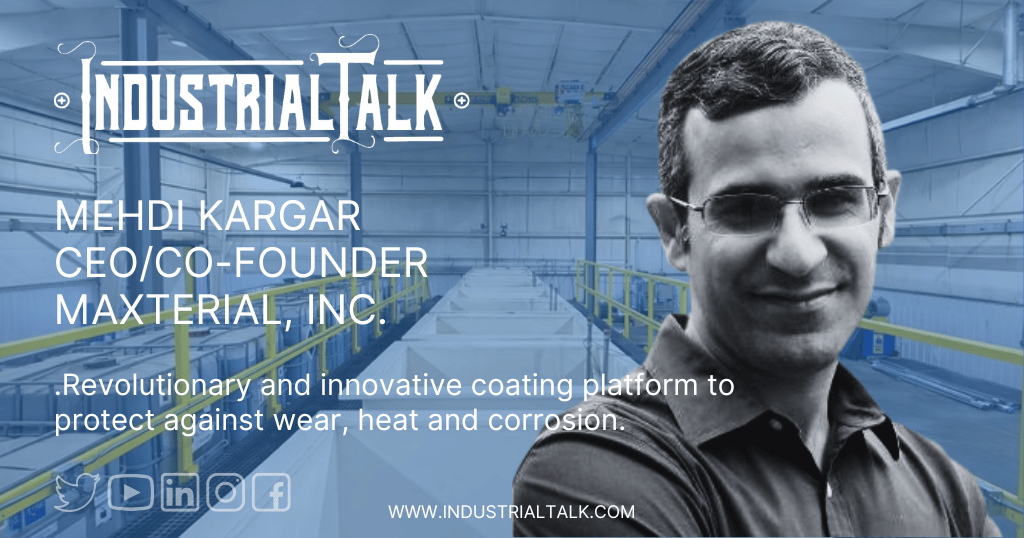
Industrial Talk is talking to Mehdi Kargar, CEO/Co-Founder at Maxterial, Inc. about “Innovative coating platform that significantly reduces corrosion”.
Mehdi Kargar, founder of Maxterial, discussed the company's innovative coatings that replace hexavalent chromium, which is being phased out due to health and environmental risks. Maxterial's coating, tested in steel mills and hydraulic systems, offers superior durability, reducing downtime by up to 50% and improving energy efficiency by four times. The coating is manufactured using standard electrodeposition processes and existing chemical suppliers. Maxterial aims to create a scalable, cost-effective solution that meets regulatory deadlines and enhances industrial efficiency. The company's strategy includes building trust and partnerships with
Outline
Barcelona Cybersecurity Congress Announcement
- Scott introduces the Barcelona Cybersecurity Congress, emphasizing its importance and urging listeners to mark their calendars for November 3-5.
- The event is described as a must-attend for cybersecurity professionals, offering networking opportunities and valuable insights.
- Scott mentions their own participation and plans to broadcast and discuss cybersecurity with experts.
- Contact information for the event is provided, and Speaker 1 encourages listeners to visit Industrial Talk for more details.
Introduction to Industrial Talk Podcast
- Scott reiterates the podcast's mission to celebrate industrial professionals and their contributions to solving global challenges.
- The introduction sets the tone for the episode, emphasizing the importance of innovation, collaboration, and problem-solving in the industrial sector.
- Scott introduces the guest, Mehdi Kargar, and the topic of discussion, which revolves around Maxterial and its innovative coatings solutions.
Mehdi Kargar's Background and Maxterial's Mission
- Scott and Mehdi Kargar discuss Mehdi's background, including his immigration to America, education, and career path in engineering and entrepreneurship.
- Mehdi explains the founding of Maxterial in 2015, initially as a coatings company with a focus on non-stick coatings made of metals.
- The conversation shifts to Maxterial's evolution and its current focus on providing hexavalent chromium alternatives for industrial applications.
- Mehdi shares the story of how Maxterial received early-stage funding from Peter Thiel's foundation, which played a crucial role in their development.
Maxterial's Hexavalent Chromium Alternative
- Mehdi elaborates on the challenges and importance of replacing hexavalent chromium, which is used in various industrial applications but poses significant health and environmental risks.
- He explains the regulatory deadlines for phasing out chromium, with the EU setting a 2027 deadline and the U.S. Army aiming for 2030.
- Maxterial's solution is described as a complex coating that offers wear and corrosion resistance, energy efficiency, and improved labor efficiency compared to traditional chromium-based coatings.
- Mehdi emphasizes the company's commitment to providing a scalable, cost-effective, and environmentally friendly alternative to chromium.
Manufacturing and Supply Chain Strategy
- Mehdi details Maxterial's manufacturing process, which involves standard electrodeposition techniques using existing plating infrastructure.
- The company's supply chain strategy involves sourcing chemicals from various suppliers and providing them to end users through a licensing process.
- Mehdi highlights the benefits of Maxterial's approach, including reduced capital expenditures, compatibility with existing manufacturing settings, and the potential to create jobs in the U.S.
- The conversation touches on the challenges of convincing existing chromium suppliers to adopt Maxterial's solution and the importance of building trust with end users.
Quality and Testing of Maxterial's Coatings
- Mehdi discusses the quality of Maxterial's coatings, emphasizing their performance in rigorous testing and real-world applications.
- He provides examples of successful tests, including a steel mill in America and a world-renowned steel producer in Italy, where Maxterial's coatings demonstrated superior durability and efficiency.
- Mehdi explains how Maxterial's coatings can be used in both corrosive and non-corrosive environments, simplifying supply chains and reducing costs for end users.
- The conversation underscores the importance of proving the quality and reliability of Maxterial's products to build trust with potential customers.
Entrepreneurial Challenges and Future Outlook
- Mehdi reflects on the challenges of building Maxterial, including the need for patience, perseverance, and the ability to adapt to changing market conditions.
- He shares his philosophy of “go slow to go fast,” explaining how the company's initial focus on small-scale operations and careful testing has set the stage for scalable growth.
- Mehdi expresses optimism about Maxterial's potential to disrupt the industry and create significant positive impact.
- The conversation concludes with Meddy encouraging listeners to reach out to him for more information and expressing gratitude for the opportunity to share Maxterial's story.
If interested in being on the Industrial Talk show, simply contact us and let's have a quick conversation.
Finally, get your exclusive free access to the Industrial Academy and a series on “Why You Need To Podcast” for Greater Success in 2026. All links designed for keeping you current in this rapidly changing Industrial Market. Learn! Grow! Enjoy!
MEHDI KARGAR'S CONTACT INFORMATION:
Personal LinkedIn: https://www.linkedin.com/in/mehdi-kargar-01197119/
Company LinkedIn: https://www.linkedin.com/company/maxterial-inc/
Company Website: https://www.maxterial.com/
PODCAST VIDEO:
THE STRATEGIC REASON “WHY YOU NEED TO PODCAST”:
OTHER GREAT INDUSTRIAL RESOURCES:
NEOM: https://www.neom.com/en-us
Hexagon: https://hexagon.com/
Arduino: https://www.arduino.cc/
Fictiv: https://www.fictiv.com/
Hitachi Vantara: https://www.hitachivantara.com/en-us/home.html
Industrial Marketing Solutions: https://industrialtalk.com/industrial-marketing/
Industrial Academy: https://industrialtalk.com/industrial-academy/
Industrial Dojo: https://industrialtalk.com/industrial_dojo/
We the 15: https://www.wethe15.org/
YOUR INDUSTRIAL DIGITAL TOOLBOX:
LifterLMS: Get One Month Free for $1 – https://lifterlms.com/
Active Campaign: Active Campaign Link
Social Jukebox: https://www.socialjukebox.com/
Industrial Academy (One Month Free Access And One Free License For Future Industrial Leader):

Business Beatitude the Book
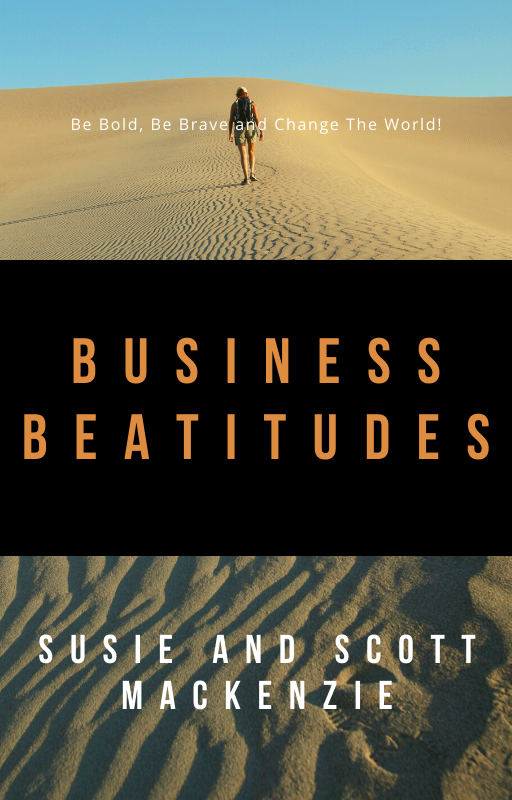
Do you desire a more joy-filled, deeply-enduring sense of accomplishment and success? Live your business the way you want to live with the BUSINESS BEATITUDES…The Bridge connecting sacrifice to success. YOU NEED THE BUSINESS BEATITUDES!
TAP INTO YOUR INDUSTRIAL SOUL, RESERVE YOUR COPY NOW! BE BOLD. BE BRAVE. DARE GREATLY AND CHANGE THE WORLD. GET THE BUSINESS BEATITUDES!
Reserve My Copy and My 25% Discount
Transcript
SUMMARY KEYWORDS
Barcelona Cybersecurity Congress, industrial innovation, Maxterial, coding requirements, efficiency improvements, hexavalent chromium, corrosion resistance, supply chain, manufacturing process, energy efficiency, regulatory compliance, entrepreneurial journey, market disruption, industrial challenges, storytelling.
All right. Before we get into the conversation, I want you to be aware of a conference that you need to put on your calendar, and you have time. It is the Barcelona Cybersecurity Congress. It is necessary. You need to up your cybersecurity game. You're connected. You need to make sure that you're protected right here. This event, Barcelona Cybersecurity Congress. It is November 3 through the fifth. You have time, November 3 through the fifth this year in Barcelona. And I'm telling you right now, the team at Farah who put this particular Congress on the best. You will not be disappointed, and you know what else you get to do? You get to network with some of the best cybersecurity professionals from around the world. You need to do this. You need to put this one on your calendar. All of the contact, all of the information is out on Industrial Talk. I'm going to be there. I'm going to be broadcasting. I'm going to be talking cybersecurity with the best in the world. So be there. Put this one on your calendar. That is November 3 through the fifth. I'll see you there.
Welcome to the Industrial Talk podcast with Scott Mackenzie. Scott is a passionate industry professional dedicated to transferring cutting-edge, industry-focused innovations and trends while highlighting the men and women who keep the world moving. So put on your hard hat, grab your work boots, and let's go! All
right, once again, welcome to Industrial Talk, the number one industrial-related podcast that celebrates you, industrial professionals all around the world. I say it once. I say it a million times. You're bold. You're brave. You dare greatly. You innovate. You collaborate. You're solving problems each and every day. That's why we celebrate you on Industrial Talk. You're the heroes in this story, and you need to succeed. All right, in the hot seat. Speaking of innovation, speaking of solving today's problems, we have a gentleman by the name of Mehdi Kagar. Kag. I want to say a Kagar. Yeah, I got it right. Maxterial is the company we're talking coatings. We're talking about the ability to be able to provide the very important coding requirements for machinery, and be able to improve efficiencies and and and deliver real value. Because Maxterial, they're they're thinking outside the box. Many, you're gonna like this conversation. Let's get cracking. I'm always into, and maybe you are too, but I'm always into the ability to be able to have conversations with innovative thought leaders, visionaries in the world of industry, I love the opportunity to disrupt and to be able to tell that story. It's always fascinating. It's always fascinating. So here's here's Medi, Maxterial. They come to me, Scott. Let's tell our story. I'm saying, heck yeah, why wouldn't I? And then be able to say, Hey, you know how important coding is? Coding. We there's so much in industry, and their process, their application is incredible, just incredible. I've got their website out here, and Medi's stat card out on LinkedIn. So you know, this is a paper pencil. He was doing it from a a gym, the conversation from a gym, but not just any gym. It was pretty fancy gym. Anyway, it's it was a fun conversation. Anyway, paper pencil, and definitely as a go to action item is always to Connect, you know, all of the the information is out on industrial talk. We it is industry is a human human equation. That's why I have the shirt on. We are industry. It's all human, and you need to continue to expand that network and continue to have these conversations with leaders like Mehdi and others to be able to truly solve today's industrial challenges, and and so we have a bright future and success and all that fun stuff. That's global. Just you got to do it anyway. That's my that that it's out on industrial talk. All right. Speaking of telling your story, industrial talk. Yes, it's a media company. Yes, it's a marketing company. Yes, it's a promotional company. But it's all geared around you telling your story, giving that human face to your solution. Whether we like it or not, this is where we have to find our, you know. Our passion is to be able to tell that story, to be able to inspire that next generation. This is what we're here for. We want you to succeed, and to succeed, you have to be consistently telling your story in a in a way and putting that human face to your solution. It just has to. It's just the way we are looking at the world nowadays. So industrial talk is always, once again, always here for you. You just go out to industrial talk. Here's my beef. Just go out there, contact me, have a conversation. You get everything. We just need for you to just be committed to telling your story. It's important that that industry does what it needs to do, so the future is bright and so everybody succeeds. All of that stuff. Yeah, you need to keep at it. You need to keep at it, and I don't care what size you are? Look at Maxterial. Been around for a little while, but they're still sort of in that startup phase. I want to tell that story. I want them to succeed. What they provide, what they do, how they are being disruptive makes complete sense. And if you're small, mid, large, doesn't matter. People need to hear. People need to see. Get those eyeballs on what you do, and industrial talk as well is here for you. Media marketing as well as promotional stuff.
So anyway, there it is. Soapbox off. All right. Mehdi is the the gentleman. It was a great conversation, by the way. Maxterial is the company. Again, everything, all the links, everything's out on Industrial Talk. So make sure that you connect with with our friend Medi. So there you go. Here's the conversation, Medi. Welcome to Industrial Talk. Thank you very much for joining me and the listeners from a gym. I like that.
Thanks, Scott. It's great to know you.
Yeah, back at you. It it looks so. Your gym is special. It's a special gym. It looks like a vacation gym. nice look.
Yeah, it's a it's a ecosystem for me, right?
Yeah,
they have a daycare here. They have a real gym here. They have everything I need. They have actually a restaurant here, so I come here and I do my job and I get everything done. Right.
What what what do you normally focus on in your gym world? What what what is your exercise routine? I have one, but I want to hear what you have.
Well, I go to gym three days a week, and I'm always in the gym between half an hour to 45 minutes. Normally, try to make it there between seven and B for eight, usually, usually, and a lot of time I cannot because I deal with a lot of Europeans and all of them which they want to meet at that time, which have to postpone later.
Yes, yeah, yeah. And
then during the gym, I just have certain kind of like plan how to get every part of the body working, right? And I take my shower, come here, grab my coffee, and get to work.
There you go. I just say the internet says you have to work out, so I'm I do what the internet says I have to do. So I constantly work out all the time too. Yeah, but I don't. I know not not that early. And it yeah all right before we get into the conversation about Maxterial, I want to be able to and for the listeners to understand who Mehdi is. What what's your background? Give us a little resume, a CV short CV short resume on who you were. Right.
Well, I was born in Iran. I immigrated to America. Shut
up! Shut up! That's been in the news. You just dropped that bomb on me. Shut up again. And I'm sorry for using drop that bomb. I just realized that that wasn't inappropriate.
hen you can. So I I came here:yeah,
that kind of stuff, right? So that's me in nutshell.
Yeah. Okay. So I got it. Been there, done that. Know what it's like. It's a bit of a grind. I understand. I understand completely. However, let's let's talk a little bit about Maxterial, and and for the listener out there, it's M A X T E R I A L is the name of the company. How long you been around?
2015.
2015. So it's been around for a little while. It's been it's been pressure tested, so that's pretty cool. But it started out as a coatings company. Is that sort of how I look at that? Tell me about that.
Well, the story started from:him well. Who doesn't know him?
Right. So they found the paper. They sent us an email, and they invited us to apply for them to be the first investor in our company, right? And
come on, hold on, hold it! Don't just gloss over that one, Peter Thiel just comes to you and sends you an email and says, "Hey, we want to be a first investor. Come on, that must have you must have just looked at that and stared at that email and just said,
"Oh no, is
this real?
I tell you, the real it was his foundation, and it was not him; he was his agent, right? Just at the time we were in an incubator and I was learning how to build financial projections, right? Well, that's the part of the company, and I didn't know I was an engineer, right? So one of our mentors, his name was Dick Doherty. Dick came to me. He was a professor, MBA at Virginia Tech, and said, "Look, we got this email. Do you guys want the money, and we said I didn't know. Very honest to God, I had no idea who he is. When you interview me, I'm not gonna make a story or correct anything. I tell you the truth, right? So, and we didn't know. We were thinking, who is this guy, right? But then he, honestly, but they told us that look, guys, if someone like that, either foundation or fund or whatever of him, become like your investor, just go give it, get the money, right? And that's how eventually I ended up traveling to Silicon Valley, and I landed here and never went back to East.
Come on, that's a great
story.
You know, there's a lot of people that are listening right now saying, "Hey, how come that's not happening to me? Oh, blue! How come that just dropped on my porch? God, that is amazing. Okay, so now, so now you're you're you're you're moving forward. You've got this organization, Maxterial. What was what was it? So just give us a little flavor of what that is, and and then we're going to go into where we're at.
So is the question: What is Maxterial about? Is that what? Yeah, yeah,
pretty much. You know, where, where, what is it?
So Maxterial basically evolved a lot. You remember that non-stick coating that doesn't exist anymore. That's in museum of mixtures. We have many things in museums. If you become a one company, company, people are more than welcome to come and visit that, right? Yeah. So things things changed over the time. What we are focused on, and I don't know if you have you ever watched the movie Erin Brockovich.
Yeah, sure, absolutely, and in fact, just FYI, FYI, this is this is my claim to fame. I grew up in a town called Barstow. She was doing her movie at Newberry Springs. Was just right down. It's all desert. It's all nasty, but it's right there. That's how, that's how I know of that.
Also, you're from California.
Oh yeah, I am. Yeah, southern, not not central, or where you're at, not the Bay Area, but
right
in between Los Angeles and Las Vegas.
Now there is actual deadline: my toe on the fact that it's:The the urgency is there because chromium itself also, and you know there are many ways to improve the life expectancy expectancy of chromium, right? We can reduce the downtime. Like for steel mill, we possibly can reduce the downtime by a factor of two, which is very important, right? We can improve energy efficiency by a factor of four. We can improve air performance, but many factor. So I want to say they they convert to economy. But why it took so long? Do you have a question?
You're you're you're just dropping bomb. I'm sorry, saying it again. Don darn it! No, when you say energy efficiency, so you're you're that's that's amazing. So that's one point. And and you're you're no go ahead. I'm sorry. I see. I wasn't writing it down. See see what you're doing to me.
Look, Steve. That's Scott. Well, why I am interested in Max Terror? Right. Everyone loves money, but I am a kind of a person that I'm looking for an impossible mission with a very big impact, right? And I'm happy to sacrifice a lot to make it work, and that's exactly this story. Why it why it took long time and nobody could replace that? You're dealing with an ecosystem. From one side, you need investment because you have to do basic research. Look, it's electrochemistry, organic chemistry, material science, and how many successful company in such an environment you have ever seen? You have seen many AI, fintech. So from that side is an unknown. I don't want to say it's unsuccessful; is an unknown to most of investors. Then it goes to the adoption cycle. All these companies they want to test things for a long time.
Yeah. So
they don't work together, right? And then you have employees like employee of startups in Silicon Valley. They have been through many startups. They know how the tech work, but in manufacturing, labor, how. So you are dealing with an ecosystem that all benefit from it, but none of them are built to enable it. So that's why people try and fail. Some part of ecosystem make them fail, right? And my my my passion in my external life saw that as a big opportunity to create a strategy how you can line up the ecosystem to enable things like that. This is an example. If the strategies work together and come out as like a book, right? The next level people can use that and improve upon that and make bigger thing happen, right? If you want to change a whole industry, just the test plan of some of them take six years, seven years, right? So how how they how we can make that work? That's what I kept me in Maxterio, right? And I think we are pretty close to the point to make it happen, and I hope Maxterio will make it through.
Yeah, see, this is interesting, and you're you're doing a lot of heavy lifting. You're not just-it's not a-it's not heavy lifting from the perspective of this. Is this is new, and I'm out on your website, right? And I've already sort of perused it, and and for me personally, I I think this is an interesting value proposition. But I can understand how the capital markets are a little like okay, we got to make sure you know it's all about risk. It's not there's there's a there's an interesting culture that exists there, but I'm all about efficiency. And if you can, you can get to a point where you are removing the inefficiencies that are innately in many of these manufacturing, or even the the the power generation, or what, just because it's a better product and you're reduced, that's an amazing bottom line value. And I'm I'm looking at this at this what you have. I
can give you a little bit explanation on efficiency. Like efficiency is defined many ways. Yeah, one one part of it is energy. Chromium usually 7% to 15% depending on what kind of a chromium and process and how good the people who run it are. Like you put 100 kilowatt in the tank, 7% gives you the coating. The rest of it heats up tank, dissociate water to hydrogen dist, right?
Yeah,
our process is normally 90% nine zero. So depending on process, two 3% up and down, just compare. Yeah, and these are these are all backed by data. 11 years old company and a bunch of customers, so that's one aspect. The other aspect comes to also I can give you second aspect is the labor. When you work with chromium, first of all, they are all exposed to all these chemicals. Look, it's not just chromium; it's lead anodes. They have to add PFAS, PFAS to the tank, right? But more importantly, it's a because we are talking industrial. I go a little bit technical. So chromium is called low throwing power coating. Basically, means that if you want to coat an object, anode has to be made in the shape of that an object, and that makes things difficult. Like if you want to coat five parts, then you have five different. How this? But we don't need that. You just can dump it in a tank, and we can just put anodes around any shapes, and we can coat them, and we can go two times faster. So if it takes chromium 34, five minutes to deposit 10 micron, we can do it in 15 minutes. Just imagine that faster. If if if if you have to coat some thicknesses, chromium is overnight work next day, right? We can do it in one day. You can coat multiple parts at a time. So these are all efficiency, both capital efficiency, and financial, and also production wise, right? It's just one factory could be a lot more efficient than one line, so there is a lot of benefit that come out of it, right? See, that's
that's huge. That's huge. Nobody really. Well, maybe the circle of friends that you hang out with know that, but now you're. But that's that's major benefit. That's huge, and and I'm I'm I'm looking over here, and on your website it says there there is a 3.3. Now you're going to have to back this up. 3.3 trillion costs associated with wear corrosion of metallic structure.
Right.
That's that's insane.
Yeah, it's coming from a credible reference. When I send you the deck, click on it. You can read the articles, right? So,
no, I'm talking to you, right? Well, no,
no. Well, look, I still have the habit that when I prepare investor deck, I try to include scientific reference some of them, right? So I believe one those data one part of it come from National Association of Peruvian Engineers, and the second part come from a paper published by Argonne National Laboratory, I believe, if I'm not. So those numbers mix them up with there. You come with 3.3. That's the major issue, and and there is that, and I read a report that the solution to that is about the, if I find them about the trillion dollar unsolved market, that basically is that because look, you know, we use coatings as a solution to them. Chromium is one solution. I last time I did market research was about $9 billion market, right? They use nickel alloys. They use tungsten carbide alloys. They use sometimes they change the base material, right? These are all solution to corrosion and wear. But there are many places that you cannot really even coat. I give you an example.
Yeah.
Years ago, I had some. Semiconductor company come to us, and they used to use nozzles, right? The semiconductor used nozzles in many places. You etch that's the etching business, right? Right. So inside of those nozzles, which are very tiny, you cannot put thick coating. You have to have tiny thin coating, but yet very efficient and very corrosion resistant, and not just the simple acid resistant. There are many other. There is no coating that can be as thin as that much, and can go inside of a nozzle and can be that much resistant. I believe what we have is that level two, right? That's why they came to us.
Okay, so now we we segue, we got it. There's a market. There's a lot of inefficiencies. There is a need that happens with the necessity to coat and do it effectively and efficiently.
Correct.
So we got all that. How does how how does Max Teriel? Tell us a little bit about that. What what what? How did you rethink that? How is that disruptive?
Well, well, it was. It first of all, it's disruptive for you know if you build something that gives you super performance, at the same time comes at a very reasonable price comparable to what is already in the market, and at at the same time is scalable using standard labor and manufacturing settings, and at the same time gives you proper ESG. Look, you want to replace chromium with another thing that makes a ton of carbon footprint, or another toxic metal, and with cobalt, or so. So if you have something that gives you all this restriction performance, and performance doesn't mean the coating is good. The manufacturing itself should be easy, right? So if it gives you the performance unit economic, good ROI, and good ESG, well, that is an impossible mission. That's what things takes time, right?
Right. Exactly. Oh yeah,
yeah, and that's why you have to understand economy. You have to understand investor. You have to understand chemistry, and you have to understand the industry. If you understand all four, you can make them work together.
Let me ask you this: so you you've got this this solution, not solution as in dipping. So just a solution of of being able to coat and coat efficiently. Tell me about and tell the listeners about the feedstock component. How do you how do you manage? Like okay, here's my recipe for making this thing, and I got to pull here, here, here, and I got you know the supply chain component. Is there what does that feedstock look like? That that strategy.
Okay. Well, I will explain, and you tell me if I got your question correctly. Yeah, I'm just
thinking.
Right.
All the inputs.
Right. I briefly will tell you how is manufactured and how is the supply chain and all of that. I guess that's the question about correct?
Yeah.
Okay. So the manufacturing is a standard electro deposition, electroplating process. The way we do chromium, because we want to replace chromium. Our basic was that look, we want to minimize the capex.
Yeah.
I don't want to say we make it zero, but yes. So it
is
a plating tank. For those of some of, I assume most of your audience are familiar with plating. But if they are not, so you have a tank. You fill it with a chemical. You dip an object inside that, and you connect electricity. That electricity will convert that liquid. You know, I always I know it's iron, but to simplify, I say liquid, right? That converts the liquid to the solid coating. You see, right? That's the chromium how it used to be done, and that hex chromium was that liquid that the people put in. That we replace that with with something that doesn't have chromium on PFAS and PFAS and none of that inside of it, right? So we do our best to use the same setting, right? That basically is what how it's done, and the final coating is an alloy composition. So the alloys have been using in industry for long time, like pipes for oil fields, and a lot of them are dealing with extreme corrosion, right? So we just build rather than having a bulky material. Now we make a tiny coating out of it, so it's a material proven to work. But now we know how to make it through simple manufacturing. We also improve them to be harder and all of them. And the supply chain of it basically is a lot of existing chemicals. We are not a synthetic chemistry company, right? We we are formulation company. We buy chemical from different supplier. We found sweet spot and sweet formulation. We mix them. Some of them internal, some of them external. We try to create job for other people too. Not everything only to us, right? So some other people also help us with with mixing, and but when the chemical is mixed, we ship. Ship it to the end user, the coating company, and we send them through a license process because they have to learn details like how to apply the coating and all of it. And after they are having the chemical and the knowledge, now they are doing the job. They need support. They need they need the chemical. All we supply them, right? So basic. That's how it works.
Son of a gun, that's huge. I mean, that's that's that is some heavy lifting. You know, I I'm just rattling in my my skull of all of the pieces and parts to make that and to to deliver your solution to that end user. Are you getting pushback from the Chromium people? Come on, there's got to be pushback from the market,
right? So, well, the Chromium we don't directly work with Chrome Playdens, correct? We work with with, and we have a lot of inbound interest, like all these like end users of chromium, like hydraulic industry, steel industry, U.S. Department of B.R. They have working with defense and you know with army, and now we are signing some contract with Air Force, right? So these are the people that have the pain. So they reach that to us, they they work with us, and they try it and test it, and when they want the supplier, we can act an initial supplier ourselves. We have plating capacity, right? And we can help them to build line, or we can talk to their existing supplier to convert at the time, which they would be okay to do that. Like when they know they have a customer, they resist now, but they are not really the decision maker in the process. They just can't act act as a separate tool that basically what they gotta
you got a clock ticking,
right?
But I like I like your explanation of saying hey we have we can use existing infrastructure, plating infrastructure. We just isn't gonna you know change it here and there a little bit, so your capex is, you know, not not like ripping everything out and interrupting your business to to the
exactly. So the point is the point is we don't want to take away job from them, so we just want we want to just exactly. Our model is to convert existing plater. They are our partner, right? So basically, we want to help them to stay in business and stay healthy. And if they switch from chrome to this, then look now, chromium everyday regulation. They they are losing this. They are everything is on. They become an stable business for the next 100 year to come. It's good for their labor and well, and they can bring a lot of supply back to America right now because of all this regulation. Everything is happening. Mexico, China, we work with Mexico, China. We don't. It's okay if needed, but I think we can create a lot of them back in America when things are compliant, right? I don't see any damage to Trump later, right? But yeah, I think they actually have to join Macsterio. Well, this is gonna be gone. What do they wanna do? They wanna go to a very complex replacement that is expensive, and some of them don't know even how to do that. Especially some of them that they have been played their generations, right? Is like it's not just a business to them, this has been something that remind them of grandpa and grandma, right? So yeah, I think they are the best partner for Maxterial, but I understand the pressure when it comes. It may not us to think inclusively, and also yeah, it's okay. We are patient.
So here, here's what I, I, we've painted the picture. Great efficiency, all works right there. Your supply chain, everything, all, all available. No, no compress. And then, of course, you've got the regulatory clock ticking and all of that good. One last question: quality, right? We, you know, chromium. That it, it. There's a. There's. It's been around for a long time. Whatever the plating, whatever that coating is, there's a quality to it. Explain to us a little bit about the quality of your product.
Of course, Scott. When I when I got to this whole Chromium game, you know, almost a decade ago, I found a lot of people have used the market. They are just trying to sell things as more safe and environmental friendly, but they are always more expensive and they deliver less. Okay, that's that's what I've seen, and I thought, look, if you want to really do the job, you have to keep economy in mind, and you have to do something better. You know, we just let the regulation help you, but don't use that as a pure way of making money out of people, right? No, the product we have is already tested. By the way, look, it has been, it has been operating in two steel mills now for I think. 18 months, 19 months. One in America, one in Italy. It has been already tested in one of the world most famous steel producers. Right, is going through all the tests. But I want to say it's very well tested. On the, I give you one example to get the quality of the product in steel mills. Are you familiar with cold rolling process?
Oh yes.
So you know, for your audience, basically when they when they steel comes out of the hot meal, it's like a very thick slab, and they send it through bunch of rolls to push them down and and reduce the thickness, right? But just imagine the roll that is so big, 10 ton. I always give an example. Imagine four human beings sticking together. That's the size, right? Yeah. So, so basically, 10 ton high RPM, and they are pressuring against the steel, not the paste, real steel. Yeah. So chromium, they have to coat chromium on that roll, and chromium lasts four to six, seven hours. Can you imagine? Now I didn't know
that. I was imagine. Hey, that's a that's a hostile environment. How does they? How does it last? Hostile
environment I have ever seen, and I'm tackling a second one together with my team, which is a mold industrial. But we had some initial tests with a world-known steel company, yeah, and they showed we can double the lifetime.
Okay, that's huge, right? That's huge. Just imagine,
right? It's done by if you can reduce the downtime by a factor of two for an steel mill, which possibly is making 5% or I don't know something in profit margin. That's one example, right?
That's huge, and not to mention the the safety component,
right?
Yeah, it's just it's it's a safer way of managing your operation. It just is. You're not you're not constantly having to change out whatever the part is because it's wear and tear. You can at least wow double, and like I said, that's that's hostile,
right?
Yeah. Wow. I think
we had that, and also another thing we did. We did some hydraulic test on corrosive environment. In corrosive environment, they cannot use chromium. They have to use tungsten carbide, which is, depending of manufacturer, could be two times to 20 time more expensive. So, for us, they can use one coating in both corrosive and non-corrosive environment. So imagine how simplified the supply chain become, rather than so. These are all the potential and opportunities, and it's a company that I know it has a very good product. We have to make it through the next phase.
Yeah,
if I stay alive, we'll see that. Right,
stay alive. You work out all the time, so you're you're all in shape. You can handle this. I started
with black hair. Now he's all white, man. Don't,
don't. I don't even have hair, let alone the color of hair. No, I don't have. Right. See, that's that. I had another one. Another question. There is the trust factor too, right?
Yes. Yes.
Can I trust it? Can I trust? I've been using this methodology and this product forever. I try. I know what I could get out of it and all this stuff. Now you're asking me to go over here and try something different. Do I trust you? Trust has got to be big.
for investor. But that first:Yeah, I agree
with you, especially for an industry, because this industry is when they switch their supply chain, then they're gonna stick to that supply chain for the next
try to try to give up for that. You're absolutely right. We've been there, done that. No, this is better. Yeah, you know, it's it's a healthy, it's it's a healthy part of the the business, but the industry doesn't change fast, does it? Because you're dealing with operations and you're dealing with, you know. Then you have to
adopt the strategies, right? I think that that that comes that who to work with, who to work with, and again, as I said, go for 10 years of slow and sacrifice a lot. So then, make it and scalable and and you know go fast. Because look, you have to consider the other part of the game, which are investors. Yeah, they also have to get a good ROI, and they
yeah they do
right. Yeah. So yeah, see,
Manny, that's that's some that's some that's a heck of a story, that's some heavy lifting. Kudos to you and your team. That that's amazing stuff to keep at it. To keep keep ah just keep persevering. It's hard. That's hard. It's
very hard. Yeah,
right. Yeah. At least you still have hair. Yeah. Right.
Right. You know. No, I always tell people, look, this company. I didn't build the company. The company built me, because it's a very hard company. And every day you self-reflect, and a new version of yourself has to come out of you to be able to go through this whole process. But I'm very painful. I'm very. I think I'm positive. I think we are, you know, we are changing an entire ecosystem, right? Yeah,
yeah.
And this is something that, if it when happens, you will see the impact of it propagate very fast. Yeah, I was just going to say
there will be an acceleration of consumption,
right? The first part of it was like to be a drop of water going through any stone, but you know, Sonny,
this whole entrepreneurial mindset-you you have you have embodied that. It's it is perseverance. Nothing's handed to you. You just got to continue to sort of adapt, persevere, overcome, do it again, get frustrated. It just it it's it's an amazing journey. That's amazing. Kudos, Benny. Thank you.
Appreciate it. Thank you. Hey,
as we wrap it up, how do people get a hold of you? If they're saying, "Well, I'll have the I'll have your website out on Industrial Talk. I'll have your LinkedIn. How do people get a hold of you, Mitty? What's the best
way? The best way to reach out to me is my email address, which is my first name.my last name@mysterial.com.
Okay, I'll have that out there on industry. You don't have problem with that?
No, I have no issue.
Okay.
So, well, if if they really are genially interested in product, or they are interested in the like these interviews, things like that. I don't mind to take the call, but normally I I guide them through their chief of staff or CMO,
yeah,
Carmen that reached out to you. So well, if they have that genius interest, that's fine. But if they really want to send me marketing material, yeah, don't do it, please.
Here, here's the reality. Here's the there. Here's the fact, and and and I think you're you you're a living proof of this. You have to keep again, but I believe you have to tell your story and just keep telling the story of why this is important, they have to create that awareness. You just have to keep at it. Don't. And I tell industry this all the time. It's great that you have a product. It's probably the best thing since you know whatever sliced bread. But if you can't tell your story and if you can't continue to do that, it's just that momentum just stops, and you you got to succeed. You have to succeed,
right? You have to tell the story, Scott, and you have to say it at the right time. And look, if you have reached out to me, for example, three years ago, and you would say, "Let's talk about the story, I would never take the call because I I wouldn't think I still were doing chromium. I was still going through this journey, but I wouldn't make many of the claims I made today. I think first go make the real story, then go tell it. Rather than, rather than especially that was part of trust. You told me, remember?
Yeah, yeah.
Like that's the trust, especially when we deal with this kind of audience that we have,
yeah.
We should be proving everything we said by tests they do, and I and I'm pretty confident everything I told you is well tested.
Yeah, see, that's cool stuff. Well, many you you were fantastic.
Thank you. Absolutely
fantastic.
Thank you, thank you for your time.
You know, though even though it was late, he was late. He was late getting to my car. It
was good to see you. Good to talk to you, and I look forward to hearing to your podcast and your other podcasts too.
Yeah, yeah. You're you're amazing. All right, we're gonna have all the contact information for Mehdi out on Industrial Talk. So fear not, you'll be able to get his email, his LinkedIn stat card, his website-you gotta, you gotta check him out. You need him in your corner. He is something that you need to, you need to talk to him because he knows a lot. All right, thank you very much, Betty. All right, we're gonna wrap it up on the other side. Stay tuned. We will be right back.
You're listening to the. Industrial Talk Podcast Network.
All right, yeah. When I tell you, that's disruptive. That's innovative. That has to happen. That's many. Reach out to him, Maxterial, the company. It's a must. I love, I love solutions like that. You, you can't help that. That energy, that that passion, that is driving Medi Maxterial to deliver something to the the market that is transformative, yeah, I'm all in. We need more that. We need more energy, like like Mehdi. We do in industry. It's all exciting. It's all bubbly excitement. Yeah. Anyway, all his contact information is out on Industrial Talk, you know that. Just go out there, industrialtalk.com. Easy to remember, you know. Reach out, boom, done. You'll you'll enjoy that conversation. All right, again, Maddie, fantastic. All right, again, Industrial Talk, passionate, big. We are industry, right there. It's on my chest. If you're out on video, you can see it. Hashtag we are industry, right there. How about that for marketing? Anyway, we want you to succeed. We do. We want you to succeed. That means telling your story. That doesn't mean telling your story once and then thinking that everything's fine. You have to keep at it because social media, because marketing platforms-they just, you know it. You squirrel, you know it. You got to keep at it. You got to keep telling that story. We make it easy. Industrial Talk makes it easy for you. If you're not thinking about doing a podcast, you need to be thinking about doing a podcast. If you want to do one in-house, you need to be doing it for your customers. There's so much that can be done. You can see I'm all hopped up on caffeine the morning. But anyway, we want you to succeed, and we're here to help you. We're here to help you with marketing. We're here to help you with just getting your voice out there. We just need to do that. So please reach out. Industrial Talk. We're here for you. All right, be bold, be brave. Derek greatly disrupt. Come out with solutions that truly transform the market, like Maxterial, and you will be changing the world. We're going to have another great conversation shortly. As always, stay tuned.