Andy Bomberger with METAL and Bomberger Industry Graphics
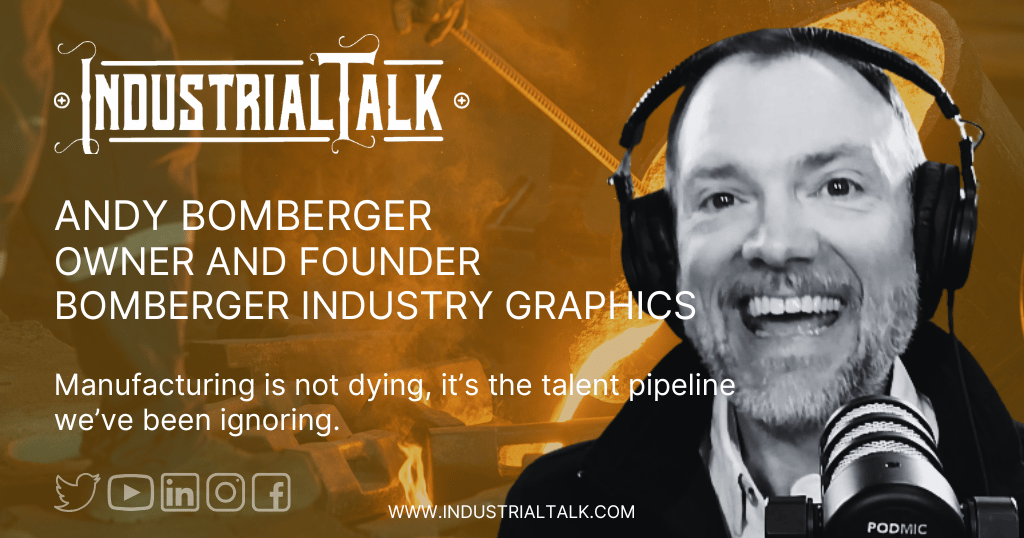
Industrial Talk is onsite at Penn State and talking to Andy Bomberger with Penn State University METAL Program about “Hands on manufacturing and foundry experience”.
If interested in being on the Industrial Talk show, simply contact us and let's have a quick conversation.
Finally, get your exclusive free access to the Industrial Academy and a series on “Why You Need To Podcast” for Greater Success in 2026. All links designed for keeping you current in this rapidly changing Industrial Market. Learn! Grow! Enjoy!
ANDY BOMBERGER'S CONTACT INFORMATION:
METAL Website: https://www.metalforamerica.org/
LinkedIn Profile: https://www.linkedin.com/in/andy-bomberger-87a38b62/
Company Website: https://behrend.psu.edu/
PODCAST VIDEO:
THE STRATEGIC REASON “WHY YOU NEED TO PODCAST”:
OTHER GREAT INDUSTRIAL RESOURCES:
NEOM: https://www.neom.com/en-us
Hexagon: https://hexagon.com/
Arduino: https://www.arduino.cc/
Fictiv: https://www.fictiv.com/
Hitachi Vantara: https://www.hitachivantara.com/en-us/home.html
Industrial Marketing Solutions: https://industrialtalk.com/industrial-marketing/
Industrial Academy: https://industrialtalk.com/industrial-academy/
Industrial Dojo: https://industrialtalk.com/industrial_dojo/
We the 15: https://www.wethe15.org/
YOUR INDUSTRIAL DIGITAL TOOLBOX:
LifterLMS: Get One Month Free for $1 – https://lifterlms.com/
Active Campaign: Active Campaign Link
Business Beatitude the Book
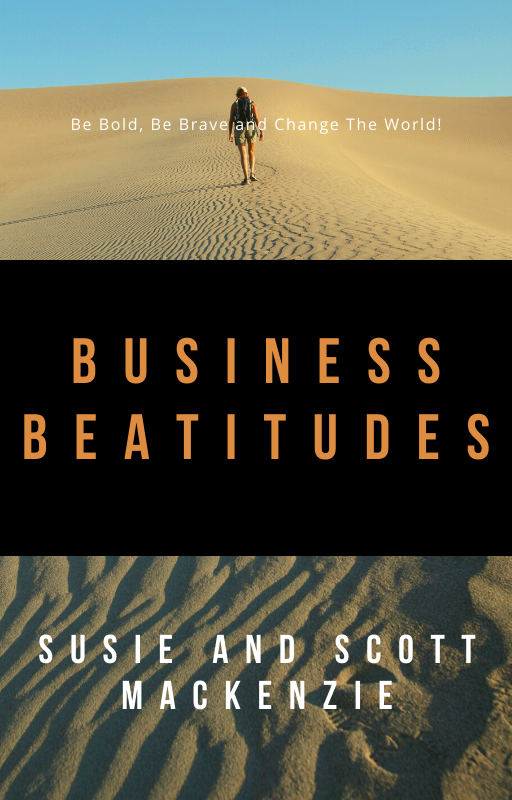
Do you desire a more joy-filled, deeply-enduring sense of accomplishment and success? Live your business the way you want to live with the BUSINESS BEATITUDES…The Bridge connecting sacrifice to success. YOU NEED THE BUSINESS BEATITUDES!
TAP INTO YOUR INDUSTRIAL SOUL, RESERVE YOUR COPY NOW! BE BOLD. BE BRAVE. DARE GREATLY AND CHANGE THE WORLD. GET THE BUSINESS BEATITUDES!
Reserve My Copy and My 25% Discount
Transcript
SUMMARY KEYWORDS
Industrial Talk, electrical maintenance, safety technologies, infrared inspection, ultrasonic inspection, Penn State, Metallurgical Engineering, apprenticeship program, foundry work, alloy development, cost calculation, manufacturing engineering, industry partners, career opportunities, Barcelona Cybersecurity Congress.
-:Welcome to the Industrial Talk Podcast with Scott Mackenzie. Scott is a passionate industry professional dedicated to transferring cutting-edge, industry-focused innovations and trends while highlighting the men and women who keep the world moving. So put on your hard hat, grab your work boots, and let's go! All
right, once again, welcome to Industrial Talk. Thank you very much once again for joining the number one industrial-related podcast in the universe that celebrates you, industry professionals all around the world. You're bold. You're brave. You dare greatly. You innovate. You collaborate. You're solving problems each and every day with a smile. That's why we celebrate you on Industrial Talk. We're broadcasting here, Erie, Pennsylvania. We're here with an organization called Metal. It's an acronym, and I have to look up at because I can't remember what the acronym. Metallurgical Engineering Trades Apprenticeship and Learning Metal is the organization, and and it's brought to you or it's through Penn State, and we're here, and if you're out on the the video, you can tell it's sort of industrial, which is pretty cool. In the hot seat, we have a gentleman by the name of Andrew. He goes by Andy, and I'll say Bomb Burger. Did I get that right, Andy?
You're perfect.
Let's get cracking with the conversation. I got to tell you, I am living the dream, Andy. I love being here. I do.
You're enjoying it.
What's you can?
It's projecting from your your aura here.
It's it's exciting. I mean, it's it's it's eye candy, quite frankly. As I walk up and down the halls, now I know we're here with metal, and I know that that there's a lot of you're just right across the way, and but there's there's automation. There's just I'm looking in the the windows. I'm going, oh look at that.
Yep,
yeah, that's a great program here.
It is, and it it integrates well with you know you got machining, you got robotics, you got injection molding. Yep.
How long how long have you been with this? See, see, I'm just, I'm just going right in. I don't care. How long you been doing this?
Well, so I, I received my undergrad degree from Penn State. So I've been working with campus, main campus, University Park. So I've, I've worked with the, the folks involved with the program here for many many years, and you know they they kind of brought me in early early in the development phases of the of the program
metal
the metal program right so you know I was helping to to write and develop the curriculum the the coursework and the the exercises and just kind of putting it all together. I, I don't know. It's been a couple years. Yeah, you've been working on that.
Yeah, I'm again. I'm I'm tickled pink because what we did, and this is just a part of it. What I'm always passionate about is this. There's one thing to be able to sort of do the coursework and do it. Sit down, get in the books, talk about it. You know, get on a whiteboard and and be able to to communicate that. But it's another thing to be able to bring that along with hands-on experience. And we just we went to a foundry. I got to tell you, come on, that was cool, right?
Yeah, yeah.
Seeing that molten liquid just sort of go into these forms and and and giving the students the opportunity to sort of well grab that ladle, baby.
Yep.
Says start pouring.
Yep. I mean it's a it's a hot and you know potentially hazardous thing that that we're doing there. But you know we make it in a safe environment. Our industry partners do a great job of making sure everybody's safe. You know and. Instructing you the the proper way to do things, and it it really is a an enjoyable experience for the students to go through, and and in most cases they're doing it for the first time.
It it well, I got to tell you, everybody was asking me for the video because I would video it because I was I was more intrigued by the fact that that we were actually doing that, and you mentioned the partners. These these industry partners are they they were passionate. They want to help and be a part of the solution that you bring to the table. Right. That metal brings to the table. Right. I I just I thought, man, I'm telling you, I was all geeking out on everything about that. Before we do get in more of this conversation, because I just went right into it, we need to know a little bit more about you, Andy. What is your background?
Okay, so as I mentioned before, I received my undergrad degree from from Penn State. And
what is that, Greg? It's
industrial and manufacturing engineering.
Yeah.
So I went. You know, Friday I graduated. Monday I went to work in a foundry. You did. Yep. So right, actually, yesterday, may 12, was the 29 year anniversary for me starting work in the foundry.
Shut up.
So
shut
up. Yeah. Yeah. So you know, kind of went right into it. Really, what attracted me was the the company I worked for was offering you know co-op internship
yeah
and and basically they said you know what you sign up for this we'll pay for your school yeah we pay for your books your room and board your tuition I'm like yeah I'm all in
yeah I can't find any negatives with that no
no it's like okay. Well, what? So what do I need to commit to? Well, yeah, we'd like you to work for two years for us. I was like, but
is there anything else? Any strings? You know? Yeah. Where's that other shoe to drop?
Right, and there was nothing.
No kidding.
So, but you know, 29 years later, it's you know, I'm still here,
and and it's in Erie. This business is no. This
this was I live just outside of Hershey, PA. Yeah, local local to me there.
Yeah.
So yeah, it's kind of enjoy doing the work. I mean, yeah, there's there's stressful moments and there's trying moments, but you know, you got to play with metal, ceramics, polymers, machining, casting. You know, it's just we got to do all kinds of different things. It was a job shop, so we we made parts for all types of industry, all types of products. You know, anything from from scissors to you know, nuclear reactor components to
no way
you know military and defense parts is just a whole you know whole why you
got to share with the listeners. Oh, is that sort of the unique part that you you're working there and somebody comes in and says, "Hey, Andy, look at this. We have this job. We have this opportunity. We're going to be making this widget, but this widget is so cool. Do you have one that just sort of stands out and says, "I'm not saying hey, you know, compromise any secret, but I mean something that is just like, yeah, this is what we
I've probably engineered over:See, this is interesting. You bring up an interesting point because here's metal. Metal is trying to truly inspire. It's only a week long boot camp. Okay, got it. But you guys do a lot in that week, and you're really trying to plant that seed that sort of encourages these professionals, these young leaders, new you know future leaders, to consider the world of metal and and metallurgy and foundry work. Anyway, the manufacturing side, but I think, and I and you you're more in the trenches than I am. I believe that companies, because you pointed this out, young individuals-they don't know what they don't know, but they'll try to solve the problem, and they might do it in such a way that is so unique because they're not-they're not bound by any parameter, saying you can't do that, you can't do that. And I think businesses are missing out on an opportunity to bring in young, young blood, young talent to be able to look at their business differently.
Yeah, yeah. I mean, you you get ingrained in in methods and you know institutional ways of doing things that you know maybe maybe set artificial boundaries, and not knowing any better, you can. Kind of plow through them and maybe find a better way of doing it, or a different way of doing it, or making it work.
What changes have you seen? Because if you've been in the business for let's say 30, I round up whatever 30 years, and I'm sure you've seen a lot of unique changes. What what what is sort of impacting the business today specifically about those changes in the world of foundry.
Well, I mean, it's it's been a constant adaptation. You know, when I when I first started, there was a tremendous amount of offshoring. You know, we were seeing a lot of our our kind of core business go overseas, and and there was some downtimes there that you know we're trying to what do we do next you know so we kind of found ways of you know plowing through that and and reinventing what you know what the foundry can do and what what that value to the customer is and you know we kind of made our way through that
because of the world of you're in. It's it's like it's endless, right? I mean, the the alloys and the the material, it's just endless, and they just keep coming up with new stuff. The foundry that you worked in had that capability of being able to be adaptable to the different alloys, or and and because I know that some we visit them, they're very they're very focused on, you know, doing what you know their core business is, and we're going to just do that and get rid of all this other stuff. How how do you create a foundry that's nimble and being able to sort of respond to market needs like that with alloys.
Yeah, so with with alloys, I mean, we it's kind of like baking a cake, you know. With if you have the right tools, you can take take all the different elements and combine them together, analyze it, and and develop you know basically any any alloy. We were primarily a steel foundry, so we weren't doing aluminum or titanium. You can kind of take whatever that requirement is. If again, if you have the right tools, you you can make whatever custom blend that the customer needs. So we had, honestly, I never counted them. 150, 200 alloys that that we we poured. Now a lot. Some of them were this very very similar, but they were all you know a little different too.
See, and this is an interesting. Somebody pointed us out yesterday, and I didn't think about it, but now I do. And it's it's it's that with these different alloys, with the the makeup of these alloys, you have to be able to segregate those alloys. You can't because they might look the same.
Oh, they all they all see they all look the same,
but their their their makeup, their composite, their recipe is different, and and you can't you can't mess up a batch because you're. It's just it. That to me, I didn't realize because you can't tell the difference.
Right. Yes. If a a little bit goes in the wrong hopper, it can have a pretty big effect on
yes
some problems.
Yes. So QC is absolutely a must. Yeah. There's no there's there's no other way of putting it,
right? Yeah, and that that's that's kind of segues into a good point that you know we we really tried to develop processes around things rather than just you know kind of the the black art notion of of the foundry,
right?
You know, there's there's a science behind it. There's the process behind it.
It's huge, huge size. Okay, let's shift gears here. Sure, you're here. You're at metal. Your class is just right across the street, right over there in my neighborhood. What what are you doing? What what what is that right there? What are you teaching those kids?
So today we're we're kind of starting to wrap some things up and tie the the concepts together, and what they're doing at the moment right now is calculating costs. So we you know we went through the process of making castings, you know using the the patterns and and pouring the parts and doing all that stuff. Now they're they're going to sit down and calculate. All right, well how does how much does this component actually cost to make, and and and wrapping their their heads around the the economy of of the casting process,
which is everything, and you you figure, and and this was also a a topic of conversation, was because you have the feedstock, you have you know I have to get you know this type of steel brought in, well that type of steel is subject to market forces, and that that price point is very fluid, very it fluctuates. But to be able to do that in such a way to be able to come. Up with a a a solid cost, you know, into that product. I I just I thought that was just I don't know how you do it.
Yeah, and that's I mean, there's the you can buy steel that's already kind of blended and and made and and ready to go, but you can also alloy it from components,
yeah,
and and that's the dynamic of it. That that all those you know major components there might be you know a half dozen, a dozen out you know alloying elements in in a batch of steel, and those those components are all they all they all have their market value and they're fluctuating.
No, I I don't know how you do it.
Yep. So it's it's you know it's it's tough for for for foundries to to stay on top of that, but it's it's also you know the other side of this, the buyer side of this, it can be frustrating there too. That you know it's this is a moving target.
Yeah, I I kudos. I I would imagine that there's technology out there that sort of helps facilitate the these cost projections and you know whatever it might be. I don't. I don't. I don't.
Yeah. I don't know. There's some forecasting and some prediction involved there, but it's still a it's you know constantly moving target.
So your students that you're but your role here at Metal, because we've got we've got the the the main you know whatever classroom that's down the floor right, and they're doing their thing, and then you have this sort of satellite classroom that I've seen.
Yep,
and that this is what what is that role specifically around costs, so
we're doing some some data collection in there. So they're they're measuring and and weighing castings and things like that. And it's just you know it's a kind of a quiet spot that we can talk and discuss and you know give them the opportunity in a small group to ask ask questions and discuss you know. Do
you do you find that these students just and again, I'm a big big fan of the the classroom. You got to do that. I mean, there's no other way of getting around it. But then that real life and seeing it in action, I I'm a big fan. It's hard to sometimes see the what am I doing? This that type of mindset, but you're you're bringing it together. Are you seeing that the students? You've been doing it for what two, three years, whatever. Are you getting some interest? Like, yeah. Oh yeah. I'm I'm really into this.
Yeah, yeah. There's you know at the end of at the end of our week here, most students are, you know, very interested in the in the industry. I don't I don't have statistics on on what that translates to you know in the real world then, but there's definitely a genuine interest generated by the the the week long activities here, and then you know I think it's it's more what what do the economics look like on the backside of this from you know am I going to go in this as a career or if there's something available there or this is my other opportunity to follow.
See, and what I what I was amazed at is this is not just a regional program. You've got students from all around coming here for this this week-long boot camp and being exposed to not just not just from a foundry, steel, you know, alloy, whatever that that point of view, but really the the principles behind manufacturing, because a lot of it overlaps. You know, I mean, there's there's so many different types of manufacturing out there, and and you you can see how the disciplines that exist here at this program and in the world of foundry work can translate into others. It's just it's an interesting. I digress. Here's I find, and and I that that the instructors like you that this program has brought in real individuals that have that gravitas. That just lends credibility right off the bat. Yeah, and there's nothing that you. I'm sure a student said, "Hey, Andy, what about this? And you didn't have an answer. I guarantee you had an answer.
ound. But yeah, I mean, in in:Salty dog, that's what you, an old salty dog. Yeah, you must have started when you were what 10. Yeah, yeah, yeah, yeah.
We'll go with that.
Yes, 10. Was your family involved?
No,
just you.
No.
Yeah. See, that was another thing that was really surprising. So we would go to the foundries that were here yesterday, and there there was a generational commitment to many of the employees, like yeah, grandpa. Well, he retired, and then there's the dad, and there's the son, and it was like three, you know, generations right, right there. Yeah,
yeah. It's it's interesting that you know, I I didn't have any you know family in the in the foundry industry before I went in, but I had the opportunity to bring my my son along to one of these boot camps here last summer. No
way!
And he's you know who knows where where he ends up here yet? But he's going into engineering, and he really liked the the boot camp and was really interested in it. So I'd say he's heading down that path, but don't know that that's where he ends up just yet. Oh, how old is he? He's 18.
Jeez, he's a pup.
Yeah, yep. So he's starting at Penn State in the fall. Get out of
here.
Yep. And I, you know, it's it's it's funny to me because I I I never intentionally I never took work home with me, you know. I don't. I had about a half hour drive, so it was enough time to
decompress.
You had to set to separate, and yeah, I never really talked much about what was going on or what we were doing. And you know, they, the kids don't really have much sense of what I did at work. But isn't that
something?
Kind of picked up on it, I guess.
I I was helped start a sugar refinery in Louisiana, right? And then I stuck around just because I I like it.
Yeah.
And anything about we're manufacturing sugar. What does that mean? It's a sweet deal. It's a sweet deal. And I would bring my kids, and of course it it got a little out of hand because oh you know I'm like look at this this is the most amazing thing and of course my kids are like that
sure
I'm not sure if this is the most amazing thing it might be neat sort of but anyway yeah no that that's interesting that you one last question before we wrap it up, what was the size of that foundry? And I'll digress a bit because I I was surprised at the foundries we went to, how much can be produced in such a small footprint?
Yeah, it was a it was a small foundry. Honestly, I off the top of my head, I couldn't tell you the tonnage or the you know the output is you know between it fluctuated between like 50 and 100 people,
yeah,
based on demand,
yeah. And and one last question. I'm sorry, I said last question the last time, but I know I I can. It's my show.
Yeah,
it. Where do you see it going? Where do you see this whole program going? Where do you see this sort of that future? Put that future hat on.
Well, yeah, I don't know. I didn't. I guess I haven't really thought too much about it. But you know, where where is the metal program going? I I think it can be the major attraction to to reach out into these, you know, maybe later high school years, early college years, to say, "Hey, we're out here. This is what you can do. These are the opportunities you could follow. This is this is what you might be working on, and and have interest in the industry.
Yeah, see, I like that. How do people get a hold of you? Let's say I I like what Andy's saying. How do I? What's the best way?
My email,
which we have, and and it's I don't understand why it's BI Graphics.
You want me to explain?
Yeah, I
do. Okay,
because I I can't. I'm going. Well, it's not his last name, and it's close to Big Graphics. It it
is. It's so Bomberger Industry Graphics is the company that I I I left the foundry business and started my own.
Shut up!
And so I'm doing casting design, consulting, 3D modeling, 3D printing, and that's the the name that I came up with for my business. And so Bomberger Industry Graphics, BIG was already taken, so I had to make it BI Graphics. Yeah, that's the way it is, right? Yeah, it is. Good things are taken. I hear
you. I hear you like yesterday's news. That's right. Well, you were absolutely stellar. I really enjoyed this conversation. Again, I'm I'm living the dream being here. I'm just being around this, talking shop, whatever that is, and and just learning myself. I just really thank you very much for being on Industrial Talk. You bet, my pleasure. All right, we're going to wrap it up. On the other side, we're going to have all the contact information for Andy out on Industrial Talk. So fear not reach out; he's a must connect. All right, stay tuned. We will be right back.
You're listening to the Industrial Talk Podcast Network.
All right, before we get into the conversation, I want you to be aware of a conference that you need to put on your calendar, and you have time. It is the Barcelona Cybersecurity Congress. It is necessary. You need to up your cybersecurity game. You're connected. You need to make sure that you're protected right here. This event, Barcelona Cybersecurity Congress. It is November 3 through the. You have time November 3 through the fifth this year in Barcelona and I'm telling you right now the team at Fara who put this particular Congress on the best you will not be disappointed and you know what else you get to do you get to networks with some of the best cybersecurity professionals from around the world. You need to do this. You need to put this one on your calendar. All of the contact, all of the information is out on Industrial Talk. I'm going to be there. I'm going to be broadcasting. I'm going to be talking cybersecurity with the best in the world. So be there. Put this one on your calendar. That is november 3 through the fifth. I'll see you there. All right, another great conversation coming to you from Industrial Talk on site. We were up in Penn State, Erie location, and of course you could tell if you were out on the video. You could tell it was it was all wrapped up in industry, manufacturing, the metal program. That was Andy Andy Bomberger. Yep, you know what he does. Well, if you listen to the podcast, you know what he does, but I'm just gonna. There's just so much to manufacturing, especially in the world of metallurgy, that CNC, you name it. It's it's all out there. There is so much opportunity that you, young person, need to look into. Reach out to Andy, and you're gonna find out more. Great guy, great program. Oh, I'm all geeky, as you can tell. I was really excited about being there. We were wandering around looking. They they have stuff going on there, all dedicated to you. All right, we're gonna have more. Definitely coming from that particular conversation. So be bold, be brave, Derek. Greatly hang out with Andy. Change the manufacturing world. We're going to have another great conversation shortly. So stay tuned.