Michal Ukropec with Twinzo
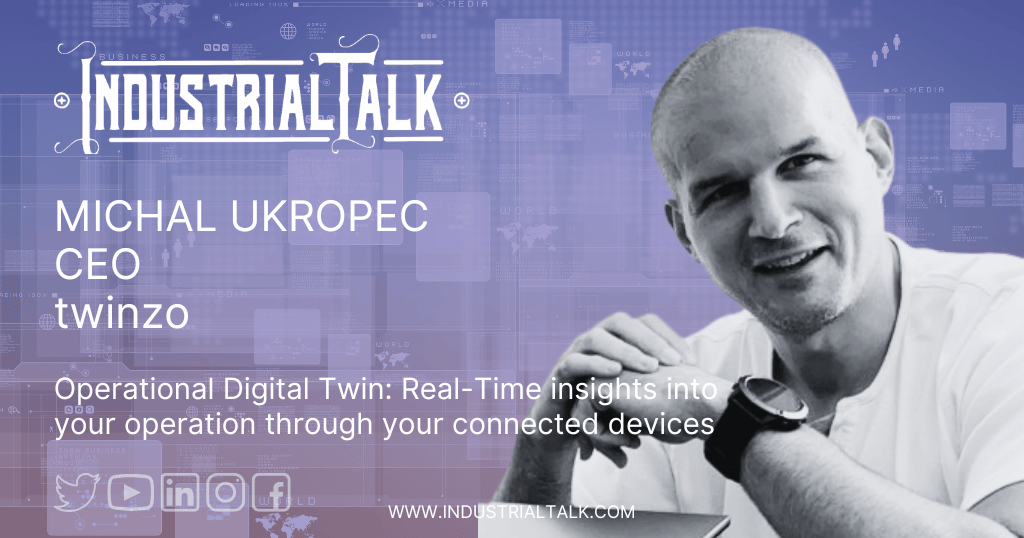
Industrial Talk is talking to Michal Ukropec, CEO at Twinzo about “Operational Digital Twin: Real-Time operational insights from all your connected devices”.
If interested in being on the Industrial Talk show, simply contact us and let's have a quick conversation.
Finally, get your exclusive free access to the Industrial Academy and a series on “Why You Need To Podcast” for Greater Success in 2026. All links designed for keeping you current in this rapidly changing Industrial Market. Learn! Grow! Enjoy!
MICHAL UKROPEC'S CONTACT INFORMATION:
Personal LinkedIn: https://www.linkedin.com/in/michalukropec/
Company LinkedIn: https://www.linkedin.com/company/twinzo/home/
Company Website: https://www.twinzo.com/
PODCAST VIDEO:
THE STRATEGIC REASON “WHY YOU NEED TO PODCAST”:
OTHER GREAT INDUSTRIAL RESOURCES:
NEOM: https://www.neom.com/en-us
Hexagon: https://hexagon.com/
Arduino: https://www.arduino.cc/
Fictiv: https://www.fictiv.com/
Hitachi Vantara: https://www.hitachivantara.com/en-us/home.html
Industrial Marketing Solutions: https://industrialtalk.com/industrial-marketing/
Industrial Academy: https://industrialtalk.com/industrial-academy/
Industrial Dojo: https://industrialtalk.com/industrial_dojo/
We the 15: https://www.wethe15.org/
YOUR INDUSTRIAL DIGITAL TOOLBOX:
LifterLMS: Get One Month Free for $1 – https://lifterlms.com/
Active Campaign: Active Campaign Link
Social Jukebox: https://www.socialjukebox.com/
Business Beatitude the Book

Do you desire a more joy-filled, deeply-enduring sense of accomplishment and success? Live your business the way you want to live with the BUSINESS BEATITUDES…The Bridge connecting sacrifice to success. YOU NEED THE BUSINESS BEATITUDES!
TAP INTO YOUR INDUSTRIAL SOUL, RESERVE YOUR COPY NOW! BE BOLD. BE BRAVE. DARE GREATLY AND CHANGE THE WORLD. GET THE BUSINESS BEATITUDES!
Reserve My Copy and My 25% Discount
Transcript
Michal Ukropec Audio Conversation
,:SUMMARY KEYWORDS
Digital twin, Logistics, Manufacturing, Automation, Digitization, Data, AI, Leadership, Workforce, Industry, Efficiency, Technology, Connectivity, Optimization, Tracking
SPEAKERS
Speaker 2, Speaker 1, Speaker 3, Speaker 4
through the fourth,:Welcome to the Industrial Talk podcast with Scott Mackenzie. Scott is a passionate industry professional dedicated to transferring cutting-edge, industry-focused innovations and trends while highlighting the men and women who keep the world moving. So put on your hard hat, grab your work boots, and let's go! All
right, once again, welcome to Industrial Talk. Thank you very much, as always, for joining this number one industry-related podcast in the universe that celebrates you, industry professionals all around the world. You are bold. You are brave. You dare greatly. You innovate. You collaborate. You're solving problems each and every day. You're making the world a better place. Take that to the bank. You are the heroes in this story. We have a conversation. It's a digital twin conversation. Twinzo is the company. The gentleman's name is Mikhail, and yeah, you can do it. Here's the technology that allows you to create those 3d images, digitally twin it, and keep current with it. It's right there, twin zero. It's all good. All right, let's get cracking with the conversation. Yeah. Did you know? You you know I interviewed the first person that well, the can't say inventor. It's a word. Came up with digital twin. Yeah, I interviewed him in Barcelona, and you know you know how he came up with that. He was just saying, "Hey, it's a digital representation of the physical world. Let's call it a digital twin, there it is, but anyway, that's that's how that rolled. It was a great conversation, and just like, just you'll just know that Mikhail has all that information. He's way above. He knows stuff. It's an amazing conversation. Before we get into it, I just want to make sure that you understand something here. You, if you look at your role in this world, because this is a global podcast. In this world, you have to succeed. In industry, has to succeed. You have to succeed. You have to figure that out. That's day in, day out, 24/7 for many. 24/7, 365. Got to figure that out, and and we want you to figure it out. Industrial talk is here for you. We believe we believe in our hearts that telling your story, communicating the coolness of what you do, is imperative to that success, and then be able to market it properly. I mean, there's a there's so many avenues that could be taken just from a conversation, just from talking, just from expressing your opinion, your insights, your wisdom. It's imperative, and and you need to you need to succeed. That's where I you know it breaks my heart when I hear. Companies that fall away, move along, don't succeed-it's tough. I don't like that. That's just me being a softy, but I want you to succeed. So Industrial Talk has this roadmap that we employ to many of our clients. One, we use podcasts, we use video, we use media to be able to tell their story. Yep, that's one. Two, we use those tools to be able to sort of highlight and create the relationships with their existing customers. That's a lot of fun. That makes sense, and those are great stories. Why do I use Acme? Well, Acme was great, and because of X, Y, Z. Yeah, it's a great story for you and for them. It's win-win. Here's another win. Number three, we always say, "Hey, there are customers. There are potential customers. There are individuals or companies that you're interested in having a conversation with. Yeah, you do. It happens. We use media. We use podcasting as a way of being able to open that door. So number three, you're able to have conversations with prospects and create the relationship to at least move forward with the possibility of getting them as a client. Yeah, that's what you do. Then number four, you you one you go to conferences. Yeah, every year it happens. I see it all the time. What conferences do we want to go to? Well, we want to go to this one and that one, and the reason we want to go to this one and that one is because well, there's great potential, there's great opportunity to come in contact, hand out my business card, and then you know create that relationship. You know what happens really in conferences? That all happens. You go to a conference. You hand out the cards. You have the conversation. The people go back to the salt mine, and then they just pretty much run out of time. It it happens all the time. Your your success rate is impacted by the fact that people have other things to do. They, I do.
I mean, we all do, and that's just the reality of it. It's all hopped up on goofballs when you're at the conference, and everybody's like, "Yeah, let's do it. Let's get together. But then when they go back to their businesses and companies and life, it just all of a sudden just falls apart. Here's what we do: we broadcast from these events. We would broadcast, and we do broadcast from these events. Here's the difference: one, again, through the power of communication, right? We have targets, prospects, set them down, have a conversation, create a relationship, and you know what they want. Yep, they told their story. They want the podcast. Do they go away? Nope, nope. They stick around. They stick around for their podcast. So, in the meantime, while the podcast is being edited and all that stuff, not on site. Can't do it on site. Got too much work to do, but after the fact, after the you know the excitement of going to the conference, there's still one of the highlights of their attendance is always sitting down and having a conversation on a podcast. It just is. So you need at a conference an ability to be able to tell and have those interviews from prospects. Here it is. It's this simple. Hey, Scott, what do you do? Oh, hey, thank you for asking. I'm I'm a host of Industrial Talk, the number one industrial related podcast in the universe. Hey, that's pretty neat. Tell us a little bit more about that. See, you're just asking questions about what they already know, and then they go back and say, "Hey, we were on a podcast company, and it was great, and we were telling the story, and we were getting the most out of the conference. Win all around. You have to rethink this. You're gonna have the conference. You got to rethink that. That's what we're here for. We want you to succeed. We want you to be able to tell not just your story but everybody else's story because it is cool. And then you create that relationship because you showed interest. See how that is? Yeah. call me. Go out to industrial talk. Yep, out to the industrial talk, and let's have a conversation. I do it for other companies. I can do it for you. We have. I'm sorry. We can do it for you. I have a team. I'm just so so. I'm always on the podcast. So there it is. Sorry. Anyway, we can do it for you. Let's go into the conversation right now, Mikhail Twinzo's the company. It's great. It's it's it's out there. You you got to check it out. You got to connect with Mikhail. All the contact information out on Industrial Talk. You will not be disappointed. Yep, he's he's got a lot of fire in the belly, and he wants you to succeed too, just like many within industry. All right, enjoy the conversation with Mikhail. Mikhail, hi, hey, how are you? Welcome to Industrial Talk. Thank you very much for joining the number one industrially related podcast in the universe that that celebrates people like you. How are you doing today?
Thank you, thank you. Running from meeting into meeting, and
I don't want to hear that whining. I'm whining on on industrial talk. No,
sorry, sorry, sorry, sorry.
Everybody, everybody's like, no, no, no. Hey, I'm glad. Where are you calling from? Where you? Where's the video coming?
Right now, I'm in Bratislava, Slovakia, Central Europe.
See, it's late at night. How are you running from things to? Why are you running from meeting to meeting, and it's it's at night?
I think it's it's it's not night. It's like 530 in the afternoon. So not. Oh, never
mind then. Yeah, yeah, we all work.
And why? I think the issue is that the German car manufacturing industry is in trouble, and they now are beginning to invest. So I think it's it's coming from the directions of okay, we have to save some money, and investment is a good way to save money. So I think this is why this happens. Actually,
that's interesting. So you think there's people are taking it seriously? There's ways of being able to be operationally more efficient.
I think Europe is when we talk about digitization quite quite behind, but that's not a big difference compared to the U.S. because the let's say on the very very very front is China, then nothing nothing nothing, and then more or less on the same level Europe and and the US, and this needs to be changed because otherwise the Chinese slash Asian competition in general, we just disappear us technologically from from the world, and we should avoid that. Yeah, no,
I I hear you. I I understand exactly what you're saying, and I think you know here at an industrial talk, we want everybody to succeed, and we want to be able to utilize the tools and the people that are necessary to make that happen. So, the bottom line is, we-it's better for everybody to succeed than maybe some dominating. It just is. I'm all about competition. I want, I want, I want competition.
It moves things forward. So, competition is good. But in this case, the the thing is that Europe for too long time relied on on the let's say machinery superiority.
Yeah,
they forgot at the the digitization at all, and Asia when they build everything from scratch, they begin actually with the digital mindset or digital first. And now, when someone has a brownfield and they, what should we do? Well, boy, where have you been the last 20 years? So,
and it's been around for 20 years. I mean, from the digitization, I mean, you got PLCs, you got DCS, you got all these other tools that are collecting data, but now it's it's it's even more advanced.
possible to capture the data:yeah, yeah, yeah, yeah.
But but make it 95, and the supply. Okay, no problem. I will cut out this this this and that connectivity, and here is 95. Voila. Here we go, and in the end, the customer is 10 years later. And why don't we have the data from the machine? Well, stupid, not you as a person, but you as a company, because there was no digitization strategy. Everyone just took care about the money. So now this is. But that's always
been the case there, Mikhail. That's always been the case. Procurement is always sort of setting that price strategy, which just comes down from on top, saying, "Hey, here's our budget. We can't do X, Y, Z. You know, this is it. Anything above that, that's not good. Anything below it is always better. So always go below it. You know, and I'll make decisions according according to that, and not seeing the the real benefits, the real ROI that comes from the the digitalization of of your your facility. Before we get into all of that, because oh, see see how I just sort of navigated. You need to give us a little background on who you are, and then we're going to talk a little bit about Twin Zo, and then we're going to talk about what that operational digital twin means. Okay.
Yes. So, who I am. This is a funny story, actually, because by education I'm an accountant. Okay.
I know. No, you should be able to speak the numbers then. Why it's important to be able to digitalize.
And when you have financial education and 25 years of experience in programming, so I by myself delivered hundreds of projects before vibe coding times, then I have an idea what the software should look like. And 12 years ago, we began to work on something what is now Twinzle, but but back in that time, it wasn't about digital twins because we didn't know that there is something, a thing called digital twin, but it was about indoor positioning. So we wanted to direct people within the buildings, and there are there are plenty of cases. You have hotels, you have shopping malls, airports. You know,
yeah,
endless use cases. But there is not a business case for for these situations. But in manufacturing, we found the case, and. logistics tracking, material tracking, tracking, and this kind of stuff brought us where we are right now, because what shaped our our our future. And give me a second. I will at least from from from here show you. I'll give
you two seconds. Just two, not a second. Just two seconds.
This American stuff, crazy. So this is the very, very first build of Twinzo. So the people who just listen, so you see a video capture from Android four four KitKat.
Yeah,
and this is the very very first build. How it looked like on a very very old and. now-an Android device. Yeah, hold it
before I forget. If you're not out on video, you're not seeing it. So that's just FYI. If you're listening to the podcast, well, he's showing something. So if you're on the video, you see it. If you're not, you're not seeing it. There you go.
This is a build which will be in two months, 12 years old, And yes, now it's not that much about people tracking, even though we have also these cases. But the companies mainly want to track the the logistics fleet, the material, how it how it moves between the supplier, then supply chain, then to the shop floor to define the workstation or the assembly line. So this is now a huge topic. Even though, and this is again funny, that the companies are coming to us because they saw Twinsov as a digital twin, and they say Michal, we have this data, that data. We have PLC, we have MES, WMS, and all these shortcuts of three characters, and they say Michael and we want to use it in a digital twin. Can you help us? Yes, we can. But Michal, we saw also the tracking stuff. Can you tell us a little bit more about that? And they pull it out. They immediately forget the the whole digital twin story. Michal, this is the low hanging foot. Let's start with logistics because that is the pain point.
See, you know, I don't think we get enough talk about logistics. I I agree with you 100% That's like that's like that black box out there. I don't have when when when I'm a company and I'm saying, hey, I got to get that widget. I got to get that thing. I got it comes from over here and it goes from over there and it. There's a lot of moving parts, specifically with logistics, and I don't think we have enough insights into that. I just don't. I think I think. Your solution from an operational perspective, let's say from a manufacturing process, yeah, all good. Device, device, device. Bring the data, simulate it over. I can do all of that, but that logistics outside the parameters of your wall, yeah, that's when it gets really kludgy. Yes, I did say klugi,
and and now imagine that there are plenty of companies, especially tier one suppliers or and logistics companies, doing the let's say some kind of added value work at their plant, so they they final, for example, the the cables or or or you know the millers and the doors and so the the tiny things they need to deliver to the OEM building the the final car, okay, so they do they they they build internally the thing then they put it on on their tracks they take it like five miles to the OEM they fleet. I mean, internal logistics takes it from those trucks and bring it, bring that the thing to the workstation and the final assembly line. So they have the whole process in their hands. And do you think that they have an idea where the material on the truck right now is? No, not one crew.
None. None. And here's a here's a mature industry that could just definitely just next level, right? Next level that that solution to be able to see where you're operationally be
just. for me, this is a ridiculous thing, because when I came from the IT stuff, because you know we we always work for the the usually they are they are called pain in the ass. Sorry, customers who who really push things forward, because I'm coming from custom software development, and they are always Michael. This is not good enough. This is not good enough, and make it better, better, better, better, better. And then, and I'm in huge companies, but with very pushy management. And then you get to these traditional things where where you there is a plan, there is the there is the forecast and these are the orders, and we have the lead time and everything is planned and prepared. Just it doesn't work 100% all the time, and between these two extremes, there is nothing, so so they rely on something that will work out. But in the end, it's not always. So
here here's here's my here's here's where I want to see it to go. I do. So I'm an operator. I'm an opera. I'm a manufacturer.
Yes, strike
that. I'm a manufacturer. I got things. I've got inputs, I got feedstock, I've got outputs, I've got you know finished goods, I've got inventory, I've got all of this this stuff to make to make my operations efficiency. I don't have beginning to end outside of the parameters. I don't have complete clarity. There's always some sort of risk, and and ideally, if if it's if it's solved by a a solution like Twinzo, where I can have complete visibility in my operations, all of the moving parts, and be able to see it, consume it, and to be able to make it easy, I'm all in because it's not happening out there. And I and and I want a return on that investment that makes sense. That my bottom line is in good shape.
Yes, there. Oh, yeah. This is this is another ridiculous thing we found out that let's say in Eastern Europe, if you cut one forklift in the fleet combined with with three guys driving the vehicle, you you can save like $80,000, euros, whatever currency in Central Europe. Okay. Usually we can help to cut like 20% of the fleet, things like that. The project usually costs like 100 to 200,000, whatever currency. They can have the ROI in like six months. It it depends how how bad it is. The worse, the faster is the R. Why? Okay, and they tell you, Michal, but we don't have the budget.
Yeah, we don't have the budget. Yeah, yeah, I guarantee you, we have no budget.
So I can sell you like 1 million because we have even these extremes, these extreme savings for 200,000, and you don't have those 200,000, but you have that 1 million. You need to burn because of no reason, right? Yes.
Yeah.
So you know the the mindset is sometimes really crazy, but okay, that's
I I I understand, and and if I had a nickel every time somebody says we don't have the budget, I mean it's ridiculous. It is, and and I understand, and I understand it's a competitive world out there. You need to have some discipline. You need to have that financial, and everybody's getting and these businesses are getting hammered with technology. Use this technology first. I can't find anybody. That's a problem. How do I resolve that to create this business that's resilient? And then I have the technology that's going at this blistering pace that I can't keep up with. And you know what happens? I do nothing
because I
can't. I can't process
it. Yes, and this is a fair point, but again there is a but, because this but it depends on who is going to say this. I am not, I am not going to do anything, because companies that invest into innovations constantly, they are actually on the track. They their strategy is not to okay now we are going to have this digitization strategy no no no they leave the strategy so all the time when something new comes they just test it in a small scale they invest 20,000 proof
of concept POCs they POC the heck out of it.
Yes, and this is just check, check, check, check. Yes, this works. No, this doesn't work. All the technology is cool, but the supplier is an idiot. Let let me maybe find someone else, and you know, so that they play with it, and then they can they can say, okay, this this is the proper solution for us, but if the company has zero strategy here or zero experience, the company or the plant manager walks around the plant with a paper notebook in his arms. When I see this, I'm like, okay, what are we going here to do here? Because you know, if the leadership is using paper, and there is nothing against the paper, okay, but it has to be digital first. Then we can discuss. Yeah,
I agree. How does how does a company like Twinzo help help me facilitate that? I understand. I got the platform. I I hear you. I read. I look at the internet, and the internet says I need to be able to collect more data. You know, here's here's a side note. I think there's going to be this AI bust.
Yes.
Yeah. There's this hype, all this capital going to AI, and it's all out of the necessity to try to figure out how to have that competitive advantage? I can't find people. I need something. You know, I understand it, but it's. I'm concerned it's going to be like a a bust. There,
VTAI. It's it's complicated. Oh, because on one side, there are very very clear cases where the the benefit is just crazy. No, absolutely, absolutely. There is no question, no doubt. However, it has to be used wisely, and the company should incorporate the implementation into the strategy in, let's say, smart way, because we need to think about it. Okay, is the AI or the LLMs better said? Because there are many types of AI, but LLMs are they deterministic? Not that much. Now, is this a problem? Well, it depends on the quality of the data, the model you use, and things like that. So again, as with all the other new technologies, the company has to evaluate: Does it work? Does it work? Not. Should we go a little bit more to the right, to the left? You know, they need to play with it and and give it a chance. However, the what the companies are usually doing is from one extreme to the other, so nothing or 100% for gas, and then many projects fail because they have no experience. The people are new in the in in the field. The field itself is. It is new. They may be used it in the wrong way. So, because you know, when when when you everywhere see a nail, then then what you have in the hand is the hammer, and or we say if you have the hammer, everything is a nail. But the AI is not the hammer for for everything. For many, no,
I think it's a tool. I think it's a tool that can help you be more efficient. I get that. I got all that. Here's the other problem I have with AI. This is a problem with any technology. Quite frankly, it's a problem. It could be a challenge for Twinzo. I need to find people that I trust. It's always a human equation. I got the technology. The technology, it always gets down to Cal. I I want to trust you. You you have that's it. I'm I'm I'm committing to the implementation of the technology, and that's where AI begins to unravel. How many people do you trust out there?
Yes, because you can't kick the AI to the butt, but a guy you can. Yeah, I mean not literally, but you can call me Mikhail. You messed it up. How are you going to solve this issue? But you can't call OpenAI or Gemini, Google or everything else, guys, it's not working. Right, as I expect. So, so this is a thing. However, if the data is prepared properly, so I I I make let's say the preparation right, the the results can be can be better, but it it needs some homework.
But again, it gets down to that human equation: people not pencil whipping data. That data has to stay pure. It has to be strong. It has to be clean. It has to be accurate, right? And and many of the systems that I use today, you get a lot of it's just bad data. If I had a nickel every time somebody says, "Hey, Scott, let's do, let's clean this data, you know how many people clean data. It takes about a week before they say, "I can't clean data anymore. I can't do it. It's too bad. So there's always. It's just that human part. Yeah, you nail that data down. You get that AI going. Yeah, you're good to go. I'm getting insights. Look at me, I'm more efficient.
g like that from IBM whatever:see, this is interesting because you you go to that take that as an example. You try to get that company off of that system, hell will break loose. Absolute hell will break loose. And where do you even start? Like where? Yuck, yuck! That that's an awful implementation. And yet, and yet, that company wants to have a a successful bright. wonderful, efficient operational future. There has to be that consideration for technology.
Maybe, maybe in the in the yearly statements or something, but not not not not really, because we saw too many times that the particular plant in this case is just a cash cow. Okay, so they don't care about anything. They have some profitable project or product or something, and they just pull the money out of the company, and they don't care about the future at all. So everything everything starts with the leadership of. Of the company, and of course you have all the levels. So the CEO, let's say the VPs, then the plant managers, and you know, it's a good performing plant, bad performing. Are they finishing the production of some project, or are they just getting a new one? You know, there are plenty of things you you need to consider.
I, I, you know, it's always leadership, right? This is what's always interesting about the the term leadership. If you have everybody rowing in the same direction, they're like, "Yeah, we get the picture. We we understand the purpose, and we're rowing in the same direction. It's being driven down by that that you know omnipotent CEO, and then that omnipotent CEO then gets another offer, and that omnipotent CEO goes to that other company. Now, now there's changes in that leadership, and whatever that implement, it's an amazing. We've been having this conversation forever, forever
about. leadership? Okay, it's a little bit maybe off topic, but I found this again funny when when I listen to the leadership fairy tales. I call it I call it this way from from Simon Sinek and and and other leaders from from from this side, they are always saying things like you have to support your people, you know, so they are engaged, the ownership, and la la la la la. Yeah
yeah yeah yeah yeah.
But at the same time, they say okay and take here the the the Navy SEALs Team Six and how they are performing and how they are building the high performance teams, la la la. Okay, nice, but are the Navy SEALs Team Six guys nice guys? Yeah. Okay, yeah. I don't think so that much.
No,
and when you when you when you read like with older books, one my favorite, the Citadel from the Exupery, the French writer who wrote the Little Prince? The leadership is not about high performance in good times. It's how to lead the team, whatever size or company, in bad times. And when the things really suck, then you see the the level of the leadership. So and when when when when the the leader survives the bad times, when the when the wave is going up, ha! It's the easiest job ever. But usually, what you see when the ship begins to sink, then too many great leaders suddenly, you know, leave the ship like rats, and and that's it. But maybe just because of the highest leadership is poor. I don't know. Okay, so this is this is the
reality. The reality is, is that I need a blending of technology as well as people, and I need I need good leadership to be able to truly transform this business. To be able to collect the data in a way that makes sense. To be able to have that tactical information. To be able to make good decisions, and to be able to take that information and strategically think forward. That's all a again a human component, but it has to. It it just doesn't. You, I've seen it over and over again. That some organizations just take a portion of that. All right, we're going to stick devices out on these pieces of equipment, but then it just falls apart. That's when think of f1. Think of f1. That car has all the data being pulled, and they're making decisions right now, real time, fast, accurate, clean. That's
that's because that's the effect of high competition.
Yes,
yes, and what I didn't finish actually about the leadership is firing people.
Yeah. Oh yeah.
This is this is a let's say a sad thing because no one likes firing people. Okay. No one.
I I've had to let people go, and I hated it. I hated it with a passion.
It's it's it's it's it's the problem, okay. But when you look at the let's say so-called 10x guys, so 10x guy is a guy who outperforms everyone by at least 10x. So you have. One who just does all the job and all the his all his peers are just what what what what what is happening and in in in in between the things this thing is already done and they didn't touch it. This is what you see in in high performing technological teams. So they fire the people who don't perform. Okay.
Yeah, that's a Mackenzie model, not not me, Mackenzie. The consulting company called Mackenzie, which spells their name Inc. completely wrong, but that's exactly correct. They they're always letting the the bottom go and the determination of what the bottom is. You know, whatever.
Of course, in their case, it it may vary, but when we talk about the let's say innovation and adoption of new technologies, when the people just don't do the thing, then just let them go, because if you will continue to have them on board, they will just ruin everything, and it changes the culture of the company significantly. When when the high performance or high performing people see the bad people going, it increases it increases their engagement because they don't need to fight with these people. Because usually, what happens? I need to have this. I shit. I have to again wait for this guy. You know what? I rather do it by myself, so I don't need to wait for this for two weeks because in two days I have it. And when you know this, okay, then maybe you should. We should let this guy go because maybe we can find someone else. Yeah,
I, I, I, I don't like that. I don't like it at all. And the reason I don't like it, it just creates poison. It's a cancer in the culture, and it just creates. I don't care your high performers down to your your low performers. I think as a leader, as a leader, I would like to try to raise everybody's capabilities up and do that effectively, and and and focus in on a a supportive and and a great culture. That is because you start you start going down that road, jeez.
And but but when we talk about leadership, no one mentions firing people because this is the unpleasant part of the of the job.
Oh yeah.
But in the end, the company in the end, the company is lean, sharp, Fast,
yeah,
highly engaged people, zero fluctuation. The people I saw it from the first row. The people can work for free, okay? Because when they see the vision and they see, okay, the leader is ahead of us, and he doesn't care about anything. His personal interest, nothing, and he just goes, goes, goes like crazy. Then they follow. They don't care about the money anymore. But with with another guy, money is the first thing they think about. So this is very, very unexpected observation I made multiple times in the past that okay for for free you can get even more than for a lot of money, but it needs or requires the the proper leadership.
Yeah, you know we didn't talk much about Twinzo. Sorry, how does Twin? As we wrap up, how does Twinzo help with my my pain point. Why is that such a great platform?
ame everything, I can produce:Yeah, see, I like that. I agree with you 100% And you know how you get to that? You need to get data. You need to collect that data. You need to put it in a situation where then you succeed in that data, and that data
is
is good data, clean data.
I like that
data. And then it's gold.
Sorry, when you have the game baroque in the morning on the shop floor, you suddenly don't have you know the the the the the paper boards, and you draw every day you know new one centimeter line up and down, according to yesterday's results. But you have a digital big TV. You click on the on the forklift. Look, he is driving like that usually, but yesterday he did something else. Why? And you can ask him why. What have you done in in this part of the plant? And and and you can you can see invisible things till now, and imagine what people work differently when the brother is looking.
Well, and and and the situation is just taken in that same scenario where you would never see that individual and the behavior of that that asset running around whatever, and you're able to compress that time and be able to make decisions quicker and be able to do it more effectively, and and then therefore bottom line value for your operations there.
So this is the definitely best case, but then of course the customers continue. Okay, we want to see the energy consumption and we want to see, aha, the machine is turned on. Wait, we have no order for the machine. Please shut it down and and similar stuff. So there are many cases, but definitely logistics optimization and microstop.
Love it
from the money perspective, the best thing.
Yeah. See, I I think you're absolutely spot on with that logistics. I think that's just like this, this black box of just possible confusion and nobody nobody wants to look into it. Everybody's all. I agree with that 100. Mikal, how do people get a hold of you? What is your best way of being able to say, Hey, I like what he's saying. I want to know more about. I trust this guy, and I want to. I want to have him part of my team. How do people get a hold of you?
So we have two main channels. So TwinZow.com is the first option, or you can drop me a message on LinkedIn. Yes, this is actually my strongest awesome lead generation source, to be honest. Yeah.
So I agree on that one. Yeah, it's easy to it's easy to give your contact information on LinkedIn. I just
e. Ah, Big Brother, you know,:Yeah,
because then they have data and they can show also the management. See, these three guys are overhand. Yeah, do something with that, guys.
Yeah, see, yeah, get over it. It's you. You want to succeed, so you need to get over that. It's just a part of operational evolution and being more efficient. Blah blah blah blah blah. You are absolutely incredible. I like that.
Thank you, goodness.
Operational Digital Twin. The company is Twinzo. T W I N C O. As you can see, if you are out on the video, there it is. There's the name. We're going to have all the contact information for this gent out on Industrial Talk, so fear not reach out to him. You know, it's all about trust. Find the individuals that you want to bring along on your journey and trust them. You'll succeed. We need you to succeed. All right, we're going to wrap it up on the other side. Stay tuned. We will be right back.
You're listening to the Industrial Talk Podcast Network.
u can find anybody. I've done:tuned.