Raul Guillen with TrendAI
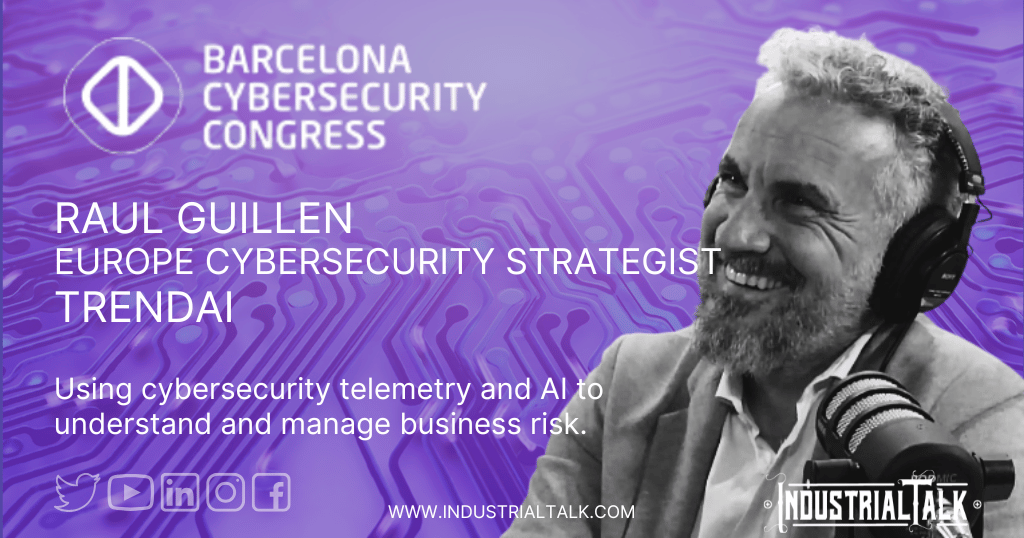
Industrial Talk is onsite at Barcelona Cybersecurity Congress and talking to Raul Guillen, Europe Cybersecurity Strategist at TrendAI about “Business Risk”.
If interested in being on the Industrial Talk show, simply contact us and let's have a quick conversation.
Finally, get your exclusive free access to the Industrial Academy and a series on “Why You Need To Podcast” for Greater Success in 2026. All links designed for keeping you current in this rapidly changing Industrial Market. Learn! Grow! Enjoy!
RAUL GUILLEN'S CONTACT INFORMATION:
Personal LinkedIn: https://www.linkedin.com/in/raulguillen/
Company LinkedIn: https://www.linkedin.com/company/trendai-security/
Company Website: https://www.trendmicro.com/en_us/business.html
PODCAST VIDEO:
THE STRATEGIC REASON “WHY YOU NEED TO PODCAST”:
OTHER GREAT INDUSTRIAL RESOURCES:
Industrial Marketing Solutions: https://industrialtalk.com/industrial-marketing/
Industrial Academy: https://industrialtalk.com/industrial-academy/
Industrial Dojo: https://industrialtalk.com/industrial_dojo/
Business Beatitude the Book
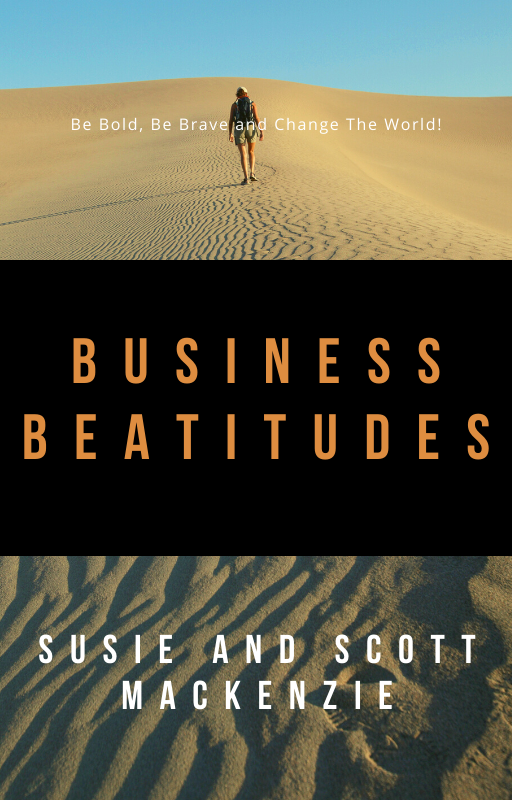
Do you desire a more joy-filled, deeply-enduring sense of accomplishment and success? Live your business the way you want to live with the BUSINESS BEATITUDES…The Bridge connecting sacrifice to success. YOU NEED THE BUSINESS BEATITUDES!
TAP INTO YOUR INDUSTRIAL SOUL, RESERVE YOUR COPY NOW! BE BOLD. BE BRAVE. DARE GREATLY AND CHANGE THE WORLD. GET THE BUSINESS BEATITUDES!
Reserve My Copy and My 25% Discount
Transcript
SUMMARY KEYWORDS
Cybersecurity, AI, TrendAI, Risk management, Trend Micro, Platform solution, Business security, Telemetry data, Data lake, Proactive defense, Vulnerability assessment, Secure AI, Govern AI, Industrial convergence, Digital transformation
Welcome to the Industrial Talk podcast with Scott Mackenzie. Scott is a passionate industry professional dedicated to transferring cutting-edge, industry-focused innovations and trends while highlighting the men and women who keep the world moving. So put on your hard hat, grab your work boots and let's go! All right,
once again, welcome to Industrial Talk. Thank you very much for joining the number one Numero Uno. I'm saying that in Spanish. Everybody knows what that is. Industrial-related podcast in the universe that celebrates you, industry professionals all around the world. I say it once. I say it a million times. You're brave. You dare greatly. You innovate, you collaborate, you're solving problems, and quite frankly, making the world a better place. We thank you. You are the heroes in this story. Without you, industrial talk wouldn't be here, and I wouldn't be talking, and and that's all a problem. We're on the floor. This is the Barcelona Cybersecurity Congress. We're right here. People walking around. People looking at me. Don't know who he is, but again, he's a fan. I can tell you right now, and and it's happening here, and we're we're talking cyber security. That's what we're talking about. And you're saying to yourself, Scott, I don't want to talk cyber security. You better have a conversation around cyber security because it's happening, and we have a gentleman in the house, in the hot seat, Raul Guillen. Did I say Guillen right?
Social. How do
you say it?
Raul Guiden.
Dj.
Oh my God! But then it's also so far so good. Not so bad. Not so bad.
Trend micro. Let's get cracking with the conversation. Yeah, there you go. You're in the house. I've been looking forward to this conversation. I met him. I had to run on over to his. He was on my calendar, and he's always concerned about his language or whatever accent or Spanish. And of course, he's talking better than I do with English. So I don't understand it. I'm having a hard time putting it together there,
Raoul. Yes.
He has a podcast. What's the name of the podcast?
Conservas Guillen. You know, Conservas is like a food can. Yeah, the food can. There it is, right there.
And of course, he doesn't have a sticker for me, but I gave him a sticker of mine.
Yeah.
We're gonna have a backlink to his podcast. Learn Spanish. You will not be disappointed.
Next time you should try to do in Spanish.
You know, I was trying to learn Spanish.
Nice, easy for me. It's hard. It's
hard for me. Yeah. If it was a, if I was a kid and I was just sort of doing it from, teach as a kid. That's what you do. When you grow older, it's like, damn,
it's hard. We are painting right.
Yeah. There you go. We need to know a little bit about you. No, hold on. Let me back up. You having a good conference?
Yeah, sure.
Why do they call it Congress and not conference?
No, what I do this one.
No, this is like no. This is a Congress.
Oh yeah, this is sound. Yeah, it's the ambient. This is real. This is not for AI. This is real.
Yeah. So, give us a little background. Why you're such an incredible professional?
Oh, you know, I started almost 30 years. 30 years. Yeah,
Commodore 64.
I know the school like you. I started at the beginning like working in an end user, like cyber security. No cyber security because 30 years ago caching security doesn't exist.
No.
So I started working as infrastructure and system director in a multinational Spanish company worldwide. After that, more the second 10 years I worked in a partner and trying to start in a technical director, sales already go GTN go to market and and I started in this point trying to be more closer from the cybersecurity, and the last nine years, I started working in Trend Micro. Now we move, we change the name TrendAI. Yeah, so nine years in TrendAI, and now running as a European or Euro cybersecurity strategy. So I have to
write all this down because I just say I've got Trend Micro, but now you're TrendAI. Now
is the artist previously known like like Trend Micro, now it's TrendAI.
Yeah, you know I was going. Oh my gosh, there's going to be a test. I don't want to take a test. It's a TrendAI.
TrendAI right now.
For clarification, TrendAI is still Trend Micro.
Trend Micro is a holding, and TrendAI is the is the new branding because our focus for sure in this in this in this time is securing and protecting and utilizing AI. So that's why we move from Trend Micro now to TrendAI. It's just a question on. It's not it's not only a rebranding. It's also a declaration of intention.
How long you been with the Trend Micro TrendAI? Nine
nine years
nine years okay why the change what what what is the strategic reason behind TrendAI outside of the obvious AI
it's very clear and it's very solid because okay trend trend micro. Started 37, 32 years ago, long, long time. We are starting with with the microcomputing, microprofessor, or the silicon-related. That's what micro have said. Right now, we are not in that era anymore. We are in the AI era. Like why we move from trend micro to train AI? Because right now we are in the AI era. We need to to use the AI to protect the AI. That's why we change the branding. And for me, it's very solid. It's very, it's very intelligent. It's very smart. It's clever. It
makes sense. I I I remember long ago talking Trend Micro. Yeah. And when they were really sort of starting up, weren't they, weren't they out of Idaho?
No, we are. We are. We are. We are raised in the U.S. We are raised in Texas, in Texas, yeah, Austin and and Dallas. But also, you know, we are a Japanese company. We are we are we are we are based in the Nikkei stock as public company. Yeah, there you go. Yeah, and also we have a research center in in Vancouver, in Canada, in Ireland. We are research center around the world, so we are more Japanese than others.
Take us through what TrendAI. What okay, so we're Trend. We're Chen Micro now. You're TrendAI. What are you focused on? What's that solution? What are you helping me with?
We are focused in business, helping business for being more secure. Not only one product. We are a platform company because we are we are approaching in protecting the different sector and the different vector we have in the company: email servers, cloud identities, IT. But also, our main focus is trying to consolidate all this telemetry for being protected, but also elevating and transforming in risk management, in business in business risk management. It's something we call CRI Cyber Ridge Index. So we are reducing all those telemetry we have in the different sector and vector we are protecting for trying to provide a high-level business perspective risk management. So we are trying to transformate cybersecurity in business security, and that's why I think our focus right now is all related the big man with the board in the advisor as an advisor trying to secure and to transformate cybersecurity technology delivers in business risk, and how we can manage that with our platform, and you know we can protect anything, and we are part of our story. But right now we are in another dimension. That's why we are we are changing our our approaching in a platform solution based, and also trying to put all related in business risk risk management, and for sure it's that for me that again.
So here's what I understand you saying. Let's say I'm a board member.
Yeah.
I'm I'm I'm an executive.
Yeah.
And I I need to have clarity, clarity in my business from a risk perspective. You're saying, hey, we have the solution. We have that visibility. We're looking into our into the organization, and and we're we're drawing conclusions of risk, and then being able to present that in a way that makes sense.
Exactly, we can first all to identify where where the risks are, so we can translate technical stuff in business in business topics. We can quantify. Okay, this is your risk. How if you stop your production? If you have a severe incident, how you can monetize that? For example, what is your level of of of maturing with the compliant with the with the risk risk risk perspectives? But also, what are your maybe in your contextualization? You you can have vulnerabilities. The vulnerability can be translating risk. What is your context? What is your visibility? Because in your in your global ecosystem, you will have different solution: cloud, on-prem, email, different vector, different different architecture. So we can try to translate how the risks are impacting in your continuity, in your business, in your, and also is you know the risk is is it's not something static, it's something that is moving every day. Also, we are helping the the board, the secretary, the C-level for understanding how the risk is the evolution of the risk, how is this is changing? Thank you. That's why.
Yeah, he's bringing tears to my
head.
Thank you.
That's why. That's why. I think we are we are trying to to elevate, and we are trying to position it train AI as a strategic vendor in the in the ecosystem of the. See,
I like that. Do you do it just consistent? You know, you got if you have this layer, this whatever, this AI layer, being able to drill down into my business from a strategic perspective, is it? It happens all the time. So is is it like a? I hate to say it. I hate to say it, but I'm going to say it. Is it a dashboard? Green is good, yellow hey, red bad.
You are in the way because, for example, we are when we are defining the KPA, the CREA is an is a numeric number. 100 is horrible, 0% is perfect. We can we can also translate how the risk are are changes in the companies for sure. Not green and red, but just with with this kind of number. For sure, you are more close on zero. You are perfect, but you know the risk is is is is moving because you know we have new vulnerabilities every day. Two week ago we remember PSP. Last week note that yes, yesterday we have new and new vulnerabilities. So the frontier AI are changing the rules, and the frontier AI are introducing new threats, a new in the in the in the business infrastructure of the company. So we need to analyze that, and we need to also show in a dynamic dashboard how the the risks are changing, how the risk because maybe you are you are doing good things or bad things, but we need tools for trying to show the world how we are investing our money, how we are investing our our time, how our improving our budget, and that also is a very useful tool because we can translate business outcomes with our technology using the cyber security platform. So that's the key business outcome. We need to try to think in this strategic level.
So this this layer, this TrendAI. I have an existing technology stack. Exactly. I've got my ERP. I've got my asset. I've got what I've got. I've got it all.
You have your asset, you have your user, you have your mailboxes, you have all those telemetry that we are using in Vision One is our platform, and here we can translate that in business outcomes. That's why I think it's a good point because we can go to the board. Hey, executive guys, we are here for help you for trying to be more proactive, also in your business success.
Do you do you dig down into operational?
Yes.
No way.
Yeah, because you're just giving
me you're giving me all this sort of real time telemetry of the general risk profile or health of my business to a certain extent.
Exactly, exactly. Huh? And also talking about being more proactive, we can we are also helping the company for trying to be focused. Don't follow in the the incident. We need to be proactive. We need to change the the mindset because right now we are moving from a reactive cybersecurity way to to being proactive. Being proactive, you need for sure this kind of of a board, the kind of platform for trying to do it.
But you need to have the ability to be able to sort of be proactive. But that proactivity is that even a word? I don't know what it is now. Proactivity. I need to have data. I need to have that data. I need to apply that data to an algorithm of some sort that gives me some level of probability of saying, yeah, this is beginning to cause a problem, or it it's going to cause a problem, and this that whole going component that I can jump on it before it becomes a problem. Is that what we're saying?
Yeah, we have the telemetry. Yeah, the telemetry is translated in a data lake. All those information we have in our environment, and for sure we are using our capabilities powered by by AI in order to identify, for example, data path prediction, and to identify how how that could be expanding in your environment. So for sure we have the data lake, the telemetry with all the connection we have in our platform. Thank
you for saying it, Data Lake. Thank you. A
new concept.
Yeah, no. Nobody's saying. And it makes sense. I get it. How quickly can you? I mean, let's just let's just say I'm in a manufacturer. Okay, I'm a manufacturer. Okay. And I come to you and I'm saying, hey, it would be easier if I'm already using a, and I'm just jumping ahead. I could be wrong, and you can. It would be easier if I'm a Trend Micro customer. I've already been using the products. It's protecting my network. Everything's there. But now we come in with TrendAI. How? How quick? can we deploy? How quickly can I begin seeing information?
For sure, it's not a simple question to answer because when we are talking about complex environment, we need to incorporate all the different telemetry from the network, for example, from the server, from the cloud, from the OT environment. So, for sure, it's not a silver bullet answer because we can. It's not. It's depend case by case. But for sure, for me, the point here is it's very simple to explore with the operation. Our dashboard is very simple. From different in different layer, and also this is for me this is like a single point of rush. With this telemetry and with our dashboard, the different roles in the corporation, in the in the organization, which see the information they need. For example, the financial officer need to try to to translate business risk into money. The operation guys need to be focused how to be respond in an incident. Be more proactive in the way they are responding when something wrongs is happening. But you are the higher level or the or the or the or the technology guy, the CTO needs to try to map the cyber security into the strategy, in the business plan, in the strategy plan, the director plan. So, with our platform, we can provide different views from different stakeholders. That's also very useful. Yeah,
because I see in the future a conference room with white with a whiteboard, and the whiteboard is determining what are the let's say the financial drivers or the operational drivers, and having those individuals in a room saying, "Yeah, that's important. That's not important," and to be able to zoom in on the data that needs to be analyzed. When we analyze the data, Raul, what's that? What's that AI layer? What is it?
It's involved. It's involved in a lot of places in our platform because we are using AI for trying to translate it. I don't know, maybe. And we have the telemetry. With AI, we can we can identify maybe the the attack pack in your environment. So okay, we have all the understanding of of the global and the complex environment, and we will have our customer to say, hey guys, take care because with with all those vulnerabilities in your environment, maybe this this could be the possible attack pack that could be exploitable in your environment. That's why, for me, one of the key points here right now in with frontiers, it's important to try to reduce your vulnerabilities, but it's more important to contextualize to have the context. Because for me, the question is not so far how much vulnerability do you have. For me, the question is: Which of those or these vulnerabilities are exploitable in my environment? For me, that's very useful because we are helping our customer for being focused in what really matter. Because every company is different, so we don't have. It
can be a what I say, a tsunami of data. Yeah, and it's like, okay, here's data. What, what? Bring context to it. Bring it down to a point where I can sort of consume it, and it me, it's relevant to me. Will there be? And I would imagine that the answer is yes. I'm, I, you know, we talk about AI, and AI is always just going to be. It's who knows. I think we're just scratching the surface. Quite frankly, we're just sort of right there at the beginning. In the top of edge. Yeah, it's like where is it going to go? Because we have creative people like you and others who are just really pushing the envelope. The I think the from a cybersecurity perspective, I think you have to have AI to guard against AI,
I think I really like what I really love. There is international standard for trying to explain cybersecurity and AI together. It's the blueprint from the Sans Institute. The blueprint from the Sans Institute thrives in three dimensions. The first one is utilize AI. What is that? How we, the cyber security vendor, utilize the AI for trying to be more proactive, for trying to be more or more clear to reducing the the noise, for trying to to identify the the the empty points. The second dimension is secure AI. Okay, we are seeing a lot of companies, organization. They are a lot of AI. There's
this intellectual property going out there. It's like, oh jeez, exactly
AI everywhere. So okay, we need to to include cybersecurity by design. We need to also help the company for protecting the AI. I'm not talking only about protecting LLM. I'm talking about protecting agents, LLM application, whatever the second dimension, okay? Remember, utilize and protect AI. And the third one is govern AI. We need to help our organization how to govern, how to control the access, how to have the global visibility. Because it's not only about to access to a LLM. It's also what are you doing with your LLM? What are you sharing with your LLM? What are you prompting?
And you know, as a company, I think that it's it's a non-negotiable. You're going to have to figure out how to use an AI. It just it's it's a tool because companies are going to figure out how to secure it, how to be able to leverage that that that tool, and then we'll gain that you know advantage that comp. Advantage, and until you figure that out, and that for me is a protection perspective. You need to protect it so that you can use it effectively. That's just how I see it.
And for sure, also there's a point here. We are not. We cannot be the doctor now, because you know the fear stop the conversation. We need to help the organization for trying to include or to adapt or to use AI, but ensuring that in a secure way. So we we need to be close from the business, from the technology officer, in order to okay guys use AI, but doing in a secure way.
His name is Raul. He's amazing. He you could tell he's got this the old podcast chops. You could tell he he stays close to that mic, baby, and he understands, and he's he's used to hearing his voice. Remember that when when you first had to do it and you heard your voice? I didn't like it.
I really liked it. It was
it was a. How do people get a hold of you, my friend? How do people, if they want to get a hold of Raul at TrendAI LinkedIn? I
don't know. Good question. No,
you need to get you need to see LinkedIn. That's how people want to get a hold of
you. The first and the and the quick way is try to share me in LinkedIn, Raul R A U L dot U N G U A L L E N LinkedIn. So it's the most.
Here's the reality. I'm going to have all the contact information for you out on Industrial Talk. So fear not. It's going to. I grab the URL and then I paste it.
But first, but you know what? I will say in a post today together with our picture we we we take at the beginning of the podcast. I will tag you from two. I will tatt you. Yes.
There it is. Done. Done and done. All right. Once again, we're going to have all the contact information for Raul out on Industrial Talk. Fear not. You need this gent in your corner. You need this individual to be a part of your team. You need this cybersecurity AI sherpa on your telling you what to do because you you gotta you gotta succeed. We want you to succeed. All right. Again, we're gonna wrap it up on the other side. As always, stay tuned. We will be right back.
You're listening to the Industrial Talk Podcast Network.
How about that for a conversation? That's Raul Yin. Yeah, TrendAI Company. As you're out there on the video, you see the Bayer Salona Cybersecurity Congress. It was a marvelous, without a doubt, a marvelous event. And as always, you need to put that one on your calendar. Here's the reason why. It's going to be next year. Okay, around November of next year. It's all out there. I'm going to have all the links and contacts and everything. Now is the time. Now is the time to plan. And here's the reason why. And I'm gonna have to hammer on it. As we, as industry, continues to converge, we're always connected. Our assets are connected. We're doing everything with AI. We have all these wonderful things that help us become more efficient and optimize our business. That, to me, is also a conversation around cybersecurity. You need to protect that asset. You need to protect your business, and you need to talk to individuals. It's happening fast. It's fast. Talk to those individuals that are keeping up with what is taking place within the market, and you'll be okay. You'll be successful. We want you to be successful. You don't do that. I don't want to be in your shoes because things are happening really quick. And many of the conversations that I had at the Barcelona Cybersecurity Congress just evolved around that whole conversation about how do we protect ourselves? What are the solutions? Why? Why is it important? Please, please do that. Have these conversations. And and and here's the other thing. And I'll just sort of add one: they're not in the business of restricting you from doing what you do, they're in the business of protecting and being able to facilitate and and enable you to do more and be protected. It's a it's it's happening now. Those days are gone. Everything's everything's converging. Industrial talk. I say it again. Is here for you. You need to tell your story. Yeah. See. Again, you can't shy away. They need to know whoever the market needs to know who you are. Tell your story. Go out to industrialtalk.com. All right. Reach out to Raoul. That's your to go. And you will not be disappointed. Be bold. Be. Brave, dare greatly, hang out with the role, and you will be changing the world. We're going to have another great conversation from BCC shortly. So, as always, stay tuned.