Diego Paranhos with Augury
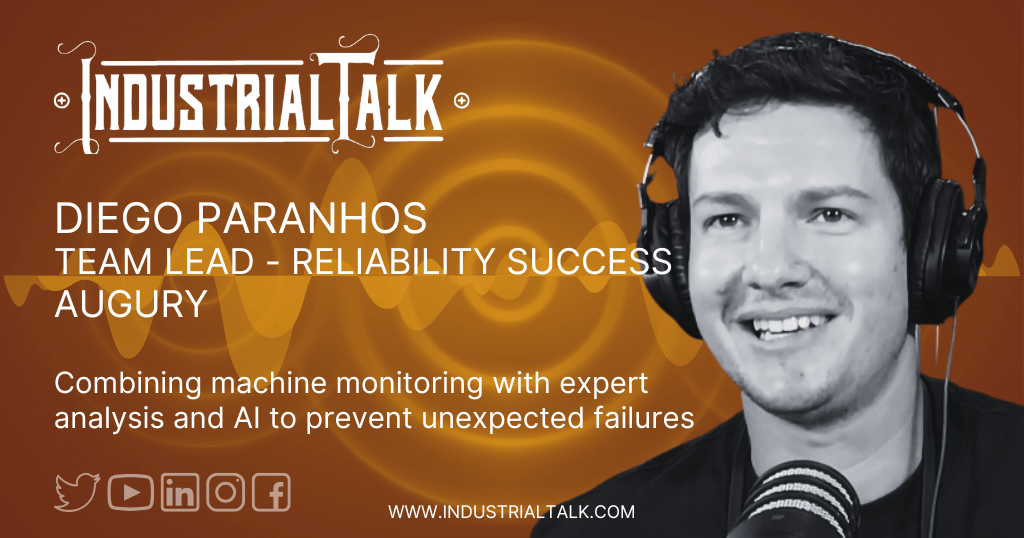
Industrial Talk is onsite at SMRP 2026 and talking to Diego Paranhos, Team Lead – Reliability Success at Augury about “Preventing unexpected failures”.
If interested in being on the Industrial Talk show, simply contact us and let's have a quick conversation.
Finally, get your exclusive free access to the Industrial Academy and a series on “Why You Need To Podcast” for Greater Success in 2025. All links designed for keeping you current in this rapidly changing Industrial Market. Learn! Grow! Enjoy!
DIEGO PARANHOS' CONTACT INFORMATION:
Personal LinkedIn: https://www.linkedin.com/in/dsparanhos/
Company LinkedIn: https://www.linkedin.com/company/augury-systems/posts/?feedView=all
Company Website: https://www.augury.com/
PODCAST VIDEO:
THE STRATEGIC REASON “WHY YOU NEED TO PODCAST”:
OTHER GREAT INDUSTRIAL RESOURCES:
Industrial Marketing Solutions: https://industrialtalk.com/industrial-marketing/
Industrial Academy: https://industrialtalk.com/industrial-academy/
Industrial Dojo: https://industrialtalk.com/industrial_dojo/
Business Beatitude the Book
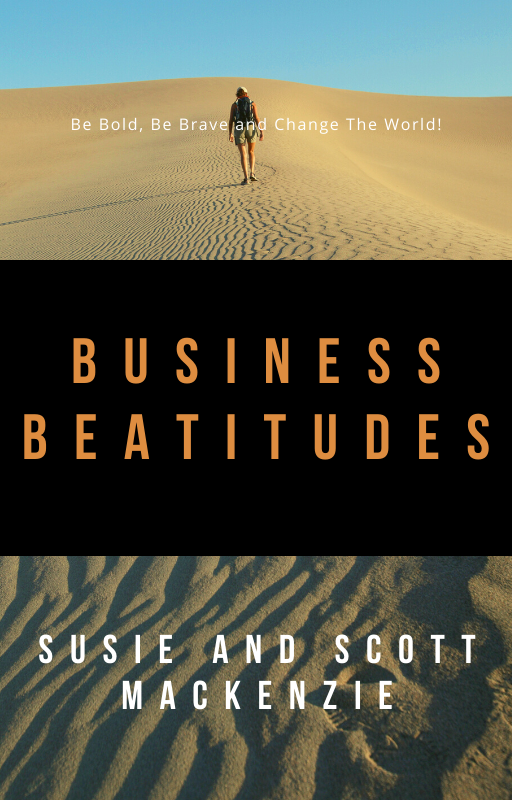
Do you desire a more joy-filled, deeply-enduring sense of accomplishment and success? Live your business the way you want to live with the BUSINESS BEATITUDES…The Bridge connecting sacrifice to success. YOU NEED THE BUSINESS BEATITUDES!
TAP INTO YOUR INDUSTRIAL SOUL, RESERVE YOUR COPY NOW! BE BOLD. BE BRAVE. DARE GREATLY AND CHANGE THE WORLD. GET THE BUSINESS BEATITUDES!
Reserve My Copy and My 25% Discount
Transcript
SUMMARY KEYWORDS
Reliability, Augury, AI agents, Asset management, Vibration analysis, Maintenance, Predictive maintenance, Data integration, Sensor technology, Root cause, Industrial automation, CMMS integration, Machine health, Reliability engineering, Operational viability
Welcome to the Industrial Talk podcast with Scott MacKenzie. Scott is a passionate industry professional dedicated to transferring cutting-edge, industry-focused innovations and trends while highlighting the men and women who keep the world moving. So, put on your hard hat, grab your work boots and let's go. All
right, once again, welcome to Industrial Talk. Thank you very much for your support and and and being part of this ever-expanding industrial family that celebrates industry professionals all around the world. You are bold. You are brave. You dare greatly. You innovate. You collaborate. You're solving problems each and every day. You're making the world a better place. That's why we celebrate you on Industrial Talk. That's why you are the heroes in this story. We're broadcasting from the 34th annual SMRP conference. We're on the floor right now, and it is a place of incredible. I mean, incredible professionals that are all focused on your success. You need to be a part of SMRP. Go out to SMRP.org, find out more, connect. They're good people too. You will not be disappointed. In the hot seat, arguing, which is always fun to have. Diego, I'm not going to say your last name because I scribble it, but he's going to be talking to us about all all things arguing and what he does. So let's get cracking. Yeah, all right, Diego. You having a good conference?
Having a great conference.
How many times you been here?
This is actually my first time.
Shut up.
Yeah.
What do you call home?
Houston, Texas.
Oh, okay. Yeah,
glad to be here. It's much cooler than Houston.
Oh
yeah, yeah. It's been.
I live in Louisiana, and I'm always mowing the lawn in December. I'm tired of that.
I just started to install some turf in the backyard. Couldn't cut grass anymore. Was tired,
and we
just celebrated not being 90 degrees out. Yeah,
it is. It's you're governed by the fact that you go, "Hey, what is this? What's the temperature going to be like? And you're looking at it, going, "Okay, it's 75. That's not so bad. Get out!" Oh, it's going to 93.
Oh, yeah. This week is 88, and we're celebrating fall, so it's kind of sad.
from? What you're all of what:39?
Life's good to you.
Yeah, I guess so. Yeah, it started. I was born in Brazil, actually. Oh, very good. Speak Portuguese and Spanish. Moved to the U.S. when I was 10 years old, graduated from Drexel University as a chemical engineer.
Yeah, started
working right after college. Literally graduated on a Friday. Started work on a Monday. Down in Houston for FlowServe. Do mechanical seals, pumps, and valves.
When did you come on board with Argury?
About five years ago.
Yeah.
Yeah.
Jeez, why?
I really liked working from home, and I had two to three friends who were ex coworkers at FlowServe that worked at Argury. So we talked a little bit. They eventually convinced me to apply, and then I'm here.
Did it? It's not disappointing, is it? No. Why? Super happy. Okay, so let's get into arguing. What do you do for them? What's your your role? We'll start there and then go forward.
Yeah, I'm a reliability lead. I lead three reliability success managers, so they're essentially reliability engineers that talk to customers, lead their journey through reliability and maintenance. So we talk to customers all over the world, and I have some of those customers as well.
We need to level set with Argury. What what what problem is Arguri solving as a company? Just you know,
ultimately, what we want to do is prevent any unexpected failures. That's the how we install Arguri sensors utilizing AI, collecting data, vibration, temperature, magnetic flux, and we have a team of vibration analysts that look at these vibration trends, vibration spectrums, time waveforms, and things like that, and alert the users at the plant that hey, this machine's going towards a failure mode. Let's make a plan together to prevent that. What is
that secret sauce? You're you're you're you're doing more than just vibration. Are you doing more than I mean? Yeah. What what is it? We
are recently. I'll say somewhat recently. We've implemented this what we call the. Industrially out workforce. So what we're doing is we start with the sensor, right, and that's just not where we stop. We have the the human behind that whole technology, where we look through the vibration data with vibration analyst, human with vibration analyst.
Yeah, which is a must.
Yep, and then what we do also supply is what we call an operational viability agent. So with that, you can actually we can actually ingest not just our data, but a lot of other data that the plant is collecting. Because today in today's world, there's a lot of data, and what do you do with
it? Yeah, it's it's overwhelming.
It's overwhelming. So these agents, these AI agents, will collect all these, all these data points, historical work orders, even things like notes from different people that may have retired long ago. Put it all together so that either the maintenance technician or the operator can make the best informed decision based off that those those data points. The
your platform it's somewhat agnostic. Oh well, I'm sure it is. It's it's agnostic to the technology stack of an existing organization. Like I've got my CMMS, I've got my you know ERP, I've got whatever. Yeah,
we have our own platform.
Yeah,
that we pull in all this information, the data that we're collecting, plus any other sensor data, and we also have these agents embedded into the platform, and we also can integrate with any CMS system. So everything is kind of connected, so that the person who's using it can make that best decision, and that those agents are essentially sort of like a ChatGPT,
yeah,
where they ask it questions: What do I do now? What's your recommendation? Things like that, and based off all that data that has been collecting and and has collected, it can make the best recommendation.
So the the platform is interesting. So, if I was a technician, maintenance tech, maintenance manager, whatever it might be, I can access that information via whatever interface you have with with Arguy, and get that information and run it sort of plain text, whatever question I might have. Okay, Is it a bidirectional sort of data flow between that CMMS and into Augury and vice versa? I know it goes one way, but so one
of the big things that we, my job and my team's job is one of them is the collaboration between us and the plant, right? Yeah, because if we just alert and they're not doing anything, yeah, there's there's no use, right? It doesn't work. So, the big collaboration is important, and then with the bidirectional communication between the CMS and Augury system, it's seamless. It improves that collaboration. Any repair that's completed, any work order that's completed, bidirectionally comes back to our platform, so we can review that data and make sure that the machine is is better now than it was before. Well,
it makes sense just because you want to be able to say, "Hey, here, here, I've got my platform. I'm pulling the data. I'm looking at the health of that asset. I'm just whatever it is, and I put it into the data meat grinder, and the meat grinder smart and pulls out, 'Hey, we're going into a failure situation with this particular asset. Ideally, here's arguing. Yep, yep. It's all validated. I've got a you know another human eye on it. Ideally, would go into the CMMS and say, okay, I got to create a work order. I got to I got to do stuff. I've got to. It's a bearing or whatever it might be. That would be ideal.
Yep, and the integration actually you can create the work order directly from our platform, right? So really, it's all there. It's all integrated.
So that's different, because normally the and then your your work order that is created as a result of the results of what what's taking place in that, or the data, you can create it there, and then just feed it back to their CMMS.
Yep.
That's a that's that's different. Yeah. Yeah. That that. Why do I need a CMMS?
That's a good question.
You guys deserve to quasi CMMS now all of a sudden?
Yeah, you need you need that that foundation on that side though, right? Because CMS is used more than just to communicate between. Yeah, it
has documents. Yeah, whatever. It has all that history that exists there. That that yeah, you still need a bank. Yeah, yeah. I I was being tug in cheek just because, really, that's ideal. Now, in in what's taking place, what what are you focused on? Now you've been focused. I'm sure AI got it. Yeah. What what gets you excited, Diego? What what are we talking about?
Personally, what gets me excited and. I tell my kids this: is I get to help. Hold it, hold it. Let me get back
up. Don't gloss over that. I'm sure your kids really appreciate you talking about what gets you excited at arguing. Yeah,
I'm I'm all over the world talking to customers, helping them out, preventing failures from happening all over the world. So my kids come home and they're like, "Where have you been today, Dad?" And I was like, "Ah, it was Mexico, Brazil, Italy, Spain, Alabama, California, New York. It's pretty cool.
Do you bring them along? Come on, you bring them along.
Kids?
Yeah.
On vacation, yeah. On work trips,
no. No. Sorry to hear that. I I took my kids on work trips. I didn't care. Like, hey, you're coming with me, baby. Whether you like it or not, get pony up. How many kids you have?
Two.
And boy, girl, girl, boy,
boy and girl, boy, girl is nine, and boy is about to turn seven.
That's cool. I'm a new grandfather. Congratulations. Oh yeah, it's. I forgot how fun it is with kids. Yeah, this is my life stops. Like I don't care. It looks like it's burning down. Oh no! But I'm with my granddaughter. Thumbs up. Good luck over there. Yeah, I I I I believe all of this, specifically in the world of asset management or what you guys do, it requires that collaboration. It requires that constant working with clients to be able to come up with. In the world of of what we're talking about, it never stops. It never stops changing. It it always evolves, which is just and that comes through the conversations you have with these these individuals, these these companies, as seeing what they're looking at in in that with that, what what are customers, your customers, what are they concerned about?
Honestly, they they just want to get through a shift without being surprised. I think
that's pretty
interesting. That's a big thing. Is they want to go home and they want they want to be assured that things aren't going to fail during the night, during the weekend. That they're with their families, right? They're not going to get pulled in on 9o'clock at night on a Friday, right? On a weekend, on a holiday, on a vacation. It
always fascinates me because they still do that. Companies still do that, and and and I think we're at a point, Diego, that it doesn't have to be that way. You don't have to live that way.
No,
you know, I I just think we're we're there. The
peace of mind. Listen,
make it happen. How if if I came to arguing and I said yeah I don't want any more of this problems at getting called out because it always breaks down at 9 a.m. on a Friday or 9 p.m. on a Friday
yeah
yeah it always I don't want that anymore how do you approach me what do I how do we how do we
deploy? I think we need to understand that that process is a journey. You don't just go from you know acting on machines that break all the time to having something like augury. You need to organize yourselves, have a team that believes in something like that, have the support from that team all the way up the chain, right? Not from not just from your president, but also the technicians on the floor. You need to believe in it because if they don't believe in it, they're not going to use it, and by not using, it's not going to change, right? And it's a cultural change too.
Yeah, I coughed and I forgot to put that button. So here's the deal. I believe that you still, even in those environments, they still have the importance of of being able to know how to effectively maintain those assets. You know, it's one thing to say, "Hey, that asset's got a problem." Here's the data, and it's saying, "Here it is, but you're going to have to correct that. And and in that, to your point about culture, if I'm not if I don't have the technicians to do that right, I'm just going to constantly be chasing after that problem. So there's that fundamental component of saying, okay, I'm going to make sure that I align the shaft and I do all of the stuff that is necessary. We have argued that is saying, "Hey, you got this challenge, but you still have to repair that, and it never stops.
It never stops too. And also, you want to correct the root cause.
Yes, not
just what's happening, right? If a bearing goes out every year,
why?
Why?
Yeah,
bad bearing. Maybe not. Maybe it's a foundational issue. Maybe it's an alarming issue. Exactly. Right. And with vibration, you can see that.
Will you, in that that platform, make that recommendations? It seems like there's a lot of problems with this bearing or this pulley or this what. What's happening? Will you say, "Hey, we're seeing this more and more. What's going on?"
Yeah, I think with data and looking at vibration, it's one part of the puzzle. But you also want to bring in the historical aspect of that. Yeah. Right.
Yeah.
Like, let's say in the data, you see that there's a bearing fault. Okay, great, bearing fault. You know, look at the bearing, change the bearing. Once you change the bearing, yeah, maybe it did improve, but there's still signs of that root cause in there. If it's a misalignment or a foundational issue, right? And that's when you start asking the questions like, "Hey, how often does this bearing break?" Yeah, we have historical data here, but you've been out in that plant for 15 years. What has been, what changed? When did it start? Right, so that you can get that context, that whole full story. So you can get that full pie to be like, okay, let's go further and deeper into this analysis. As a
team member of Augury, and it's an amazing organization. I got that, and you're already deploying AI. What what else do you see that you're saying? Hey, we're going to have a release of fill in the blank, or what are you doing?
I think the agentic AI over releasing today. Oh, not today, but recently.
Yeah,
the operational and reliability agent, where it really helps out those in those positions as an operator or a technician to really have an assistant next to them to really talk to as a chat bot, pulling all that information in right to make the ultimate decision, ultimate best decision.
For me, it's freaking exciting.
Yeah,
it's game changer. I've been in the world of asset management for so many years, and I've seen the good, bad, and the ugly. Mostly the bad and the ugly. Sometimes maybe good, but now I see more good than bad and ugly because it's just still opportunities, but it's still a fertile ground too. I mean, there's still companies that just aren't. They have so much opportunity to be better, and they just I don't know. I don't know.
It's exciting.
It's exciting. How do people get a hold of you, Diego?
LinkedIn.
LinkedIn. There it is. We'll make it happen, Captain. All right, he's Diego. You want more people like him on your team, so reach out to him. All the contact information for Diego will be out on Industrial Talk, so fear not. You'll be able to connect and have a conversation. Argue's fun. They're a great company. Great from top to bottom. They're always, always there, ready to help you succeed. We're once again broadcasting from the 34th annual SMRP conference here in Raleigh, North Carolina. Yep, yep. It has great people like Diego and others. So you need to put this one on your calendar. It's in in Indianapolis, I believe, next year, but I don't have a date. So yeah, we're gonna have to get update that. All right, we're gonna wrap it up on the other side. Stay tuned. We will be right back.
You're listening to the Industrial Talk Podcast Network.
it for nine years. We've had: