George Williams with ReliabilityX
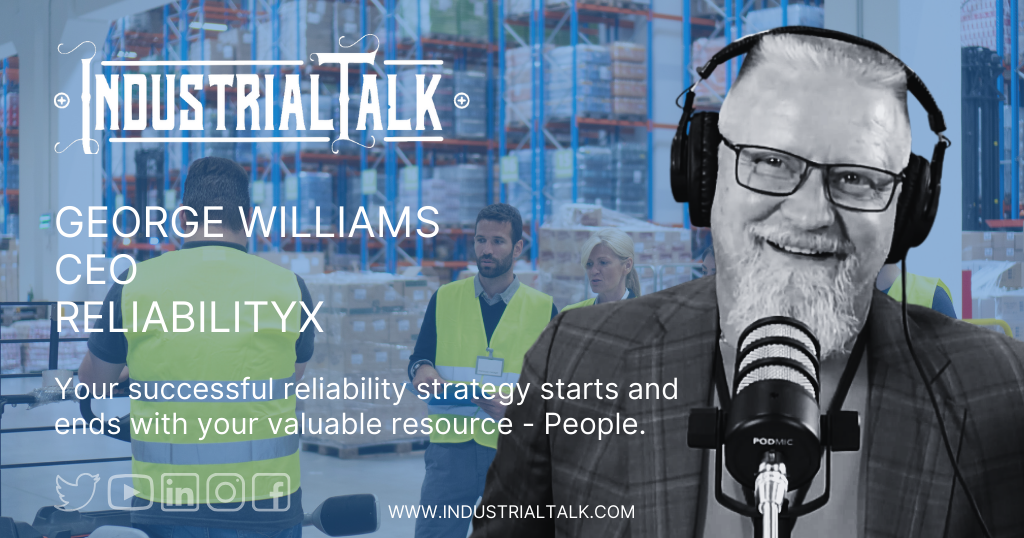
Industrial Talk is onsite at SMRP 2025 and talking to George Williams, CEO at ReliabilityX about “Successful Reliability begins with people”.
Scott Mackenzie announced upcoming events where Industrial Talk will broadcast, including Power Gen January 20-22 and MD&M West February 3-5. He introduced George Williams, who discussed his career progression from a painter to a global asset manager and co-founder of ReliabilityX. George emphasized the importance of growing “doers” through education, training, and mentoring to improve plant performance and reliability. He highlighted the need for practical applications of technology, such as using vibration sensors to prevent product giveaway. George also stressed the importance of collaboration, innovation, and adapting to the changing workforce to ensure sustainability and relevance in the industry.
Action Items
- [ ] Broadcast Industrial Talk on site at PowerGen (January 20–22) and host conversations at booth 349 during the event
- [ ] Broadcast Industrial Talk on site at MD&M West (February 3–5) in Anaheim and engage attendees on the show floor
- [ ] Publish George Williams / ReliabilityX contact information and link on the Industrial Talk website and include it with the episode content
- [ ] Build and maintain the members-only area on the ReliabilityX website with a growing library of Kahoot quizzes (pneumatics, hydraulics, power transmission, etc.) for team training and engagement
Outline
Upcoming Events and Broadcasts
- Scott announces upcoming events where Industrial Talk will be broadcasting on-site, including Power Gen January 20-22 at booth 349 and MD&M West February 3-5 in Anaheim, California.
- Emphasizes the importance of attending these events for manufacturing professionals and encourages listeners to look him up for specific discussions.
- Scott welcomes listeners to the Industrial Talk podcast, celebrating industry professionals and their contributions to making the world a better place.
Introduction of George Williams and ReliabilityX
- Scott introduces George Williams, a key figure at ReliabilityX, and praises the organization for its commitment to storytelling and roundtable discussions.
- George Williams shares his background, starting as a painter in a large pharmaceutical plant and eventually becoming responsible for global asset management.
- Discusses his transition to a $17 billion medical device company and eventually starting his own business with his partner, Joe.
- Highlights the passion of George and Joe for seeing people grow and succeed in their careers.
Core Business of ReliabilityX
- George explains that ReliabilityX's core business is the growth of doers, focusing on educating, training, coaching, and mentoring individuals to improve plant performance and reliability.
- Emphasizes the importance of understanding and focusing on the growth of individuals rather than just the technical aspects of reliability.
- Discusses the need for executive support to scale business and the importance of simplifying reliability for broader understanding and application.
- Outlines the three key principles of reliability: stopping being the source of problems, doing the right preventive maintenance, and managing degradation.
Challenges and Solutions in Reliability
- Scott and George discuss the challenges of maintaining focus in a rapidly changing market and the importance of practical applications of technology.
- George shares examples of practical applications, such as using vibration sensors to prevent product giveaway and automating processes to improve efficiency.
- Emphasizes the need for companies to focus on the relevance of technology to their business and to avoid being distracted by shiny objects.
- Highlights the importance of a people-centric approach to reliability and the challenges of getting executives to support reliability initiatives.
Building a Community of Reliability Professionals
- George discusses the importance of building a community of reliability professionals and the role of ReliabilityX in providing resources and support.
- Mentions the creation of a members-only area on their website, including a Kahoot platform for team building and knowledge checks.
- Emphasizes the need for collaboration within the community to raise awareness of reliability and to share best practices.
- Highlights the importance of innovation in solving reliability problems and the role of ReliabilityX in providing practical solutions.
Addressing the Aging Workforce and Inspiring Young Professionals
- Scott and George discuss the challenge of inspiring young professionals to enter the reliability field and the impact of an aging workforce.
- George shares insights on the generational differences and the need to adapt communication and engagement strategies to reach younger professionals.
- Emphasizes the importance of storytelling and creating a sense of belonging for young professionals to feel part of the reliability community.
- Highlights the role of ReliabilityX in growing 10,000 doers and the importance of a people-centric approach to reliability.
Final Thoughts and Contact Information
- George shares his contact information and encourages listeners to reach out to ReliabilityX for support and resources.
- Scott wraps up the podcast, emphasizing the importance of collaboration, innovation, and education in the reliability field.
- Encourages listeners to attend the SMRP conference and to reach out to Industrial Talk for further support and amplification of their voices.
- Concludes with a call to action for listeners to be bold, brave, and innovative in their reliability efforts.
If interested in being on the Industrial Talk show, simply contact us and let's have a quick conversation.
Finally, get your exclusive free access to the Industrial Academy and a series on “Why You Need To Podcast” for Greater Success in 2026. All links designed for keeping you current in this rapidly changing Industrial Market. Learn! Grow! Enjoy!
GEORGE WILLIAMS' CONTACT INFORMATION:
Personal LinkedIn: https://www.linkedin.com/in/georgewilliamscmrp/
Company LinkedIn: https://www.linkedin.com/company/reliabilityx/posts/?feedView=all
Company Website: https://reliabilityx.com/
PODCAST VIDEO:
THE STRATEGIC REASON “WHY YOU NEED TO PODCAST”:
OTHER GREAT INDUSTRIAL RESOURCES:
NEOM: https://www.neom.com/en-us
Hexagon: https://hexagon.com/
Arduino: https://www.arduino.cc/
Fictiv: https://www.fictiv.com/
Hitachi Vantara: https://www.hitachivantara.com/en-us/home.html
Industrial Marketing Solutions: https://industrialtalk.com/industrial-marketing/
Industrial Academy: https://industrialtalk.com/industrial-academy/
Industrial Dojo: https://industrialtalk.com/industrial_dojo/
We the 15: https://www.wethe15.org/
YOUR INDUSTRIAL DIGITAL TOOLBOX:
LifterLMS: Get One Month Free for $1 – https://lifterlms.com/
Active Campaign: Active Campaign Link
Social Jukebox: https://www.socialjukebox.com/
Industrial Academy (One Month Free Access And One Free License For Future Industrial Leader):

Business Beatitude the Book
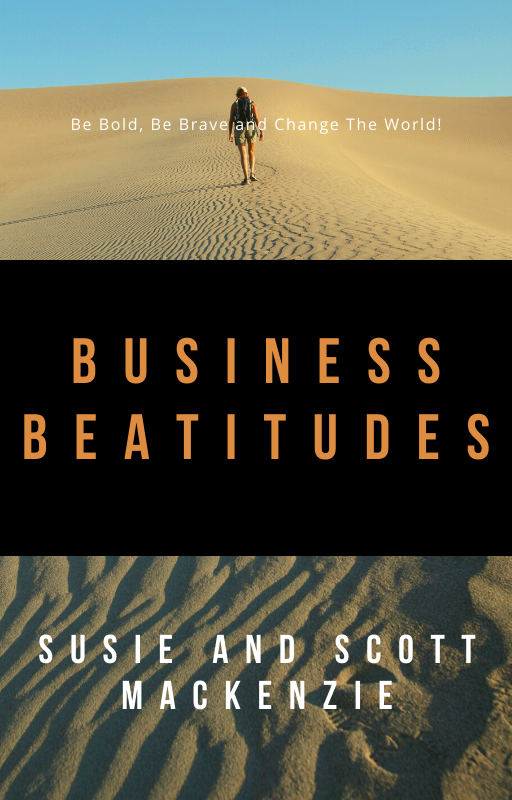
Do you desire a more joy-filled, deeply-enduring sense of accomplishment and success? Live your business the way you want to live with the BUSINESS BEATITUDES…The Bridge connecting sacrifice to success. YOU NEED THE BUSINESS BEATITUDES!
TAP INTO YOUR INDUSTRIAL SOUL, RESERVE YOUR COPY NOW! BE BOLD. BE BRAVE. DARE GREATLY AND CHANGE THE WORLD. GET THE BUSINESS BEATITUDES!
Reserve My Copy and My 25% Discount
Transcript
SUMMARY KEYWORDS
Industrial Talk, PowerGen, MD&M West, asset management, reliability X, manufacturing, maintenance technician, predictive technologies, precision maintenance, workforce aging, collaboration, innovation, asset performance, industrial storytelling.
All right, real quick. I want to make you aware of a couple of events that are taking place where Industrial Talk will be broadcasting on site. The first one put this on if you're there. Let's put it this way, if you're there at PowerGen January, 20 through the 22nd Yeah, we're going to be broadcasting there. You need to come by my booth. That's 349 and just say, Hey, Scott, let's have a conversation. That's PowerGen. If you have not scheduled for it, it's a great event. PowerGen, January, 20 through the 22nd Now, if you're in the West Coast, we're going to be broadcasting with news and brews, MD and M West. That's February, 3 through the fifth and will we once again broadcasting on the floor, you know, telling that story, telling that industrial story. So if you're going there, look me up if you want to find something that is specific to manufacturing. A great event. Second to none. Mdnm West is for you once again, February 3 through the fifth. Anaheim, California. See you there.
Welcome to the Industrial Talk podcast with Scott Mackenzie. Scott is a passionate industry professional dedicated to transferring cutting edge industry focused innovations and trends while highlighting the men and women who keep the world moving. So put on your hard hat, grab your work boots, and let's go
all right once again. Welcome to Industrial Talk, the number one industrial related podcast in the universe that celebrates you industry professionals all around the world. You are bold, brave, you dare greatly, you innovate, you collaborate. You are making the world a better place. We are broadcasting here at SMRP 33 or is it the 33rd SMRP conference? I don't know, but we're just gonna go. It's SMRP 33 and we are on the floor, and it's finally opening up, and I'm not gonna hear any forklifts backing up or anything like that, with the beep, beep, beep, and it looks like we're going to be cracking real soon with some drinks and some food and kicking this doc on conference, up in a hot seat. He's amazing. He's tremendous. His name is George Williams. He's, it's, it is reliability. X, they're never shame, ashamed of getting on podcast. You know, guys never are. Let's get cracking. Yes sir. You guys aren't. Man, you guys, see, this is what's so great about reliability X. If you want people to step up and tell their story, reliability X is right there, yes, sir, you know. And if you want, you want to have a session, a round table. There you guys are, and you have mad skills that street cred is slipping in street cred. There you go. Get that drink before I they didn't have it. It's not now It's six o'clock. How did
you gotta, you gotta go to the member meeting and then you get a
drink. Oh, that's right, yeah, you remember,
got to be an SMRP member.
Does that cost money? It does. Actually,
there's probably Paul's right behind me as we we see he's right there. Yeah, all right, let's level set. Let's get a little bit about George. Give us a little background. Yeah, because if you ever go out to Industrial Talk, you type in his name and you will find his conversation. But I'm sure things change. So let's give a background,
quick background of grew up, maintenance, reliability and pharmaceuticals. 15 years a large pharmaceutical plant. Started out as a maintenance technician. My first job actually, was as a painter. One years later. Painter, no, no, really, yeah. I mean, it wasn't my background. I showed up to a job interview, and of course, classic the gentleman said, Oh, I love you, but we don't really have an opening. And I said, I took a day off of work to come here. What do you mean you mean? You don't have an opening? He went, well, we can use a nighttime painter. And I'm great. I'll take it. I'm here. Yeah. So 15 years later, responsible for Asset Management globally at that company, left there, went to a small, to not small, $17 billion a year medical device company, and then finally convinced my wife, I had marketable skills, weren't going to live under a bridge, and so we started a business, yeah?
And then the journey began. Yeah, that's so cool. And I'm sorry for the noises. Where is it coming from? I don't know. Amazing. Anyway, yeah, I remember the good old days when you guys were with that company, you and Joe, yeah, just sort of hanging out, doing great things, making things happen, and and then all of a sudden, one day, it was like, yeah. Now the reliability X, I said, that's pretty cool.
You know, you get, you get. To a certain point in your career where you can only do so much being stagnant. Yeah, and Joe and I have a tremendous passion for seeing people grow. It's not really, I don't know. I know it's gonna sound like it's cliche and it's a load of crap, but we genuinely have a passion to see people evolve and succeed, and that's what we try to do as a business.
Yeah. Would you say reliability x what?
What is your core business? Our core business is the growth of doers.
And of course, I have to ask the question, What do you mean by that?
Yeah, so we, we educate, train, coach, mentor and and handhold people through a process that improves their plant performance, increases reliability. Does all those great things, but what it does folks first and foremost, is focus on their growth and their understanding of reliability, and that's really what we do as a business.
Do you do you see that at its core, that's great. You're training these individuals in an incredible profession, creating, I would imagine some level of passion within them to say, yeah. I mean, I'm in the right place, doing the right thing. But do you find that it's necessary for that executive to say, Yeah, I'm in support of this. I want to do this. I want to be the force behind it, whatever it
might be. Ultimately, if we want to stay in business, we're going to have to get business like that. But we also have clients. Quite honestly, I've had clients that want to pay us out of their pocket to be coached. Oh, that's pretty cool. And oftentimes we figure out how to make something like that work. But ultimately, if we want larger scale business, then of course, we've got a we've got to get C suite support. But that's not really that hard. Our approach to things like that is, we are the company that simplifies reliability. Please, please. You got to do three things. Scott, one, stop being the source of problems. Do the right PMS. Do things with precision. Don't be don't cause your own problem, to manage degradation, slow it down, manage lubrication, do all the right things that slow down. How an asset degrades three know in advance it's going to fail eventually. Why wouldn't I use the technology to know in advance? So it's really that simple, and and we it's not really dumbing it down. It's creating an area where anyone can understand it
if you make it simple and consumable and, and it makes sense that it can be sustainable, right? Because you know, as well as I do that there are programs galore that exists out there, that promise the world and incredible, and it sounds good, and it looks great on paper, but, you know, come on, let's just be real about it. It their life expectancy is, well, that of a NAT.
If I, if I held up a bunch of signs that say you suck, and they were in different fonts and colors. I could tell you you suck in predictive technologies. I could say you suck in IIoT. I can say you suck in industry 4.0 and I can say you suck in AI knowing you suck sooner isn't helping you, yeah. But it's true. It's true. You have to understand what is the backbone of why that exists, and how to get out from under it. And those tools aren't teaching you that.
How do you you know, as well as I do, that this market, this world, is going at a rapid pace. Yeah, it's just, it's just crazy. It's it's shiny objects everywhere. It just constant distraction. How does reliability acts? How does your team keep current and create relevance out of all of this noise? Because it's noisy out there. Now, you don't need that, right? You need this, but not that. How do you do that?
I think, for us, we try to find practical applications of things so, so, for example, if I've got a lot of companies that want to automate everything, we want to put robots in because they want, I
can't find anybody, and I'm just trying to deal with the writing. They just want to put robots, yeah,
and they want, they want to check mark on their resume, and they're going to leave that company anyway. And they want to spend $6 million on some robot, right? And that's not really going to help them. We try to teach them where automation can apply, right? So things like, if I've got, if I'm giving away too much product, and I've got a scale that vibrates, and it's got an adjustment my scale, my scale should be changing the vibration, yeah, so that I'm not. Giving away extra just to give it away, right? That's, that's application of knowledge and application of technology. And oftentimes we, we don't, we don't think about the application relevance. We just think about the application as an as an action, right? As long as I apply it, I've done something good, and I can check a box. We don't really look at how relevant it is to the business and whether or not it's going to be a positive result.
How, with that said, how do you see again, companies are notorious for being distracted and and how do companies come to the realization that it's a people equation? It is a I got the technology. There it is. It's out there. There it is. There's the but from a business perspective, it's a people equation. How do you how do you focus in on that culture that you can feel comfortable in knowing that I'm bringing in new talent, I'm inspiring, I'm doing what I need to do so that I can have a business that is resilient and relevant.
It's always a challenge. I think the challenge is for people to realize that they are not always the expert. So just because you have a title in the company does not make you an expert in something. And I think oftentimes the onus of the maintenance and reliability organization is really to give a dose of reality of why they exist. They exist because you lack the skill set to make those critical decisions. You're not qualified to tell me what it takes to take it. I can't. You can't buy a Ferrari and apply the Toyota maintenance budget and then expect it to run like a Ferrari. Right, right? You are your seat, your title, your desire doesn't dictate that the fact that you bought the Ferrari does, and so you need an expert to tell you how to take care of a Ferrari. Just because you feel like demanding the Toyota maintenance budget, you're not qualified to do that. Yeah, I'm not teaching you how to run the company, and I'm not teaching you about finance. Don't teach me about maintenance and reliability. You hired the role for a reason.
But again, you have to sort of take that humble pill. You have these individuals that have to recognize that that's the fact Yeah, and, and, and I've been on this journey of saying, Okay, I see. I've been very fortunate to talk to all of this wonderful technology, all these incredible individuals. And you know what, I've been in the world of reliability forever, it seems like. And you know what? We're having, the same doggone conversations again, even with the technology, it's all it's the same stinking conversation. And I want. I want me. I want something sustainable. And here we are in a world where there you were saying, Hey, here's a new renaissance man. We're just going to be pumping and we're going to be expanding, we're going to be capital is going to flow, and then all I think about is that's great people, I don't, I don't have an answer. I don't, George, I don't.
So we're gonna make this really simple. Please
get me off of this edge
as a leader in that space. You have to go and approach the C suite with very simple questions, should I spend $1,000 on a work order or $200 on a work order. If all things are equal, they're going to say $200 Yep. Should I take the line down when you when least expect it? Or should I know in advance and schedule taking the line down? What are they going to answer? Schedule it. Take it down when it's convenient, right? Great. Should I when I know something's going to foul? Should I let it destroy three parts, or should I just replace the one that I knew was going to fail? We'll just replace the one. Okay, great. You told me I need to use predictive technologies. You told me I need to use the right PMS, right. Should I repair it and then have a problem later? Or should I repair it right? The first time they're gonna say, repair it right? The first great. Then you believe in precision maintenance. Yeah, stop asking if you can implement precision maintenance. Ask them if you should be a screw up, or if you should do it right. And then when they support doing it right, then lay out what it takes to make that happen. We keep doing it the other way. We keep trying to say, we keep trying to say, I need a vibration sensor. No, you don't. You don't need a vibration sensor. You need to stop having failures that impact operations. The fact that you're going to do it through a vibration sensor is your department's decision. You need management to support Stop screwing up while I'm running that's it. You.
It must be a fertile ground out there for you, because it's fertile because those conversations are necessary, especially today and and the speed. So again, a part of that is I have, I have capital flow, and I got great this is a great market. I have wonderful opportunities in the United States, great market, and it's happening at a blistering pace, and I can't keep focus, and I just got to just sort of
push on through it.
It's a fertile it's got to be fertile for you guys, because you get it, I can have another conversation with somebody else, and it's not going to be that way.
terally building a library of:Yeah, your team is awesome. Don't get me wrong, you guys, you've done some great recruiting, which is cool. I know them all, and they're good, they're they're cool. I like that because I've always been an advocate on I try to simplify it, because I'm not I'm not as smart as George, but I always talk about, you need to educate. You need to do that. Don't don't just go into it half heartedly. There's there's material, there's people like George and and others, and reliability X, and you can educate. Got to do it. The big one that I see is you got to collaborate. You don't have all the answers. I'm telling you right now. You come to an event like this, you don't have all the answers, and you need to find the ability to be able to collaborate with trusted individuals that I could say, Yep, I got it. I got it. And the last one, of course, is innovate. Figure it out. And it can be an innovation through technology, which is the obvious one, or innovation through management, innovation through developing a culture that is sustainable. I just poke holes in that. Do you think so
there's no holes to poke. It's absolutely correct. Yeah. We've got to collaborate, not only with our clients, but even within the community, to make because the job is to raise awareness of reliability and to get people to understand the simple premise. An asset is designed with an inherent reliability, and all we can do is screw it up. Our job in this in this conference, is to teach people how to not screw it up. It's not to make it better. You can't make it better. It's engineered. What you can do is stop messing it up. And so we've got to look at all the human elements that that associates to. So all of the technology is designed to find the human intervention that is reducing reliability. It cannot improve reliability. It is engineered in so our role is to collaborate with those folks to broaden that understanding. And as you said, we got to innovate and come up with solutions that people can absorb and apply and get better. Yeah, that's and that's why we try to do the simplification piece. We try to make it so it's it can, it's palatable, I agree, and can and can be implemented so people can take one step, one step. That's why, like, our mantra is, go make tomorrow better than today. Yeah. And if you can do that, you're in a good place. It doesn't matter how bad it is today, and it doesn't matter how many steps you're gonna have to take. Take one, and then you're in. I agree.
said, Yeah, got, got all the:Yeah, I think that's a significant challenge
for a variety of reasons. A they didn't grow up touching, feeling and taking things apart, like my car, right, truck, right like on road. Yeah, you can't. You know, our generation learned how to stand in the engine bay and work on a engine and how to do our own oil changes. In this general, we didn't teach our kids that, because suddenly the bay disappeared. You didn't have any room to sit in there. And we went, Oh my God, there's this plastic cover over to intake manifold. So I'm afraid of that, so I won't take it off. Yeah, and we didn't teach our kids anything, and so it's our fault. We didn't teach them, we didn't enforce them to put the effort in. We were of the generation that if you didn't want to do it, fine, whatever, I'm gonna go do it myself. We were very independent. The problem was we raised our kids with that same mentality, and when they didn't want to get involved, we were like, Fine, I'm gonna go do it myself. Yeah, and they didn't learn anything, and we they weren't forced to so so it's unfair for us to now say, Well, how do I engage? We're going to have to ask them how
we can engage. Okay, I have, I have this as an option. The reality is, you guys get it, reliability, X, you Joe Team, you guys get it. You're you're trying to tell that story. You're trying to use the available communication tools that exist out there that maybe younger people can consume. All of these, these vendors, you one, every other one, all of them, they're not telling their story. They need to tell their story. They need to create that image, that picture of why it's, it's cool stuff,
yeah, no doubt, especially the story part, right? Yeah, yeah. Have to feel like they're part of something, yeah, and that didn't exist before. So it's, it's beyond, which is why for us, we're trying to grow 10,000 doers, right? I mean, we're trying to propagate leadership and activity, and that's not about what we sell. That's about what we give, yes and and what we sell supports our ability to give, but not the other way around. And we firmly believe that as a company, and hopefully not detrimentally, until we go out of business, but, but that's what we believe in, right? It's hard to walk around and see what other organizations are believe in. It you see what they sell. And that's not the same. If you go walk by our booth that's playing a video of what we believe in and how we're going to help people grow. It's not about what we sell. And if you walk around and don't get me wrong, they're here to sell, and so am I absolutely but, but the generational thing like you had expressed, you have to approach it differently, because they absorb things different,
and you and you have to put yourself in an uncomfortable position and and recognize the fact that the the the standard way that we do this is not going to be sustainable going forward. Yes, that's right. And and put yourself out there, feel a little uncomfortable. It's all available. And you just it's something that that I wish we had a magic wand to be able to because I'll talk to him, and everybody's passionate about what they do, which always blows me away. That's great. That's a great story.
We need to do it.
Yeah, I totally agree. Well, we are doing it, so I hope others do it.
I'm always struck. On a side note,
you ever watched SpaceX launches, yes, I've seen Yeah. And everybody in their in the team is at the launch site, and they're just going berserk over a rocket being launched. They are all in Yeah. They're just like, yes, my little role that I played with that heat shield.
It succeeded. You know, yeah, life matters. Life matters no matter what they're doing, even if you're especially in me, yes.
Wrap it up. Keep you all popped up on goofballs. I need that like a hole in the head. Shoot. How do people get a hold of you? George, what's the best way? I'm all I'm all in.
Ask it. Reliability x.com, 877, RL, bl, t, y, x, www, dot reliability x.com, LinkedIn, of course, you.
Yeah, he's John. He reliability acts. He could tell, Ah, she's telling you, man, you got to connect with these guys. She's just not going to be disappointed. They'll change, they'll change your business for the best. You will be more successful. I'm saying New York says that you will be more successful. All right, once again, we're broadcasting definitely from the 33rd annual SMRP last year's was 32nd which was canceled this year because of hurricanes. This one's the 33rd and it's going to look, just looks like a barn burger, a bunch of people that want you to succeed. All right, we're going to have all the contact information with Fort George out on Industrial Talk. Stay tuned. We will be right back.
You're listening to the Industrial Talk Podcast Network.
ot be disappointed, and it is:
About the author, Scott
I am Scott MacKenzie, husband, father, and passionate industry educator. From humble beginnings as a lathing contractor and certified journeyman/lineman to an Undergraduate and Master’s Degree in Business Administration, I have applied every aspect of my education and training to lead and influence. I believe in serving and adding value wherever I am called.
