Nancy Regan and Corey Dickens Discussing Asset Management
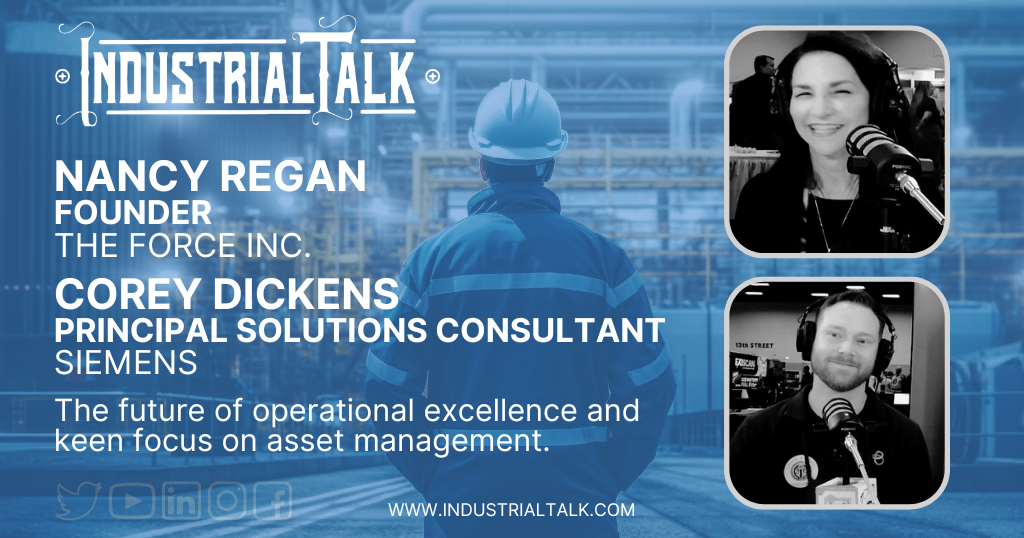
Industrial Talk is onsite at SMRP 2025 and talking to Nancy Regan and Corey Dickens about “The future of operational excellence”.
Scott Mackenzie introduces Elevotec ERP, EAM, and business intelligence solutions on the Industrial Talk Podcast. The episode features Nancy and Corey, industry veterans discussing their careers in reliability and maintenance. Nancy, with 27 years of experience, emphasizes the importance of mentorship and simple explanations in reliability. Corey, with 13 years in the Navy and industry, highlights the need for leadership, mentorship, and workforce development. They stress the importance of overcoming comfort zones, embracing failure, and leveraging technology while maintaining foundational skills. Both advocate for inspiring the next generation and the value of conferences like SMRP for professional growth.
Outline
Introduction to Elevotec and Industrial Talk Podcast
- Scott introduces Elevotec, highlighting their ERP, EAM, and business intelligence solutions.
- Scott thanks listeners for joining the podcast, celebrating industrial professionals and their contributions.
- Scott mentions the SMRP 33 conference in Fort Worth, Texas, and introduces guests Nancy and Corey.
Backgrounds of Nancy and Corey
- Scott asks Nancy and Corey to introduce themselves.
- Nancy shares her 27-year journey in reliability-centered maintenance (RCM) and her passion for the field.
- Corey discusses his 13-year career in maintenance and reliability, starting in the Navy and transitioning to the industrial sector.
- Both guests highlight their experiences and the impact of mentorship on their careers.
Challenges and Opportunities in Mentorship
- Scott emphasizes the importance of inspiring the next generation and addressing the skills gap.
- Nancy stresses the significance of mentorship and the impact of her mentors, particularly John Mowbray.
- Corey talks about the need for vision, leadership, and ongoing support to develop talent.
- Both guests agree on the importance of mentorship and the role of experienced professionals in guiding the next generation.
Inspiring the Next Generation
- Corey discusses the need for workforce development, including training and recruitment efforts.
- He highlights the importance of mentorship and the role of military veterans in the workforce.
- Nancy shares her approach to simplifying complex concepts to make them accessible to new professionals.
- Both guests emphasize the need for practical experience and the value of hands-on training.
Overcoming Comfort Zones and Embracing Failure
- Nancy talks about the importance of getting out of one's comfort zone to achieve personal and professional growth.
- Corey shares his experience with failure and how it has shaped his approach to leadership and problem-solving.
- Both guests discuss the challenges of middle management and the need for effective leadership.
- They emphasize the importance of embracing failure as a learning opportunity and not being afraid to take risks.
The Role of Technology and Certification
- Corey discusses the role of technology in training and developing the next generation of professionals.
- He highlights the importance of certification programs like the Certified Maintenance and Reliability Technician (CMRT).
- Nancy shares her approach to explaining complex concepts using simple analogies.
- Both guests agree on the need for a balanced approach to technology and traditional training methods.
Final Thoughts and Contact Information
- Scott thanks Nancy and Corey for their insights and encourages listeners to reach out to them for mentorship and guidance.
- Nancy provides her contact information and mentions her availability on LinkedIn.
- Corey also encourages listeners to connect with him on LinkedIn for further discussions.
- Scott wraps up the podcast, emphasizing the importance of attending conferences like SMRP to network and learn from industry professionals.
If interested in being on the Industrial Talk show, simply contact us and let's have a quick conversation.
Finally, get your exclusive free access to the Industrial Academy and a series on “Why You Need To Podcast” for Greater Success in 2026. All links designed for keeping you current in this rapidly changing Industrial Market. Learn! Grow! Enjoy!
NANCY REGAN'S CONTACT INFORMATION:
Personal LinkedIn: https://www.linkedin.com/in/thenancyregan/
Company LinkedIn: https://www.linkedin.com/company/theforceinc/
Company Website: https://theforceinc.com/
COREY DICKENS' CONTACT INFORMATION:
Personal LinkedIn: https://www.linkedin.com/in/coreydickens/
Company LinkedIn: https://www.linkedin.com/company/brightlysoftware/
Company Website: https://www.brightlysoftware.com/
PODCAST VIDEO:
THE STRATEGIC REASON “WHY YOU NEED TO PODCAST”:
OTHER GREAT INDUSTRIAL RESOURCES:
NEOM: https://www.neom.com/en-us
Hexagon: https://hexagon.com/
Arduino: https://www.arduino.cc/
Fictiv: https://www.fictiv.com/
Hitachi Vantara: https://www.hitachivantara.com/en-us/home.html
Industrial Marketing Solutions: https://industrialtalk.com/industrial-marketing/
Industrial Academy: https://industrialtalk.com/industrial-academy/
Industrial Dojo: https://industrialtalk.com/industrial_dojo/
We the 15: https://www.wethe15.org/
YOUR INDUSTRIAL DIGITAL TOOLBOX:
LifterLMS: Get One Month Free for $1 – https://lifterlms.com/
Active Campaign: Active Campaign Link
Social Jukebox: https://www.socialjukebox.com/
Industrial Academy (One Month Free Access And One Free License For Future Industrial Leader):

Business Beatitude the Book
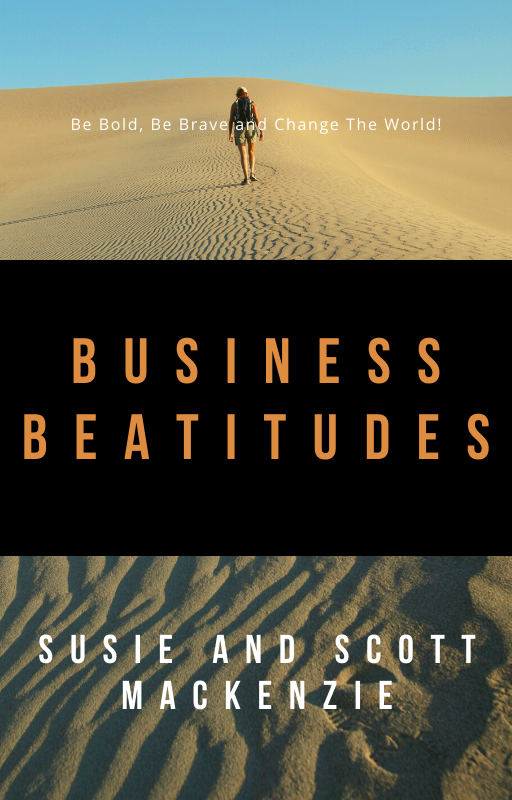
Do you desire a more joy-filled, deeply-enduring sense of accomplishment and success? Live your business the way you want to live with the BUSINESS BEATITUDES…The Bridge connecting sacrifice to success. YOU NEED THE BUSINESS BEATITUDES!
TAP INTO YOUR INDUSTRIAL SOUL, RESERVE YOUR COPY NOW! BE BOLD. BE BRAVE. DARE GREATLY AND CHANGE THE WORLD. GET THE BUSINESS BEATITUDES!
Reserve My Copy and My 25% Discount
Transcript
SUMMARY KEYWORDS
Elevotec, ERP EAM, business intelligence, digital transformation, Industrial Talk podcast, asset management, reliability maintenance, mentorship, workforce development, leadership, failure, technology, SMRP, maintenance management, ROI.
Hey, it's Scott MacKenzie, your industrial friend, and I want to bring your attention to a great company, Elevotec. Elevotec is transforming how businesses manage assets and operations with powerful ERP EAM and business intelligence solutions. They deliver streamlined processes real ROI and over 20 years of proven expertise if you want technology that actually drives performance, not complexity, Elevotec has you covered. Learn more at Elevotec.com Elevotec empowering your digital transformation with clarity, expertise and ROI. Check them at elevotec.com
Welcome to the Industrial Talk podcast with Scott MacKenzie. Scott is a passionate industry professional dedicated to transferring cutting edge industry focused innovations and trends while highlighting the men and women who keep the world moving. So put on your hard hat, grab your work boots, and let's go all right once again.
this one on your calendar for:you didn't run into into me. I came looking for you.
You could have come looking for me yesterday. I know we're here now. Yeah, clearly, clearly, because you both are a legend in reliability, we need to inspire. So before we get going, Okay, I need a little 411 on Nancy, and I need a little 411 on Corey. But I'm going to start with Nancy because she's Nancy Reagan. She's a legend. You know, she's a legend. Yeah, you back off. I just told her that. Yeah, she is. She's a legend. Thank you, Scott. Back at you give us background,
okay, well, my technical hot and stole. My technical hot and soul was stolen by reliability scented maintenance. 27 years ago. I'm totally dating myself. Yeah, she was 10. Yeah, it just chose me. Reliability scented chose me. And I love it because it is a simple process that helps you figure out what you need from your machines, and then it helps you figure out what you have to do to get that reliability. And that is it in a nutshell.
You know, Corey, this is really hard for Nancy, because she likes to prepare. She always likes to prepare. And now I've caught her off guard, and I'm just enjoying this. I'm just, I'm just relishing this opportunity to get her off guard. Corey, you know,
not 27 years ago, but I've been in maintenance reliability 13 years. Started in the Navy, fresh out of high school, right? Didn't have, I didn't know what I wanted to do with my life. I was on surface ships. I was a destroyer. I was a gunner's mate, but again, very much so grunt work, right? So built a knack for following processes that I had no idea why I was following RCM, smart people very far away publishing MRCs enforcer visions that I had to implement. But I kind of figured it out, right? I figured out how the game was played. I understand how to play the game that translated into the industrial setting. I thought I wanted to be an engineer, but I'm not great at math, so I'll stick to fixing things. So that's how I
got here today. Drop it. Nancy, do it. Do it. Tell them what you did. Do it.
Now, I started my ASEM career as a civilian employee of the United States Navy, and it's like I just felt one day, my supervisor, Fred, I was an intern at Navy Lakehurst, and I was brought to tears. Have you ever been an intern? You Scott?
Oh no, I've always been the that's always what we call our I'm always doing these technicians, right?
Well, you don't always get the most exciting work, and I'm not that kind of a person. I need to be doing do and do and going going. So one day, Fred calls me into his office and said, Nancy, I need you to figure out how to do Reliability centered maintenance. We need to reduce our maintenance costs. So I wrote it down in my notebook, and I'm to this day, I wonder if Fred was really tasking me, or if he was just trying to get an intern, you know, off his back. But. I took it and ran with it, and here we are, 27 years later.
Yeah, but you're living that you're, you're, you're leaving out the that real cool thing that
the aircraft carrier work.
Oh, well, we did Reliability centered maintenance, yeah,
the first time I interviewed her, she drops that bomb. And I just I was like, Whoa,
yes, we did it on aircraft man aircraft launch and recovery equipment. We did it on some air capable ships, and I worked with the Department of Energy, where they refurbished nuclear weapons. So, yeah, I'm, I've been very lucky to have some amazing experience.
You stink Corey, see, I started in the Navy, worked with a lot of those civilian contractors, got a lot of praise from them. They were kind of like that, those mentors you look up to, right? And they start instilling that confidence in you, and you're like, Oh, I'm gonna go engineer, I'm gonna get my degree, I'm gonna come back, I'm gonna work for NAVSEA, and I'm gonna be the technical subject matter expert for the systems that I already mastered in the Navy. You got to pass some math classes, and I didn't do that. So here I am second best, also second best in the seat over here.
Yeah, yeah, yeah, absolutely, I'm the third best. So it's a All right, there's a topic that I want to talk to you. I want to pick your brains. One of the things that I think is is vital, and I think we're at a point where it cannot be ignored. And I I have some ideas, but I don't, I don't know if they're there, they're viable. And that is, how do we inspire the next generation? We have a we have a need. And everybody talks about, I can't find people. I don't know how to do it. And that's skill. We don't have training. We've done a great job as a country to discourage people to get that type of training. And now we're, you know, those chickens are coming home to roost. I've never used that, by the way, just FYI, that was sort of working that one hard. Yeah, and, and, and how do we, how do we? Nancy, what are your thoughts about that? Do you? Do you recognize that? I think that that's a critical issue of our times.
Okay, well, what came to my mind when you said that is someone who will sincerely mentor a young person or a new person, is that on your list,
it's right here, and in fact, that I wrote it down.
Mentor, okay, so I've been doing SCM for a long time, and still today, when I presented, I talk about the things that John Mowbray taught us. I can still remember, I can still hear His voice, the vital lessons that he taught me. But he took the time to do that, and maybe he saw something in me, you know. So not everyone is going to take the ball and run with it, but when you find someone who really wants to be mentored, being that special mentor, and not holding back on your knowledge, like, just get it all out there. And that's what I think I mean, I I don't know where I would be without my mentors. That's the key. See, I agree with you 100%
and I look at this floor and I see a lot of gray beards and gray hair and bald people roaming around. And I I think that here, these are the this is the key to success, and you have to step up, and you have to just recognize your role. Stop thinking about just what you provide, but think about the needs of the market. Now, you Corey, are one of the young, up and comers. You're the you're smart and you're you got everything that. What do you see? What do you see?
Mentorship, 100% tripman Junkin had a post recently about, how do you turn a good planner into a great planner? And I said, let's step back. Let's not even talk about planners, just people in general. They need that kind of vision, that leadership, and then they need the ongoing support. And at sometimes that's tough love. You were given a potentially an impossible task, and you ran with it and turned it and turned it into a career. How do we create that level of drive and incitement amongst people? So again, when you talk about workforce development, like either you can start training it straight into trades out of high school, so bring back shop classes or those type of classes in the school, or focus your retention or your recruitment efforts people from the military. I did not know the acronym RCM until I came over here. Came to a conference like this, and was like, Oh, I know those questions. I know what rams is. I know all these things. I've read it in publications. But you can't ignore the fact that I had a mentor in the Navy that challenged me on things. I had the internal drive to seek out information and then apply that. I just happen to land in a field based on pure luck where I get to apply it. And now I love being that next generation of this group to try and extract the knowledge from the people that built the industry without an easy button. How do we translate this, and how do I pass this on
to them? So what do you what are you doing? What are you doing to inspire the next generation? You're just you're right there. I'm going to listen to you. I might not listen to me, this old guy, but do you? I'm going to listen to you. What are you doing to say, I want to be a part of the solution, just
getting involved in talking and challenging, to not try and find the easy button. All these solutions, right? People view some of these solutions is like, oh, PDM is a replacement for traditional plan maintenance or preventive maintenance. It's like, no, they're complimentary, right? You have to do the work to figure out what is the right balance, and how do we adapt to these new technologies. Same thing. Nothing's going to beat the blocking and tackling, the basic understanding of maintenance management, business acumen, in finance, yeah, to translate ROI of these projects, like it's back to the basics, and once you master the basics and the effectiveness, then we can look for efficiency gains. So as an engineer, my stepfather is an engineer, very well accomplished in his career. We solve problems different, yeah, he processes kind of complicates, right? I'm like, I'm gonna try it and see what works. I learned your experience, and we have to figure out how to get both people to communicate and find how both people funnel into this space.
Yeah, I agree with you 100% and I was just looking at Nancy because we've had this conversation, and it's exactly what
you said it's the same message over and over, over and over again, but people won't do it because it's not easy,
that is so it See, I call myself, I call
Nancy, and I just met over at the water cooler, yeah, five minutes ago. This was not planned. Freaky.
It's freaky when I'm hearing you talking, I'm listening. I've talked to Nancy, it was like, What the
I talked about my dip, my my:The biggest thing that people keep neglecting, I think, is just the value of good management, like good leadership, good management, that's the biggest thing lacking in most organizations, is middle management, someone, somewhere, has a great vision for the company, and there's a lot of people doing a lot of work to try and execute on the information they're given. And then there's a layer in between of like this constant politics. Same thing is in the Navy. Please don't think I'm just talking about meaning it's everywhere. It's everywhere. It is our society. It is our culture as a society. It is the accepted norms and behaviors that we have allowed get to this point.
Yeah, I think there's a drive to try to climb that corporate ladder as fast as you possibly can, and therefore not invest that energy and time and into it again. Silver Bullet,
I think people are afraid of fail. They don't understand failure is where we get the best data, failures where you get all your experience. And I don't have as much failure under my fingers as Nancy does, or a lot of people in this room, I promise you, I have my fair share, and I'm not afraid to fail.
Yeah, well, that's, that's, that's brilliant, that's, that's sage advice. When I was going through an apprenticeship program as a journeyman lineman, so I started out as a grunt. I was digging ditches. I was getting coffee for the these journeyman linemen. They were yelling at me. They were calling me names. But then again, I came and I said, I'm going to be in the apprenticeship program. I was still dirt, but I was doing it on site, being coached by these individuals. We can't say mentor. They yell at you. I'm not sure if that's the right mentor. Anyway, four years later, I'm a journeyman, right? And now I'm yelling at young pups. But the reality is, is that I don't there was no easy button to become a journeyman lineman, that that doesn't work, and it should be the same thing, and you should take pride in what you're doing here, we what you what you guys do, what everybody does, is noble. I look at it from that perspective, you guys are solving problems.
Yeah, I don't know you. I think you can't you follow Gary V, don't you Gary. Gary V says, fail fast. Don't be afraid to fail and fail fast, because that's. How you learn?
Yep, but how do you see? I think that there's a great opportunity to inspire the young, leverage the technology into thinking and just continue to sort of push fast it just and because they could, too. I had a conversation with a couple of young ones like you, but younger, and I was sitting there, yeah, yeah. They're not as old as you and and they were sitting there. And it just, it was fascinating to see how they talked about the technology and what they're trying to do and what the benefits are. And it was just engaging, because it's not your typical conversation that the it's just, we just need to do it.
Each generation brings their own strengths, yes and perspective like Yes, right? For the kids below me, I'm probably the upper end of that generation. We can find all the information we need on YouTube. Right? My uncle, my uncle, is a career lineman, ran the entire power grid for Fort Bragg, North Carolina. There you go, right? He's climbed poles. He's very stubborn, set in his ways. I was changing the oil pump on my old Jeep Wrangler in his shop one night, and I'm watching the YouTube videos. What are you doing? I was like, figuring out how to change this out. He's like, you just do it. And I was like, do it and break apart and not have a vehicle for a few days. Or watch someone else give me, literally, the playbook of how to get it done. Next day I come in, he's watching YouTube videos about X, Y and Z, yeah, right. It's all out there, just like that. So how do we do that? I think to your recommendation. How do we start if it's for the M and R community, more people need to be looking at the cmrt. What's that? Certified maintenance and reliability technician? So lower level accreditation. But again, it's a broad body. It's not a replacement for certified vibration analyst. It's not a replacement for MLT. All those are specialties, and I view cmrt as this kind of overarching, broad perspective of all the modalities and functions of maintenance management at the level of a technician. So how do I solve problems? Let me start understanding there's a science behind lubrication. There's a science behind this. Oh, that's interesting. I didn't know about this. They start practicing those habits, and then they start forming this into a routine.
I want to inspire. I want to just keep it rolling. I want everybody to succeed. I want to elevate you Nancy and you Corey, and be able to have that conversation, so that you guys inspired these other individuals, these knowledgeable, potential mentors, let's say, to maybe step out and be a little uncomfortable. You know how it is? You know how it is, it's uncomfortable. I remember having conversations with you Nancy and you just, you plan your videos. Yeah, you plan. But you did it. I persevered, and people liked it.
I'm still persevering.
I would say this. I love this quote, which is, don't worry about the opinion of someone. You wouldn't ask for advice. So same thing, I have led maintenance groups in the Navy, large departments, people older than me, people younger than me, and all the in between, right? Daily, my life sucked dealing with the attitudes and the beautiful aspect of managing. No one that's not glorious. No wants to do it. People love being high level individual contributors and running something you got to do. That management aspect, that's where I learned how to be a leader. But again, out of that, the shining light I look back and say, All right, that's successful is because everyone progressed in their career. Whether I was a small little piece of that or I was a big piece that I have no clue, but everyone succeeded, and it's like that is the greatest satisfaction I've had yet to this far in my Well, other than my kids and my wife, sorry,
I love it. I love this conversation.
You met Scott. You mentioned comfort, yeah. Oh, okay, so you know, like this, get out of your comfort zone. Here's what that means to me. Comfort can become like a seduction and and in our own personal lives with respect to achieving our own goals. You know, we're afraid so we, I don't know. We just don't do it. We stay on the couch. We're we're busy cleaning or doing stuff that we think that's important, because it's actually a comfort zone, but it keeps us from doing what we want to do, even in reliability. When people are in like, firefighting mode and big react, big reactive mode, that actually can become, like a comfort, you know, that can become very comfortable.
So it's debuted as job security,
yeah, but it's, it's not easy, but that's how we grow, and that's how we produce, and that's how we create, and that's what we're supposed to do as human beings. I mean, we're not, we're not here to just, you know, have a good time and go on vacation and just, you know, live every day as it comes. We need, there's legitimate rest and relaxation that we need, but only after we've been uncomfortable and we put the work and challenged ourselves thinking, I'm inspired. Am I inspiring you?
Are you always do? Because I'll always remember that, that when I decided that I'm going to podcast, I'm going to put it on a video, and I thought, I'm thinking to myself, I. It, what am I going to talk about? But in there's that energy inside your head. You're saying to yourself, what is it I got to prepare? What am I going to talk about? And then you just continue, and you persevere, and you just keep pushing and pushing and and eventually it just becomes natural. But I don't I don't want to be comfortable. That's why I want to talk to you guys, because you make me and you inspire me to be more uncomfortable, I guess. How to how do people get a hold of you? Nancy, what's the best way?
Nancy Regan, R, E, G, A, N at RCM training online.com, and you're out on LinkedIn too, right? Yes. And on LinkedIn,
yeah, that's, that's the answer. Corey, the answer is
LinkedIn, yeah, there you go. Thank you very much.
It's the only way I can provide a link to your stat card, and I don't have to worry about it. All right, we're broadcasting from SMRP. Those two were absolutely incredible. I am ready to conquer the world because of their their their energy. All right, you need to come to SMRP. You get people like Corey and Nancy, and you get to talk to them, because they're open books, and they will inspire you each and every day. All right, we're gonna wrap it up on this side. Stay tuned. We will be right back.
You're listening to the Industrial Talk Podcast Network. You
y, that was SMRP, that was in:
About the author, Scott
I am Scott MacKenzie, husband, father, and passionate industry educator. From humble beginnings as a lathing contractor and certified journeyman/lineman to an Undergraduate and Master’s Degree in Business Administration, I have applied every aspect of my education and training to lead and influence. I believe in serving and adding value wherever I am called.
