Ryan Hiss with Better Engineering
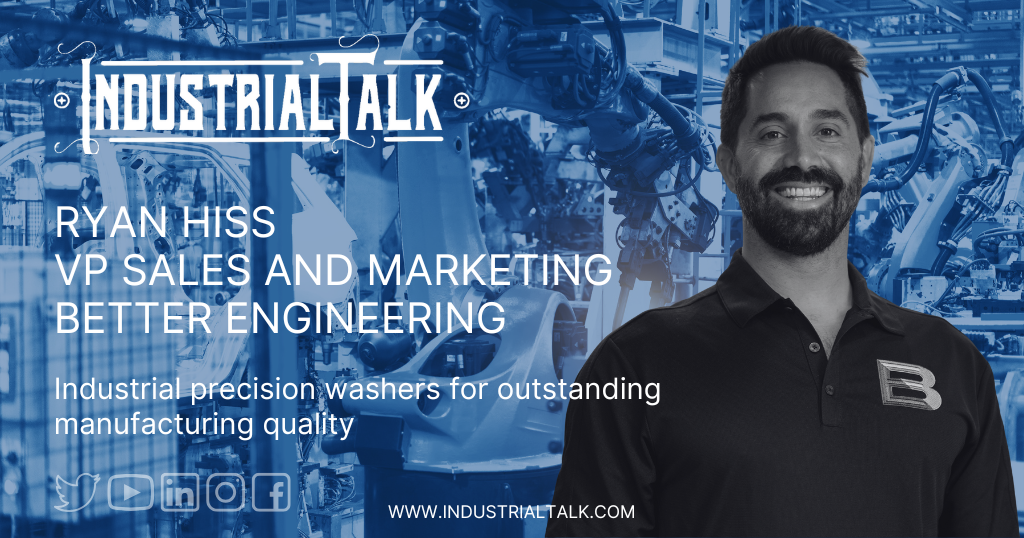
Industrial Talk is talking to Ryan Hiss, VP of Sales and Marketing at Better Engineering about “Industrial Parts Washers”.
Ryan Hiss, VP of Sales and Marketing at Better Engineering, discussed their industrial wash systems on the Industrial Talk Podcast. Better Engineering, founded in 1960, specializes in aqueous parts washers for various industries, including automotive, aerospace, and food and pharmaceutical. Hiss highlighted the importance of cleanliness in manufacturing, noting that their systems can process parts at high throughputs, ensuring quality control. The company also employs sensors to monitor equipment and proactively alert customers to maintenance needs. Better Engineering is expanding into automation and traceability in food and pharmaceutical industries to improve efficiency and sustainability.
Outline
Introduction and Welcome to Industrial Talk Podcast
- Scott introduces Ryan Hiss from Better Engineering, highlighting their expertise in industrial washers.
- Scott suggests an on-site conversation with Ryan to discuss industrial washers further.
Discussion on AI and Human Interaction in Business
- Scott discusses the role of AI in business and emphasizes the importance of human interaction in maintaining trust and engagement.
- Scott argues that companies need to tell their stories with a human face to build trust and authenticity.
- Scott shares his experience of creating content that reflects the human side of business.
- Scott encourages listeners to reach out to Industrial Talk for help in telling their stories effectively.
Introduction of Ryan Hiss and Better Engineering
- Scott introduces Ryan Hiss, VP of Sales and Marketing at Better Engineering, and discusses his background.
- Ryan shares his journey from Baltimore to California, his education, and his career in software sales before joining Better Engineering.
- Ryan talks about his father's retirement and his role in taking over the family business.
- Ryan provides a brief history of Better Engineering, founded in 1960 by his grandfather, and its evolution over the years.
Better Engineering's Products and Services
- Ryan explains Better Engineering's focus on industrial wash systems, also known as aqueous parts washers.
- Better Engineering offers a variety of wash systems, including small parts washers, conveyor washers, rotary basket washers, and custom units.
- Ryan highlights the company's work with major space, aerospace, automotive, and food and pharmaceutical OEMs.
- Ryan discusses the importance of cleanliness in manufacturing and the role of industrial washers in maintaining quality control.
Challenges and Solutions in Industrial Washing
- Ryan explains the need for high-throughput wash systems in automotive and aerospace manufacturing.
- Better Engineering's systems are designed to meet specific cleanliness standards and are tested using standard equipment.
- Ryan discusses the flexibility of Better Engineering's wash systems, which are modular by design to accommodate different customer requirements.
- Ryan shares examples of how Better Engineering modifies existing systems to meet new application needs.
Data Collection and AI in Manufacturing
- Ryan talks about the use of sensors in Better Engineering's wash systems to monitor and maintain equipment.
- Better Engineering collects data on various parameters, such as vibration, temperature, and chemistry concentration, to ensure optimal performance.
- Ryan explains the importance of traceability in food and pharmaceutical industries, where data is used to track and verify cleanliness.
- Better Engineering provides interfaces to send data to customers' SCADA systems or offers their own UI for data reporting.
Future of Better Engineering and Industrial Washers
- Ryan discusses the company's focus on automation and the integration of sensors and data collection in their wash systems.
- Better Engineering is expanding its work in the food and pharmaceutical industries, where automation is increasingly important.
- Ryan highlights the challenges of cleaning large containers by hand and the benefits of automating this process.
- Better Engineering aims to improve efficiency, reduce labor costs, and ensure consistent cleanliness in manufacturing.
Conclusion and Contact Information
- Ryan provides contact information for Better Engineering, including email and phone number, and encourages listeners to connect on LinkedIn.
- Scott thanks Ryan for the conversation and emphasizes the importance of telling the human story in industry.
- Scott invites listeners to reach out to Industrial Talk for more information and to schedule on-site interviews.
- The podcast concludes with a reminder of the importance of human interaction and storytelling in industrial manufacturing.
If interested in being on the Industrial Talk show, simply contact us and let's have a quick conversation.
Finally, get your exclusive free access to the Industrial Academy and a series on “Why You Need To Podcast” for Greater Success in 2025. All links designed for keeping you current in this rapidly changing Industrial Market. Learn! Grow! Enjoy!
RYAN HISS' CONTACT INFORMATION:
Personal LinkedIn: https://www.linkedin.com/in/ryanhiss/
Company LinkedIn: https://www.linkedin.com/company/better-engineering-mfg.-inc./
Company Website: https://www.betterengineering.com/
PODCAST VIDEO:
THE STRATEGIC REASON “WHY YOU NEED TO PODCAST”:
OTHER GREAT INDUSTRIAL RESOURCES:
NEOM: https://www.neom.com/en-us
Hexagon: https://hexagon.com/
Arduino: https://www.arduino.cc/
Fictiv: https://www.fictiv.com/
Hitachi Vantara: https://www.hitachivantara.com/en-us/home.html
Industrial Marketing Solutions: https://industrialtalk.com/industrial-marketing/
Industrial Academy: https://industrialtalk.com/industrial-academy/
Industrial Dojo: https://industrialtalk.com/industrial_dojo/
We the 15: https://www.wethe15.org/
YOUR INDUSTRIAL DIGITAL TOOLBOX:
LifterLMS: Get One Month Free for $1 – https://lifterlms.com/
Active Campaign: Active Campaign Link
Social Jukebox: https://www.socialjukebox.com/
Industrial Academy (One Month Free Access And One Free License For Future Industrial Leader):

Business Beatitude the Book
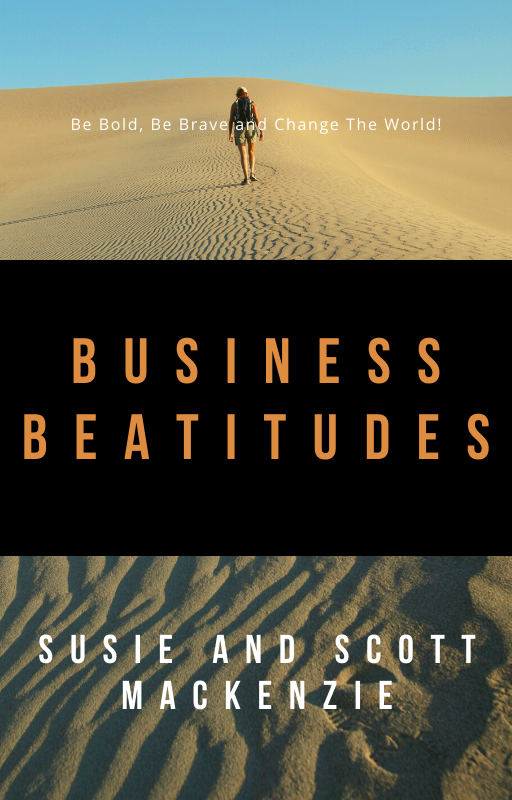
Do you desire a more joy-filled, deeply-enduring sense of accomplishment and success? Live your business the way you want to live with the BUSINESS BEATITUDES…The Bridge connecting sacrifice to success. YOU NEED THE BUSINESS BEATITUDES!
TAP INTO YOUR INDUSTRIAL SOUL, RESERVE YOUR COPY NOW! BE BOLD. BE BRAVE. DARE GREATLY AND CHANGE THE WORLD. GET THE BUSINESS BEATITUDES!
Reserve My Copy and My 25% Discount
Transcript
SUMMARY KEYWORDS
Industrial washers, Better Engineering, AI integration, human interaction, manufacturing quality, aerospace OEMs, automotive OEMs, food and pharma, traceability, data collection, automation, modular systems, cleanliness specs, vibration sensors, sustainability.
Scott. Welcome to the industrial talk podcast with Scott Mackenzie. Scott is a passionate industry professional dedicated to transferring cutting edge industry focused innovations and trends while highlighting the men and women who keep the world moving. So put on your hard hat, grab your work boots and let's
go all right, once again. Welcome to industrial talk. Thank you very much for joining me and your continued support of this platform that, once again, celebrates you, industry professionals all around the world. You know why we celebrate you? I say it all the time because you're bold, yes, brave and dare greatly. You innovate all the time. You are making lives better and therefore making the world a better place. Take that to the bank, bring that into your heart and own it, because that's how special you are, and that's why industrial talk is here. We just want to celebrate you. We're your cheerleaders. Thank you. Thank you for what you do. In a hot seat, we have a gentleman by the name of Ryan hiss. Better engineering is the organization, and we're talking about industrial washers. It's, it's right here, industrial parts, washers. And you're saying to yourself, Scott, I how do I get more information? I want to know more about that. Well, you're, you're lucky because we get it from Brian. Hess, he knows everything about it. And you go out to their website,
it's pretty doggone geeky. I love it, man.
And here's, here's the shameless plug, Ryan, if you're listening out there, here's the here's the intro. We need to do a an on site conversation at your location. That's what we want to do. So, Shameless, Shameless. Let's get cracking.
It is, it's shameless. Okay, so I was walking the dog,
and, you know, all this stuff rattles around in my head. I and, and one of the things that is rattling around in my head is just this AI thing, this whole AI push, got it? It's, it's pretty cool. And it's just I, from my perspective, we're still at the tip. Yeah, we can, we can be concerned. What are the bumper guards to keep, keep it relevant anyway, so it's rattling around in my head, and I can never, ever get to the point where to extricate the human side. Can it get to the point where we just removed the human side? And I'm here to tell you, no, no, I'm that is my position and and I'm sticking to it. And here's the reason why your business, you're an industrial business. You're listening to the podcast, and you're saying to yourself, Scott, I want to use the AI. I want to do it. I want to, you know, I want to leverage it for the betterment of this particular company. But here's the reality. I think this is mandatory. You and others in your organization have to tell their story, the human side. It has to be a human face. I don't think we can ever get around that. I think that we me. Maybe it's me. I mean, I mean, it could be other people. I think there's going to be this, this increased desire to have that inner human interaction, right? That saying, Oh, you're real, you're what you're saying is engaging, whatever it might be, and I trust you, I'm developing trust, and that can only come through that human interaction. Telling your story, it's mandatory. Now the question is, how do I tell that story effectively, or, How do I tell that story consistently? Right? Right? It's, it's one thing to be a company that says, hey, I'm telling my story, and that's it, and, and we have a lot of websites out there that have, sort of have videos out there that are sort of stale, let's just be truthful here, because it's just like one and done. I've already told my story. There it is. Go out to my website, whatever it might be. I'm saying that that truly successful companies will be able to feel comfortable as much as possible with telling that story to bring in that that human face. I just believe industrial talk is here for you. You're saying, I want to venture into that. Have a conversation with me. I'll and you're saying, probably saying that. Well, it's got, you, you, you've been doing it forever. Yeah, I have. But I started out it was rough, and I just, for whatever reason, decided to soldier on. It. Might you. Still rough sometimes, right? But I believe that, as I said in the beginning, I believe that you are changing lives and changing world, and you need to succeed you do. And that means telling your story. That means being able to create that content quickly that has that human flavor to it. That means taking your blogs, whatever it might be, all that time and effort and energy of creating that blog and making it human, put a face on that, and it's all available. It's all doable and but, and you're saying, I need somebody to facilitate that. Talk to me. Just go out to industrial talk. Reach out to me and find out more. Let's, let's, let's do a conversation from your manufacturing line. That's pretty cool. I like that. Yeah, there's so many ways of being able to bring that human element to your to your business, make it happen. Industrial talk here for you. All right, I'm with the conversation. Brian hiss, industrial washers. You go out to better engineering. You look at the the technology, you look at the machines. Oh no, they're not little, tiny things. They are Impressive, impressive technology. Anyway, go out there. It's all out on industrial talk. All right, enjoy the conversation with Ryan. Ryan, welcome to industrial talk. How are you doing today? Doing well. Doing well. Thanks for having me. Oh, we've been
chit chatting for the past
10 minutes, no 15 minutes. We should have been recording, but we did right? Man, good
getting to know you. Good getting to know you. Glad to be here. Thanks for
having me. It's all cool. It's all cool. Is it cold in Maryland? Is it it is?
Man, it's it's been really cold. Actually. It was 19 degrees yesterday, 20 today, but nothing to show for it. Man, just cold weather. No snow. It's all south of us, which is actually really weird. So like, North Carolina is getting off of the snow. Yeah, it's pretty strange. It's odd that happens Louisiana.
We had snow last year in Louisiana, and it was just like a holiday. We were just walking around. It just
shut down. Though, did everything shut down? Because years ago in Texas, when there was ice and snow, it was like catastrophic.
Yeah, we don't know. We have no clue about how to drive around on ice and snow. We just, we just frolic.
Yeah, it's not, it's not much better here, frankly,
well, all right, Ryan, you're with better engineering.
Take us through about who Ryan is for the listeners out there. Then we're going to talk a little bit about better engineering. We're going to be talking about industrial washers, which is pretty cool. Do you have a good dishwasher at your house?
We do, yeah. It's actually a newer dishwasher. It works really well, and that's basically what we built. We built giant dishwashers. I clean. You do all sorts of items and parts, I would
hope that your dishwasher is is industrial strength. Mine's not mine. You just
throw it, yeah, I'd be lying if I said it was no, no this dishwashers are actually pretty finicky. I think across the board, someone needs to work on reinventing the dishwasher, honestly, because they're all pretty, pretty bad.
I think there's a company out that would be able to do that, and they have a they have an army of engineers. I think it's a better
engineer we could do it.
New revenue source.
Next task at hand, yeah, yeah. It'd be a pretty, pretty major revenue source, if we could figure that out. All right.
Background there, Ryan, give us a little background on who?
Yeah, yeah, of course, it is Ryan hiss. I am the VP of Sales and Marketing for better engineering. Grew up in Baltimore, Maryland, moved to California when I was 18, went to college in California, went to Loyola, Marymount as an undergrad in USC to get my MBA, and I sold software for the beginning of my career, which was which was awesome. Did the whole Silicon Valley thing, lived in San Francisco. I learned a lot. And then when I was in my late 20s, my dad propositioned me. He said, Hey, I'm ready to retire soon. And you know, if you're interested in joining the business, now is the time you've got to learn the business. I knew nothing about manufacturing. I'm not mechanical by any stretch. It's kind of embarrassing, actually, for given that I sell machinery. So, you know, I joined the company about 10 years ago and managed the western US, and, you know, brought out a lot of awesome customers out west. But then recently, I actually moved back to Maryland about a year ago for being in California for 20 years, kind of an adjustment. Yeah, and so I'm going to be taking over my father's role when he retires in about a year to manage better engineering. So, really fortunate. Yeah, it's been, it's been an awesome ride. I've learned a lot, still not mechanical. You. Not electrical. But, you know, I have learned a lot over the years learn to appreciate manufacturing. You got that
e company's been around since: since:That's cool, of course, the Pacific Theater he got because I'm a, I'm a world war two nut. What? What part of the Pacific Theater?
Yeah, I forget which it was, Southeast Asia. I forget, like, the exact island he was on.
Yeah, Island warfare. Man, brutal.
My father in law. He was on Saipan, and he was repairing planes, and you just, you just look at that. He was 17, yeah, yeah, odd, yeah. I know.
I know, man, it's, you know, that generation, you know, the greatest generation. I think it's appropriately named. I mean, yeah, what they did, you know, collectively, is a lot of them really young. Yeah, my grandfather was 17 as well when he joined. I know he lied about his age to enlist.
Of course, anybody, they'll turn a blind eye to that. No, yeah, sure. Come on, on. It's all good, yeah? For sure. And all I would do is whine to this if I listen to the stories of these vets, and I think about what they go through and what they did, I guarantee you, I quickly come to the conclusion that I would be a whiner.
I think I think I would be.
I don't like the food.
Well, especially there, man, you know, it was brutal, like fighting on those islands. I mean, it was, it was brutal, brutal.
Yeah, stories, incredible. All right, take us through what better engineering is. I've got the website up. I'm looking at it. You got some great customers, by the way, and I don't know where I read it, you guys are doing work for Blue Origin.
Yeah, yeah, we are doing work for Blue Origin. So we're a manufacturer of industrial wash systems, also known as aqueous parts washers, and we build a whole variety of different types of systems, so from small parts washer cabinets to conveyor washers to rotary basket washers. I mean, there's a multitude of designs to fully custom units for a really wide variety of customers. And that can be for, you know, space, you know, we work with almost all of the major space OEMs. Aerospace is another, you know, major industry that we sell into, basically all the major aerospace OEMs, automotive, basically all the major automotive OEMs. And then we also, there's a whole other side of our business where we actually focus on food and pharma that's growing pretty quickly.
Let's, let's go back to the sort of the space Otto. Why is it important to have these solutions for these industries?
Yeah, because you know, how is Hyundai going to afford to pay for that 100,000 mile warranty, right? So these parts have to be clean to maintain that go into a product of the end that is quality. So it's really about quality control, right? So after a part is machined, for instance, this is like an engine block, it's going to have oil and chips on that part, so it needs to be cleaned well enough. And a lot of those major automotive OEMs, and most, you know, aerospace OEMs as well, they have a cleanliness spec that you have to meet. So they're actually cleaning these parts and then measuring the amount of particulate left on these parts by size and weight before it moves on in the manufacturing process is that with every part, no, not with every part, that just wouldn't be sustainable, so they'll pull apart, like, let's say, once every couple hours to make sure that that part is meeting spec. But you know, getting these parts clean enough is what guarantees that whatever that part is going into, like. Like, let's say it's going into a block or an engine. That engine will last the duration it's supposed to
see. I didn't
know that. I was always wondering, how in the heck can cars go
100,000 with no no issues? I mean, it's just yeah, and in fact, yeah, see, I didn't know that. And in fact, it's, it's just, you don't even question it, you Oh, when I was growing up and I had my 57 Chevy, it didn't go 100,000 miles. I guarantee you, it didn't. And so I was always worried. But the reality is, is then, all of a sudden, the quality of cars had just skyrocketed. And you know, you just don't even know.
It's not the only reason right that that extend the engine life has been extended, but it is a major reason, a significant reason, that that plays into the these engines having a longer lifetime,
using that use case of the of the auto manufacturer, the rate of cleaning. So it's not just, it's not like my dishwasher at home, where you're thinking to yourself, really, you're still going that type of thing, versus something that is in a commercial settings and a manufacturing setting. It did. You would have to be able to design that solution in such a way that there's a rate, plus a result that insurance,
yeah, a lot of these systems that go into automotive OEMs are designed for a high throughput, so they're putting out a part once every five or 10 seconds. Yeah, and the way we guarantee cleanliness, we have a lab at our factory. What a lot of these companies will do is they'll send us their parts, and we've got all of our standard equipment in the factory. So what we'll do is we'll actually take their parts and we'll run them through the system that we think is the best fit, and then we will test those parts using whatever means they specify to guarantee that we are going to get those parts as clean as they're supposed to. Should they honor us with a purchase order?
If that makes sense. So we validated front
before, no, I mean, I'm going to kick the tires. I'm going to go out there and say, Hey, I have these parts that need to be cleaned. I need to make sure and ensure free of cost,
free of cost. We do it at no cost to the customer, because it helps us, us and the customer. Now we want to make sure that we can clean those parts of spec as well. Before you want
to put yourself out there and not
deliver quality exactly makes the question so you're vertically integrated. You guys are manufacturing these washers. Great, fantastic. But, but I'm, I'm Ford, I'm not Hyundai. I have different requirements. I have, you know, there's just, you know, uniqueness when it comes to, how do you keep up with balance, standardization and customization on your washing
or all day? Yeah,
that's a good question.
I wouldn't know these
systems are modular by design, right? So it's one customer might require one subset of stages, and this customer might require a different subset of stages based on their specifications and options, right? So customer one might require a certain subset of options. Customer two might require a different subset of options. But these systems are modular by design, so they're very flexible. They're flexible so we can accommodate different customers with different requirements and different standards. Good.
Manufacturing perspective, because you guys are a manufacturer, manufacturing perspective that
it's better to do it that way, as opposed to, oh yeah, we'll create a new version
for you.
Yeah, yeah. You got to be flexible. So we use a standard platform most the time and modify it. We make it wider, taller, heavier, load, capacity, etc, to conform to the customer's application.
So what happens flexible? Yeah. What happens in a situation where they're saying, Yep, we're using, we're using this industrial washer better engineering. It's been in in service for 10 years. It's been delivering, but we want to upgrade, to take existing assets. Or how do you how do you deal with that?
That it depends on what they want to do differently, like we will evaluate their existing wash system to see if we can modify it in some way, shape or form, to conform to the new application. But if it's out of scope or out of that system's capabilities, let's just say, like the part they want to put in there is larger than the machine itself. You know, unfortunately, you've got to look at. An entirely new wash system, but we will work with the customer like, if we we would much rather modify their existing system. Like, for instance, our conveyor washers are modular by design, so let's say their throughput doubles. We can build a new module and insert it into the conveyor line, versus have them having to buy a whole new conveyor wash system, which is obviously a very costly endeavor.
Well, I'm gonna have to say it. I think it's dead sexy. Thank you.
Nobody's ever said that about parts washers, right? Again, we're usually like, like a necessary evil of the manufacturing process, because, again, we're not making parts, we're just making parts cleaner to give them a better product downstream, yeah, and give the customer, their customer a better user experience. Yeah, but, but here's,
here's here, here's another question I have, because my mind is racing, is, if you're in the aerospace market, right, and you're providing solutions for Blue Origin or there, that whole process is prone to change all the time, because it's all it's all new, like No, right? All of a sudden, we got this, and now we're trying to optimize, you know, our delivery. But, I mean, that's got to be sort of like a tiger by the tail or a roller coaster and you're buckled in. Just keep going and going and trying to have those conversations. Am I looking at that right?
Yeah, no. They're constantly iterating, right? They're constantly coming up with with a different engine design that's getting bigger and bigger over time. So what they'll typically do, or most space OEMs, is they're going to anticipate these iterations over time, and they're going to say, look, this part is going to double in size, more than likely, within the next five years. So we're going to buy a system that has twice the capacity, it's twice the size. And the systems that go into companies like Blue Origin and others. You know, we have what we call turntable washer washers. They're batch style washers, because space is low volume, right? They're not putting out a an engine, one, you know, one engine an hour. So they're batch style systems. And they're, what they do is they put these parts on a big turntable. And so these turntables well, they'll get, they'll get as big as 30 feet in diameter to anticipate what's going to go in that stuff.
I'm looking at it on your website again.
Yeah, they're cool. They're cool systems. And of course, in those units, what's most common in space is they clean their rocket nozzles before going into heat treat. So that is, that is probably one of the most common applications that we see in space.
That's, that's cool, too. Now I have to approach this subject, and that is one, how does,
how does better engineering deal with the
collection of data like the IIoT so I've got
and I'm pulling in this data, I'm measuring it at and I'm all, I'm dealing with it, and then take that leap, I'm collecting the data, whatever the data is, I'm collecting the data, and then take the leap to the world of AI to be able to create some sort of tactical insights into the data that's been dealing. Are you guys down that road?
Yeah, yeah. So we're putting sensors on motors now that detect vibration. For instance, let's say you put a sensor on a pump, right, a pump motor, you know, over time as that, we'll call it, we'll say that as that motor starts to depreciate, it starts to vibrate more, and that sensor, after once it passes or surpasses a certain threshold, will notify the operator, you know, via email or text, that, hey, it's time to change this. This pump motor, it's, yeah, it is now out of spec in terms of vibration. You know, that's just one example of something that we're doing more with sensors. Another a couple of industries that rely heavily on trade, you know, traceability, it's food and pharma, Yeah, huge data recording and these, in these types of industries. It's parents for safety, right? So it's all about traceability at the end of the day. So they want to be able to measure a parts, washers, chemistry, concentration, temperature, duration of the cycle. And there's a whole slew of other variables that it can measure. But you know, should something happen downstream, like an E coli outbreak, they want to be able to go. Back and look at that data, that past data to see was the parts washer not working correctly, you know, did it play a role in this outbreak? So when it comes to those industries, like when he talks about data reporting and traceability, like that is like a huge part of what we do see.
It would seem like a no brainer from a food and pharma perspective, that you do need this?
I mean, it's so they do. Yeah, it's not. It's not negotiable for a lot of these manuals.
And when you're you're collecting all this data, it does better engineering have the interface? Or does that interface occur into their, whatever their system of record? It could be a CMS, ERP, whatever it might it might be. Yes. Good question.
Good question. So we can, we can send data into their back end SCADA system, or we actually do provide the UI that will that can purvey that data to the customer as well.
So, so, okay, I'm going down this road, continue to pull on that thread. So now you have that UI, you have the ability to be able to collect all this data, the tsunami of data, I would imagine, I can't speak for it, and from there, you're, you're determining everything's okay, okay, okay, okay. And then all of a sudden, something pops up, vibration, heat, whatever, whatever you're tracking at that particular time. Hey, I need to go maintain this asset right now. Do it now? Are you sending that data into some sort of a cloud solution for or better engineering? What? How are you taking that data and making it normalize.
So if we can, if the customer does allow us access to that data, right, which is always the tricky part, we will proactively reach out to them and let them know that there is something going on with their system in some way shape, right? It's pretty cool. Or, like we talked about vibration, if that vibration is deemed above a certain threshold or out of spec, we can call them and say, hey, look, it's time for a new pump motor. Yeah, right. So we're trying to be proactive with the data that we are procuring to help the customer to better service our customers.
See, this is the world that I want to live in. And of course, somebody's going to say, Scott, I don't want to live in that world, but I want to live in this world I have. I have, and I'll bring it down to me. I have a kitchen. I have a kitchen full of stuff. Now, oven, refrigerator, a dishwasher. Anyway, eventually, I would imagine, in the in the future, we're going to get data always sort of connected to the Wi Fi, whatever it might be, send it out. And then all of a sudden that data is is being analyzed by some AI. And then all of a sudden that that entity will say, hey, need a technician to go out here. And all of a sudden, somebody just knocks on my door, hey, I'm here to fix your refrigerator. And then I'll say, I didn't know I needed my refrigerator fixed. And then he will say, hey, the data said. And I'll say, fantastic.
You'll say fantastic. You know, I do wonder how people would respond to a situation like a situation like that. Some people might be a little freaked out, right? Like I will be,
but I believe, I believe it's gonna get to that point where it's not going to be freaky. Hey, speaking of freaky, have you ever, ever
gone into a Waymo?
Hey, waymos are really, really cool. You want to talk about, like, like, the convergence of AI and technology? I mean, that's it right there, right?
I'm sorry. I digress, because when, when you start talking about, I'm getting into a car with nobody. It's just all computers and all that, no latency, and it's taking me down this street. It sees all this stuff. It took me one time to realize I want more. I would do this in a jet second.
So there is such cool tech. I'm gonna say AI manufacturing, right? Like the fact that LIDAR technology and automotive and AI, I mean, it's it, they're super cool. And you can control your own music. I mean, it's a really different experience, that's for sure.
And I like it. I like it a lot.
It can exist in your in your situation, you've got, you've got assets that are in specific locations, manufacturing online, and I would imagine, and just like anything else I don't want, I might complain about or. Think that it's not as important. But have that that line, that cleaning component, into my manufacturing line, the workflow, but I guarantee you, if it goes down, things start to you can't produce you. Oh, things stop.
Yes, things stop. Like, if you've talked about, like, an OEM, an automotive OEM, aerospace OEM even, like on the food and pharma side, a little bit less so on that end. But if you're talking about these types of OEMs, no, everything comes to a halt. I mean, parts have to get washed. It's not optional, right? So, yeah,
you don't want that. You don't
and especially, you know, we don't want that.
We don't want, ah, you know that better engineering Washington, you know you can hear it right now. You don't want that. We don't want to be those guys. You don't want to be those guys. You want the other guys to be those guys.
Yeah, exactly. Yeah. All of our competitors can be those guys. We those guys. All right, yeah.
Now, so where do you see it going? Out on your website. It's all cool. It's all good.
And as I fly, what's on the
horizon, what's happening at better engineering with these industrial washers?
Yeah, it's a good question. So we're now doing all of the automation that ties into our systems on the front end, back end of our washers. So we're going above and beyond. Wash systems now are actually becoming more and more focused on the automation that's upstream and downstream from our systems. So that's awesome. We're doing more and more on the food and pharmaceutical side. We're really starting to see that that those industries expand crazy, crazy stat, and those industries, especially on the food side, a lot of ingredients and food in a facility gets transported around in containers, right? They call them totes, yeah, or vats. You know, there's all these different, different terminology. Those things are cleaned. 50% of food processors clean those by hand.
What? No way. Yeah,
they clean them by hand. So, you know, a lot of companies reach out to us on a fairly regular basis to automate their cleaning Yeah, not just because, you know, when somebody starts an eight hour shift and they're doing a great job by the end of that shift, they're not doing such a great job. And the odds are, from an ergonomic standpoint, they may have, like, tweaked their back right or hurt themselves. And we talked about this earlier, there's literally, there's no traceability. So, like, they have no idea, like, how clean they're actually getting these containers at the end of the day. So, and then lastly, all of that water they're using pressure washers. It just, it goes down the drain. So, you know, from a sustainability perspective, it's kind of a nightmare.
I didn't know that it seems like
right for better engineering to be able to automate all of these opportunities when you were talking about food totes and all that good stuff,
because I live in Louisiana, all I could think about was Tabasco. And if you ever go to and if they're cleaning it by hand, God bless you. Because, I mean, your eyes must be watering. Your hands must be saying, Yeah, I can't imagine.
It's, you know, you go into these, some of these facilities, and it's these things are big. They're like 48 by 48 by 48 inches, and it's cumbersome. It's a tough job, man. It gives them the opportunity to reallocate that labor.
See, that's cool stuff. I like this conversation. I enjoy it. I enjoy this guy
partake on the podcast. How do
people get a hold of you? Ryan, what are they saying? I want an industrial washer, and I need to find the best company out there
which is better engineering, which is better engineering. You're going to email info at better engineering.com
-:are you out on LinkedIn? You're on LinkedIn.
I am. I am. Please friend me on LinkedIn. Would love to connect. You were great. You were absolutely great. I really, really, you opened up my eyes watching. It's the huffle parts washer, but it plays, it does play a significant role in everyone's life in some very, very, very small way.
I think it's now that you're talking about food and pharma. I want that. I want that to be clean, whatever that is, get it clean because
a headache
that's right, non negotiable, right there.
Thank you, Brian for being on industrial talk. Really appreciate it. All right, absolutely.
All right. Listeners who know. Wrap it up on the other side, we're going to have all the contact information for Ryan and better engineering out on industrial talk. So fear not reach out high priority connection. So we're going to wrap it up on this I stay tuned. We will
be right back.
You're listening to the industrial talk Podcast Network.
Two words. Ryan, hiss better engineering, and we were talking about those industrial washers. And again, go out to better engineering.com. Find out more. It's cool. It is cool stuff. And again, Ryan, if you're listening, I want to be out there and doing a on site interview of what you guys are doing out there, because what I can tell on a website, it's pretty cool, and it is. It's the unsung hero in manufacturing. You just take it for granted. Got to do a good job. They do a good job. All right.
Again, you need to tell your story.
Let the human face on what you do in industry, it is vital, it's mandatory, it's it's available. You can do it. You know how it's available? You just go out to industrial talk. So Scott, I want to tell my story there it is done. Look at that. Easy peasy. No friction, all right, be bold, be brave, dare greatly. Hang out with Ryan and you're going to change the world. We're going to have another great conversation shortly. So stay tuned.

About the author, Scott
I am Scott MacKenzie, husband, father, and passionate industry educator. From humble beginnings as a lathing contractor and certified journeyman/lineman to an Undergraduate and Master’s Degree in Business Administration, I have applied every aspect of my education and training to lead and influence. I believe in serving and adding value wherever I am called.
