Tom Fletcher with Projective
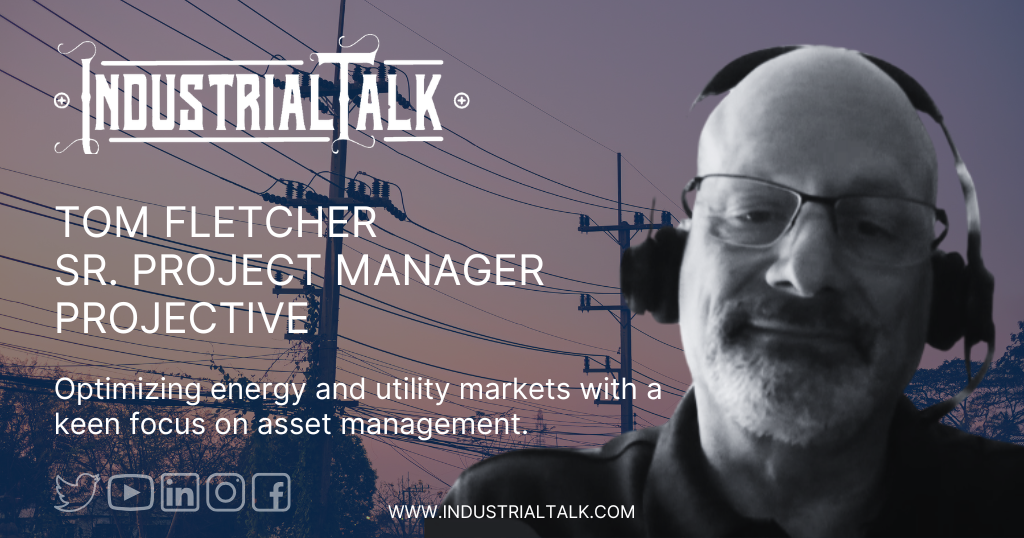
Industrial Talk is talking to Tom Fletcher, Sr. Project Manager at Projective Engineering about “Utility management and optimization”.
Scott Mackenzie introduces Elevotec's ERP, EAM, and business intelligence solutions, emphasizing their ROI and expertise. He then welcomes Tom Fletcher from Projective Engineering, discussing asset management and utilities. Tom shares his background in utilities and Projective's focus on optimizing utility operations. They discuss the challenges of managing aging assets, the importance of proactive maintenance, and the role of AI in improving efficiency. Tom highlights Projective's role in helping clients achieve sustainability goals and manage risks. Scott stresses the need for industry professionals to inspire the next generation and effectively communicate the industry's value.
Outline
Introduction to Elevotec and Industrial Talk Podcast
- Scott Mackenzie introduces Elevotec, highlighting their ERP, EAM, and business intelligence solutions.
- Scott Mackenzie welcomes listeners to the Industrial Talk Podcast, emphasizing the celebration of industry professionals.
- Scott introduces Tom Fletcher from Projective Engineering, focusing on asset management and utilities.
- Scott shares a personal anecdote about consulting for a utility company and the challenges of managing assets proactively.
Tom Fletcher's Background and Projective Engineering
- Tom Fletcher shares his background as a mechanical engineer and his experience with a large pharmaceutical firm.
- Tom discusses his transition to Projective Engineering and their focus on utilities and energy management.
- Scott and Tom discuss the importance of asset management and the challenges of maintaining aging infrastructure.
- Tom highlights Projective Engineering's role in helping clients optimize their utility operations and manage their assets more efficiently.
Challenges in Utility Management and the Role of Technology
- Tom discusses the challenges of managing aging assets and the importance of proactive maintenance.
- Scott and Tom talk about the role of technology in improving efficiency and reducing costs in utility management.
- Tom mentions the use of AI and advanced technologies to optimize chiller dispatch and other utility operations.
- Scott emphasizes the need for industry professionals to communicate the importance of asset management and the risks of deferred maintenance.
The Importance of Inspiring the Next Generation
- Scott discusses the need for industry professionals to inspire the next generation by telling their stories and highlighting the exciting aspects of their work.
- Scott shares his thoughts on the importance of being comfortable with sharing industry experiences and the benefits of doing so.
- Scott emphasizes the role of social media and other platforms in reaching out to young professionals and promoting the industry.
- Scott encourages listeners to connect with him and Projective Engineering to learn more about their work and opportunities in the industry.
Tom Fletcher's Perspective on AI and Technology in Utilities
- Tom discusses the potential of AI in managing utility assets and the importance of using technology to improve efficiency.
- Tom shares examples of how Projective Engineering helps clients optimize their utility operations and reduce costs.
- Scott and Tom talk about the challenges of implementing new technologies and the importance of a cautious approach.
- Tom emphasizes the need for continuous training and education to keep up with technological advancements in the industry.
The Role of Education and Training in the Industry
- Scott and Tom discuss the importance of education and training in preparing the next generation of industry professionals.
- Tom shares his experience with a professor who emphasized the importance of adapting to change and continuous learning.
- Scott highlights the need for the education system to keep up with the rapid pace of technological advancements.
- Tom and Scott agree on the importance of inspiring young professionals to pursue careers in the industry and the role of storytelling in promoting the industry.
Conclusion and Call to Action
- Scott wraps up the conversation by emphasizing the importance of inspiring the next generation and telling the industry's story.
- Scott encourages listeners to connect with Tom and Projective Engineering to learn more about their work and opportunities in the industry.
- Scott reiterates the importance of being comfortable with sharing industry experiences and the benefits of doing so.
- Scott thanks Tom for the conversation and invites listeners to reach out to him and Projective Engineering for more information.
If interested in being on the Industrial Talk show, simply contact us and let's have a quick conversation.
Finally, get your exclusive free access to the Industrial Academy and a series on “Why You Need To Podcast” for Greater Success in 2026. All links designed for keeping you current in this rapidly changing Industrial Market. Learn! Grow! Enjoy!
TOM FLETCHER'S CONTACT INFORMATION:
Personal LinkedIn: https://www.linkedin.com/in/tom-fletcher-305a2575/
Company LinkedIn: https://www.linkedin.com/company/projectiveengineering/
Company Website: https://projectiveengineering.com/us/
PODCAST VIDEO:
THE STRATEGIC REASON “WHY YOU NEED TO PODCAST”:
OTHER GREAT INDUSTRIAL RESOURCES:
NEOM: https://www.neom.com/en-us
Hexagon: https://hexagon.com/
Arduino: https://www.arduino.cc/
Fictiv: https://www.fictiv.com/
Hitachi Vantara: https://www.hitachivantara.com/en-us/home.html
Industrial Marketing Solutions: https://industrialtalk.com/industrial-marketing/
Industrial Academy: https://industrialtalk.com/industrial-academy/
Industrial Dojo: https://industrialtalk.com/industrial_dojo/
We the 15: https://www.wethe15.org/
YOUR INDUSTRIAL DIGITAL TOOLBOX:
LifterLMS: Get One Month Free for $1 – https://lifterlms.com/
Active Campaign: Active Campaign Link
Social Jukebox: https://www.socialjukebox.com/
Industrial Academy (One Month Free Access And One Free License For Future Industrial Leader):

Business Beatitude the Book

Do you desire a more joy-filled, deeply-enduring sense of accomplishment and success? Live your business the way you want to live with the BUSINESS BEATITUDES…The Bridge connecting sacrifice to success. YOU NEED THE BUSINESS BEATITUDES!
TAP INTO YOUR INDUSTRIAL SOUL, RESERVE YOUR COPY NOW! BE BOLD. BE BRAVE. DARE GREATLY AND CHANGE THE WORLD. GET THE BUSINESS BEATITUDES!
Reserve My Copy and My 25% Discount
Transcript
SUMMARY KEYWORDS
Elevotec, ERP EAM, business intelligence, digital transformation, Industrial Talk, asset management, utilities, projective engineering, sustainability, efficiency, AI, maintenance, technology, next generation.
Hey, it's Scott MacKenzie, your industrial friend, and I want to bring your attention to a great company, Elevotec. Elevotec is transforming how businesses manage assets and operations with powerful ERP EAM and business intelligence solutions. They deliver streamlined processes real ROI and over 20 years of proven expertise if you want technology that actually drives performance, not complexity, Elevotec has you covered. Learn more at Elevotec.com. Elevotec empowering your digital transformation with clarity, expertise and ROI. Check them out at Elevotec.com
Welcome to the Industrial Talk podcast with Scott MacKenzie. Scott is a passionate industry professional dedicated to transferring cutting edge industry focused innovations and trends while highlighting the men and women who keep the world moving. So put on your hard hat, grab your work boots, and let's go again.
Welcome to Industrial Talk. Thank you very much for joining the number one industrial related podcast in the universe that celebrates you industry professionals all around the world. I say it all the time. You're bold, you're brave, you dare greatly, you innovate, you collaborate. You're solving problems each and every day. That's why this platform is here for you. It is your celebration, and that's why you are the heroes in this story. In a hot seat, we have a gentleman by the name of Tom Fletcher. Projective is the company, and we're talking specifically two things that I like talking about, two things. And Tom brings it one, asset management, yes, and utilities, he brings it together. And they bring those two, those two businesses together and starts talking about it, projective engineering. All right, let's get cracking. Yeah. Again, all the contact information for Tom as well as projective engineering out on Industrial Talk, reach out to them. You need Sherpas. So our conversation was also around that. And you know, the funny thing about it is that many years ago, I was consulting for a utility company, and we were talking specifically about how to manage assets, and what way of being able to manage those transformers and to be able to manage those assets effectively, to be able to sort of tell when they're starting to degrade, or whatever, proactively, and then be able to perform maintenance at that right time. That was the thought process. That's what we did. But the reality is, is that today, the technology and the skills to do that are are definitely light years away from when we were doing it, back when we were trying to do this for a company. So it's, it's really good and just, you know, projective, they've got an army of great engineers specific around utilities. It's, it's a, it's a really great conversation. Really enjoyed Tom sharing his massive utility insights in that conversation. Okay, this is a call to action to you. I'm passionate, and I think that this is key, and this is important, because as businesses, specifically industrial businesses, we just sort of, you know, work each day, grind it out, get things done, because that's what we do, because we're professionals. But the reality is, is that, what are we doing as an industry to be able to inspire that next generation? I think that that's really critical. We've got the technology, and that technology is going fast, right? It just is. That's the amazing part about the technology, and it's powerful, and it's exciting, taking that and be able to to to inspire that next generation is key for that business resiliency. And the only way that I know how, because I'll tell you right now, and I'll be honest with you, you know, we're we're definitely out on in LinkedIn, but I think we have to stretch ourselves to be able to communicate why industry is cool and why it that these young individuals, these young professionals need to consider getting an industry, but we have to tell that story. We have to be able to speak that language. We have to be able to put ourselves out there in a way that might be uncomfortable for you, but we need to do that. Here's the benefit from it, what I'm always you. Intrigued. And I look at companies that fall into this category, that they look at something that is sort of traditional, traditional manufacturing, yes, whatever the tradition might be.
And I look at how the youth, the young talent, the young professionals out there have a way of looking at it differently and and approach it in a disruptive way, a positive disruptive way, not a negative and whatever, don't go down that road however, a positive disruptive way, and that, to me, is what is truly exciting about that, that young talent going forward, it can be disruptive. One last point, if you watch anything from SpaceX, anything you know, a rocket boom going in the air, and they pan to their team right there, the people that are all involved, there are two things that stand out. One, young professionals, no. Three things, young young professionals. Two, passionate, absolutely, off the charts, passionate and really embracing the vision everybody is creating, or looking at that purpose of what they're doing, and they're passionate about it that's exciting. And at three again, they look at it in such a way that is different. You know, for me, exactly, you know, I get into my routine, I do the same thing. I just keep on, you know, producing the content. But maybe, just maybe, there's a way of being able to elevate that, look at it from a different perspective, and be disruptive in that ability to be able to communicate what's happening in industry. My soapbox right here, right now. And I just ask that you need to really consider in your heart that ability to be able to say, Yes, I need to tell that story, and you need to do it in such a way that the individual looking at it now, yeah, don't think that you're going to go all viral? No, you're looking at it from this perspective that, hey, I know that person. I can relate to, that person. I like what that person is telling me. And it's not an infomercial. It's truly from comes from the perspective of truly wanting to help there. How about that? I've got a lot more to be said about that, but the reality is, go out to Industrial Talk. You want to join this, you want to be a part of this disruptive media platform. You just got to contact me. I want to have that conversation. All right, on to the conversation that was at hand. Tom Fletcher projective all of that conversation and everything that's associated with projective is out on Industrial Talk. So you just go to Tom, you find it there's all the backlinks, everything that you want. You want to reach out to him. All right, here is Tom. Tom. Welcome to Industrial Talk. Thank you very much for finding time in your busy schedule to talk to the best listeners on the face of the earth, all industrial. How you doing? Tom I'm
doing well and glad to be here with you today. Scott, thank you. What do you call home? I am based out of Kalamazoo, Michigan. That would be southwest Michigan.
I got your stat card up here. That's right. You're, you're Wolverine. I am, yeah. How are they? I'm sorry, but Michigan, the other team in Michigan's, they're, they're in the Final Four. I think
Michigan is in the Final Four.
Dominant man, and they're
dominant, yeah, and the hockey team is in the Final Four. So life is good for the Wolverines. Absolutely. Honor. We go. There you go.
Yeah. Have you ever been to the football game at your stadium? You had
to, oh, yeah, yeah. I grew met there a lot as kids, and then I was a student there, and I had, I had alumni tickets for a number of years, but it just got to be every other Saturday, it's just start having kids and you got other priorities.
But it's a heck of a stadium,
only 100,000 and change. I mean, it's you, if you've never been there, find a reason to go. Yeah, the first time you walk in, it just takes your breath away when you see this huge bowl. Yeah, and it's impressive. Now, I don't know if it translates to better football on the field, but it certainly pays for the pays away.
It's it's history, baby. It's history. Yeah, when I was a kid, and I digress, I when I was a kid, and I would look at the. College football. Kid, just kid. And it was always that, that classic Michigan Wolverine helmet, no matter what. Yeah, there it is.
Yeah. Anyway, there's a funny Indus, sorry, industrial story about the construction of that stadium.
Yes, and you need to share that now,
so that was built in a swampy area, and as the stories have it, the construction team came in one morning and a steam shovel was missing. It had sunk down into the muck and is still below the stadium floor today, it lives in infamy below the stadium, correct?
Really? Yeah, yeah, yeah,
I see that's cool stuff.
Yeah, the little bitty, the behind the scenes stories are pretty cool. Yeah, that's cool.
That's cool. I'm not gonna lie to you about that, all right, Tom before we really get into the conversation about projective and and what we're talking about from a utility energy that perspective, give us a little background on Tom level set. Yeah.
Who are you? Well, mechanical engineer in training out of college, and you know, as we were talking earlier, the young and dumb stage of your life. Didn't know what I wanted to do, and I went to work for a very large pharmaceutical firm, and the joke is that they never found something I could do well, because I spent about 10 years in maintenance, and then I spent 10 years in capital projects, in particular, in utilities, yeah, installing stuff, and then then they made me manage and operate the stuff that I installed, and I was utility leader at a very large industrial site, utilities and facilities. In the middle of all that, I decided to go work for a mechanical contractor and kind of learn that side of the business, what it takes to install, what we engineers, design and try to make work. And retired. Thought I was done with the professional world, and lo and behold, projective, called they had done fair amount of work for me in my last three or four years in the industrial world. Was very impressed with what they did for me. And so I went over to the other side of the business and and here I am. Look at you. Yeah, you
were with that other company for a long time, 35 years. Yes, I got your stat card right out here. Okay, you're on top, and then projective gives you a buzz. Now with take us through, and you see if I want to navigate. Now, tell us a little bit about projective, what they do, what their focus is, and then I want to sort of bridge it to what you do and promote.
Oh, okay, yeah. Well, projective, we want to be your trusted engineering consultant. We want to help you solve your problems. We specialize in utilities, utilities operation, utilities management, optimization, and draw up alongside you and be your friendly consultant.
See, that's interesting, because where you came from was a heavily, heavily regulated, heavily manufacturing base, and then you took that whole utility specific, that energy component, but then you came over to projective. Now they have a real focus in the world of utilities is that sort of, you got the manufacturing side now you have a real discipline in the utility side.
Correct, correct. Yep, interesting.
And has projective always been sort of that, that that's their niche, that's their vertical,
that's my understanding. I've only been with them. Let's see, two years, nine months,
yeah, exactly. And so,
company goes back to:Are we looking at all aspects of the utility, from generation to transmission to substations to distribution and everything in between. Oh yeah,
yeah, there's, there's, there's several ways to work that, from an efficiency standpoint, from a cost saving standpoint, and and you can bleed pennies and dollars all over the place, on the generation side and on the distribution side, absolutely. See this
is interesting because, because what I'm gathering specifically around the conversations that I've had at various events, is that, for from my perspective, everybody is looking to try to gain greater, greater efficiencies out of that grid, and that's every aspect of that grid, because, because we're not, we're not in a position to build transmission lines or or it's just that it's a really unique and challenging market, specifically because of the demand for bought it yesterday,
yeah, and in so many these days, as as we Go down the sustainability road for many of our clients. You know, we want to burn less fossil fuels. And so what are we doing? We're electrifying. And so
for clarification, what do you mean by electrifying? What do you
mean I am. I am, if I'm on a minimize my carbon footprint, I have to burn less coal, natural gas, those kind of fuels, to say, generate my steam, and I'm going to generate my heat with other means, heat pumps, and the new some of the newer technologies coming into the marketplace right now. So what I'm training trading is burning fossil fuels for electrical consumption, and so now some of our clients are grappling with, I got to bring more power in. Do I have the infrastructure to do it?
Yeah, yeah. I quite frankly, it's way above my pay grade, because typically, my knowledge, my background in the world of utilities, has always been generator, transmission, substation, distribution and just very linear. And it was from a system operators perspective, they just sat there, physically sat there saying, all right, supply, demand, supply, you know, and matching it. And now we have distributive energy. We have all of the other challenges that are taking place. But what is really sort of on top of that has been this ridiculous in a good way, not a not a bad way, a ridiculous demand for because of what is taking place in the market. Everybody says, data centers, yeah, the cooling component of that. So, yeah, I, I, it's an interesting time. How does projective fit into that?
Well, we fit into that across a very broad spectrum. So a lot of our clients, we spend some time first of all assessing what do you have, what are your needs? What's your growth look like? What are the age of your assets? And then Then, where are you going? Some of our clients have very aggressive sustainability goals. You know, by 20x x I want to be X amount of carbon free and reduce my emissions. Others maybe aren't as concerned, but reliability is a huge concern of buying and I don't have the reliability I want right now, or I need to squeeze some efficiency out of my operation. Many don't know how inefficient or efficient they are, and so we can come alongside anywhere in that spectrum. Help you understand where you're at and help you get where you need to go.
ut there today are still just:Well, to answer your first question, yes, we consider all those different alternatives. And there's that, there's, do we want to be on the bleeding edge, or do we want to be on maybe the right edge and not on the bleeding edge? And everybody's got a different tolerance for risk, but we help clients with does it make sense for me to do solar? Do I do solar PV and generate some of my own electricity. Do I use the solar rather for thermal, for, say, domestic hot water, heat? We've got other clients that are looking at some of these black boxes that are starting to pop up in the world. Hey, we got this little black box we want to put in your backyard, and it'll take care of your power needs and so, but we don't want to peak. We don't want to give you a peek at what's in the black box. Well, I've got a large industrial site. Am I going to rely on that? Or I need someone like projective to kind of poke and prod a little bit, and that's something we can bring to the table. You know, that whole, that whole technology piece, Heat pumps are a great example. You know, heat pumps, oh, they don't work in the northern climes because it gets too cold. Well, they're making intermental, incremental improvements year by year. And so we have people that stay on top of that. So when our client says, Hey, this is what I need. Is it going to work? We can say, Yeah, but you might want to have some supplemental heating capability here because of where you are, or you're going to be fine because here's your needs. And the new equipment is a pretty good match. And guess what? It's installed at a few other places that we can talk about, and you're not getting serial number one. And you know, late wake at night when it's that 50 Year, brutally cold evening.
Yeah, see again, I look at it specifically about bandwidth, what I have, if I'm utility guy and I am, I am tasked to ensure that power is delivered no matter what clean according to 60 cycles, whatever it might be, and I don't and it's delivered. I don't have the bandwidth be able to consider all of the other elements that could make me more efficient. It just seems like the right strategy to find the Sherpas to be able to, you know, push me along faster.
Yeah, find me a partner. Because you're you're spot on, because very few people, very few clients, have the staff that has the bandwidth to do that. And in my my utility management days, I certainly did not. And so you touched a nerve a few minutes ago, when you said that 50 year old asset, and when projective came to to the town and started wandering around my plant, you know, Hey, Tom, you've got some really, really old stuff here. Number one, we don't know how you're keeping it operating, but number two, it's terribly inefficient. And number three, you should see what the new stuff will do. And and I'm happy to say, post my departure retirement, several large projects, chillers, air compressors have been the seeds of which were with those original projective guys have come to fruition. They have new chillers, they have new air compressors, and they're they're much more efficient as a result.
Isn't it amazing that, and if you look at it, it's overwhelming. If you look at the manufacturing world, the utility world, all of these electrical assets that exist out there today, all of them, it's, I don't know, it's overwhelming, right? Of which, of which, that whole portfolio of all these assets, the amount of energy that is, the inefficiencies that exist i was when i was alignment for Southern California, Edison and climbing towers, towers coming out of Long Beach, California.
1909, oh my climb with confidence.
few feet, here and there. But:think about it. Don't talk about it.
Yeah, just keep climbing. Reality is that there are transformers out there. Are just the same thing, without getting overwhelmed, because I'm, let's say I'm a utility guy, and I don't have the the bench. That's one too. I don't have the market knowledge. I'm specifically focused on my my service territory, or whatever. I just think you guys keep up with all of the latest and greatest that have to happen. And that makes sense. You alluded to it. But how do you in the world of asset management, and I've seen it on your list, how do you get utilities to properly and proactively manage their assets?
The Holy Grail, you know, if I shared the secret recipe with you, no, I'm I'm just
No, I had a project and there was a problem.
st a wise guy. He had been in:Yeah, it's a it's a cultural mindset, too. And I'll give you what you know. It's I've been in the world of reliability for many years, I've seen it evolve, and it's been in the world of manufacturing, oil and gas, power generation and so on, and and various segments, various verticals, treat it differently, right? And some take it seriously, like we're all in, and others don't. And and I, I always looked at at the utilities as sort of that, that laggard like being able to take, here's where other markets are at. This is where you're at. And it always gets down to and also, the other challenge is, when you start talking about money, is it in the rate case, do we have a ring like it's maintenance? I don't want to spend maintenance dollars. I'll spend capital dollars, but maintenance dollar,
yeah, and big, big, big difference there. And, you know, everybody's under cost pressure. I I mean, there's a few industries these days that are, you know, it's a little boom or bust, and when it's boom, it's great. And nobody's looking at maybe how much you're spending on on maintenance. But, yeah, most places are. Under pretty good cost pressure. And you know, after a while, you've seen the good, bad and the ugly, where you you cut too far, and you find that pain point in utilities, finding the pay point is not wise, because usually bad things happen and and it's very costly. It very
costly, and it's, it's such a balance Tom, because I'm a utility, I'm bound by my rate case. I'm looking at that. I'm, let's say I'm an investor owned utility, so I've got to get that whole, you know, dividends and release, and I see and I'm going over here, and I'm not doing maintenance. But then when that hits the fan, then the regulators are on my back.
You just read my mind, yeah?
Chewing on me, Yep,
yeah, yeah. It's a it's a challenging environment, yeah, but they need to do it right.
They just need to Yeah, and there's, there's, there's horror stories, war stories that illustrate that point, over and over and over again. But just like history tends to repeat itself, we tend to repeat ourselves. I have found utility and asset managers to be some of the most resourceful, resilient people in the business, and to a fault, we will say, We'll make it work. We'll make it work. Yes, sir, I'll do with Okay, another quarter million dollar cut. I'll make it work. And that's what we do, but unfortunately, sometimes we get a little silly that way, or the bosses get a little silly that way, and when we just go too far, and then one of those lessons presents itself, and then there's a correction, and we try not to repeat it.
Yeah, yeah. How is projective dealing in this world? Ai, how are you taking the utilities as, yeah, hey, here, here's AI, it'll do XYZ, it's fantastic, and all that stuff. Do that.
apacity, and I got a fleet of:versus hard lesson maybe,
yeah, I, I, I see AI, the role of AI crunching data and then predicting sort of some sort of result from that data. So if I'm a utility and I want to sweat that asset, I don't want to do maintenance right now because of all these other reasons. So whatever financials, I'm going to sweat that asset, and I'm going to sweat that asset and try to determine when would be the best time for me to be able to perform maintenance on that asset. That is, from my perspective, an AI case, right? Yep, pull data, pull data, pull data. Oh, it's escalating. It's got this algorithm. It's escalating
absolutely, you know, it's time to punch tubes on your on your condenser, or whatever it is, because we're watching the efficiency go south. That's a great application of something that can crunch every 32nd piece of data or whatever that yes, you know, yeah, I like spreadsheets, but I don't like spreadsheets that much. So let's let a machine take care of that analysis and just send me a flag when it's time.
So. Here's the funny thing. So I, I worked for, or I did some consulting work for a utility, and what we were trying to determine is the best way of being able to test, proactively, test in an in an in a technology, dissolve gasses in a transformer. Big transfer. There it is, right. Let's pull that let's pull that, let's pull that sample. Dissolve, guests, dissolve. Guess the problem is, because it was a way before its time. It was data. It was a data tsunami, like it's got it, it's there, yeah, now what? Right? But it, it made sense practically, but it technology wise, we're not there, but today we are.
Yeah, yeah. And, you know, everybody wants to, I don't want any more utility operators than I need. So if you want to leverage your utility operator, have some tools for him. You know, have some things readily available that will jump up on I don't want to clobber him with unnecessary alarms. There's already way too many alarms, typically on a well automated system, so we got to be careful there. And just because it throws a flag doesn't mean you got to get up and jump and grab your toolbox and go. But it's okay. I need to let the maintenance dispatcher know, you know, next chance we get, we got to bring the tower down, punch the tubes, you know.
And this also brings up the whole topic of, what technology do you have to manage those assets? What is it? Is it some sort of asset management
platform to be able to sort of make sure that you have
went down that road, and when you're looking at, let's say, a manufacturing where you have four walls, it's like here, here's my asset base right in here. But then when you get into the world of utilities, well, you got a transformer that's 200 miles over this way over here. Yeah, the boundaries are just ridiculous. And to be able to have clarity into those assets and where they are from a health perspective, is that's a whole technology
conversation, and it changes so fast. You know, you know, it used to be copper, right back in the day, we had to string copper to bring information back. Now we're bouncing it off satellites, and it goes here and it goes there and comes back from Africa and suddenly shows up on your PLC. And that's, that's pretty wild stuff, but it's great application for AI,
it's an exciting time to be a part of the utility space. Which then brings us to the final conversation. People, right? Yeah, when I was when I was going through my program, and I was working for a utility company, and then I was consulting for a utility company, yeah, he always had a sort of a stable full of you know, people, and being able to come on in and you teach them and train them and all that stuff, I find that maybe there's some challenges that exist today, finding individuals that saying, Yeah, I want to get into that.
Well, in our world where we have the internet and things get splashed up all over the place, you and I were talking about LinkedIn, and look what we did, or look what they did. Or utilities aren't glitzy. They're not glamorous. But you got to find people that are, lack of a better term, energized by that, that not only understand it, but have a passion for it. Yeah, and, and, and they're out there. How we find them and develop them is a completely different matter. But at projective, we, you know, we look for people that come from higher learning institutions that that have programs in, say, energy or something along those lines. So, you know, if you're going to do that in a higher learning environment, then chances are you may have a passion for this going out. And to even take it a step further, what we train our operators to do, I get into a lot of plans and and never cease to be amazed. I can be out on the planes in Canada and be sitting there and talking to a boiler operator. And he is just impressive, as all get out. He understands how that machine works. He's keeping an eye on the excess oxygen. He's doing everything he needs to do. He's he's an engineer. Okay, he may not have the piece of paper, but in essence, an engineer, we have to train, I don't care where you are in the utilities equation, we have to train people, not only to keep up with this crazy technology development, but nobody can staff the way we used to. So we got to have the brightest and best. There's two. Much money, you know, when you sit back, yeah? When you sit back, like where I worked, and one day they came in and they said, Tom, your air compressors are the largest consumer of electricity at your site. That about I bought, fell out of my chair. Yeah? And, well, we're not paying any attention to those. Yeah, from an efficiency standpoint, well, maybe you should, and so it's a huge challenge to find the right people and then educate them, I
you know. And I think one last little blurb, I think one industry, as in general, just industry on us, needs to tell that story. Needs to be engaged, telling the story why it's, it's a great profession. That's one. And do it inconsistently, and just, you know, get over the fact that you're, you know, you know, feel uncomfortable. That's one. And I think we have to do that. But two, I think, and I can be completely wrong, the Education Complex that we have today, is it nimble enough, is it proactive enough to be able to train that next generation? Because, you know, as well as I do, Tom things are happening fast out there. I don't know how you keep up. It's a really interesting time, and I'm and do we? Do we have the education in place to be able to do that, the training?
u I graduated from college in:back then. Now it's it's even more so. And I think that from a from from a tenure professor, are they keeping current? Are they doing, yeah, I don't know.
I certainly hope so, for for the sake of the industrial complex, they need to,
absolutely, they need to, yeah, that's, that's
a, that's a whole nother topic. I, I'm passionate about that because I just think that all of this wonderful technology and all of this great stuff, all of this insights, all of this ability to be able to create and extract greater value out of these assets, all good, all important, all necessary, and you need to commit to it. But I I'm keenly focused on, are we doing the best with that next generation? Because I love industry. I think it's cool stuff.
Oh yeah, yeah. Plan I get into. It's like, what do y'all do here? And show me how you do it. And I don't care if it's 100 years old or if it's 20 years old, or if it's brand new. They do cool stuff there, and operators love to show you and tell you what they're making. Again, I don't care if it's a red wagon or a syringe full of medicine, they are. They all want to tell you that stuff.
And it's a beautiful thing. I love that energy. I love that.
Yeah, absolutely. Soak it up.
All right, Tom, as we wrap this up, how do people get a hold of you? What is the best way? And they're saying, Hey, I I like what Tom is saying. I like projective. I want to know more. How do they get a hold of you?
I would start by going to projective engineering comm. And what you'll do is you'll you'll see on there is, there's offices around the world, navigate to your nearest office, communicate with us and reach out and trust me, we will, we will, in turn, get in touch, and we'll talk about what your needs are. Again, we want to be your trusted partner and help us understand what your needs are, and we'll let you know how we can help.
See, I like that. Are you act about on LinkedIn? Can't if I, if I just gave that link to LinkedIn. By the way, you're ghosting me. I'm I've got a right there. I see it right there. But anyway, are you? Would you be amenable to somebody saying,
hey, absolutely.
To answer your question, I'm probably not as active as I should be on LinkedIn, but yes, I'm out there, and I respond to messages, as do the many others you'll see from projective on on LinkedIn, absolutely.
Well, you were absolutely. Be a delight. I can have this conversation. And by the way, I haven't had a long conversation like this in a long time. Hey, I'll eat this stuff up.
Let's get some lunch and get back at it, right?
I like it, yeah. Tom, you were a delight. Thank you very much for being talk my friend. That was all right. Listen, we're gonna wrap it up on the other side. We're gonna have all the contact information for Tom out on Industrial Talk. So fear not reach out to him. Find out more. Yes, you need to know more about projective and Tom. You just do all right, stay tuned. We will be right back.
You're listening to the Industrial Talk Podcast Network. You you.
That's Tom Fletcher. Projective is the company. So projective engineering, calm, that's that's the URL. So projective engineering.com, all of it. So fear not. Don't worry about it. It's all out on Industrial Talk. You go find Tom, you're right. It's probably in the league. Just find Tom, and then you get to see all of the ways of being able to connect with Tom and projective engineering. Absolutely all there make it a priority. Again. What always fascinates me about these conversation is how much, how much we can improve, how much more there is to be able to extract greater value specifically or or efficiencies specifically in the world of utilities, it's pretty cool and Anna and being from the utility space, it's needed, and we really need to think differently. The demands for that are skyrocketing and and if you're are, if you're in the world, or you want to consider a profession, yeah, you need to look at utilities. You need to look at power generation. You need to look at everything in between. It is a remarkable industry, and you need to reach out, definitely to Tom, make that happen. All right. Again, I was on a soapbox in the beginning of the of my monolog. The reason I'm on that soapbox because I think what is critical, what is vital, what is important for your success, is that we have to inspire that next generation, and that means telling your story. You need to tell the story, no matter how uncomfortable it is. You need to tell that story, and you need to tell it from the heart. It's just how people consume information now, Industrial Talk. Go out to Industrial Talk. Click on connect it, and you'll be talking to me. That's it. How about that for easy peasy. All right. Again, connect with Tom projective. Make it all happen. We're going to have another great conversation shortly. So stay tuned.

About the author, Scott
I am Scott MacKenzie, husband, father, and passionate industry educator. From humble beginnings as a lathing contractor and certified journeyman/lineman to an Undergraduate and Master’s Degree in Business Administration, I have applied every aspect of my education and training to lead and influence. I believe in serving and adding value wherever I am called.
