Josh Brown and Steven Fedell with METAL for America
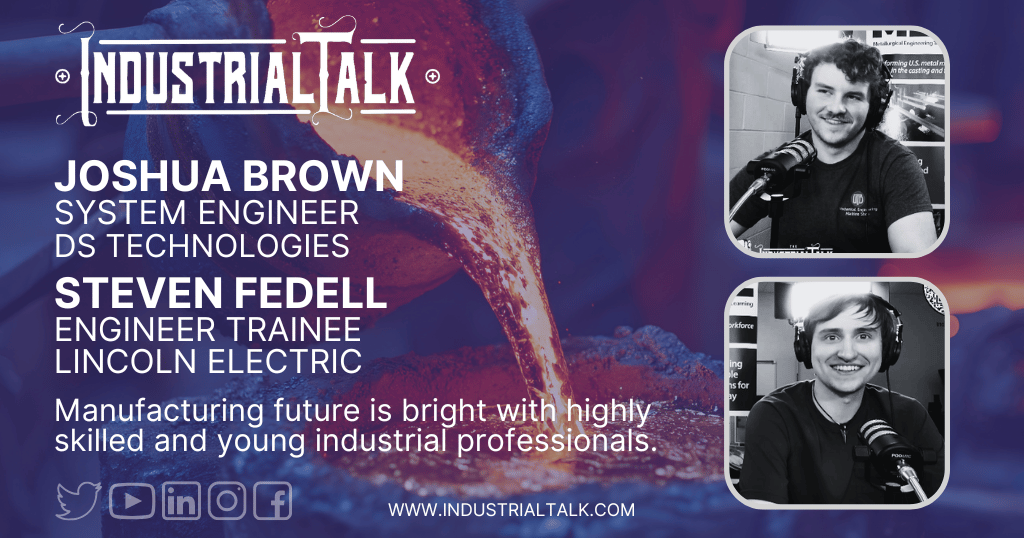
Industrial Talk is onsite at Penn State and talking to Josh Brown and Steven Fedell with Penn State University METAL Program about “Why they are passionate about the future”.
If interested in being on the Industrial Talk show, simply contact us and let's have a quick conversation.
Finally, get your exclusive free access to the Industrial Academy and a series on “Why You Need To Podcast” for Greater Success in 2026. All links designed for keeping you current in this rapidly changing Industrial Market. Learn! Grow! Enjoy!
JOSH BROWN'S CONTACT INFORMATION:
METAL Website: https://www.metalforamerica.org/
LinkedIn Profile: https://www.linkedin.com/in/joshua~brown/
Company Website: https://behrend.psu.edu/
Company Website: https://dstllc.net/
STEVEN FEDELL'S CONTACT INFORMATION:
LinkedIn Profile: https://www.linkedin.com/in/steven-fedell-896945244/
Company Website: https://www.lincolnelectric.com/en/
PODCAST VIDEO:
THE STRATEGIC REASON “WHY YOU NEED TO PODCAST”:
OTHER GREAT INDUSTRIAL RESOURCES:
NEOM: https://www.neom.com/en-us
Hexagon: https://hexagon.com/
Arduino: https://www.arduino.cc/
Fictiv: https://www.fictiv.com/
Hitachi Vantara: https://www.hitachivantara.com/en-us/home.html
Industrial Marketing Solutions: https://industrialtalk.com/industrial-marketing/
Industrial Academy: https://industrialtalk.com/industrial-academy/
Industrial Dojo: https://industrialtalk.com/industrial_dojo/
We the 15: https://www.wethe15.org/
YOUR INDUSTRIAL DIGITAL TOOLBOX:
LifterLMS: Get One Month Free for $1 – https://lifterlms.com/
Active Campaign: Active Campaign Link
Business Beatitude the Book
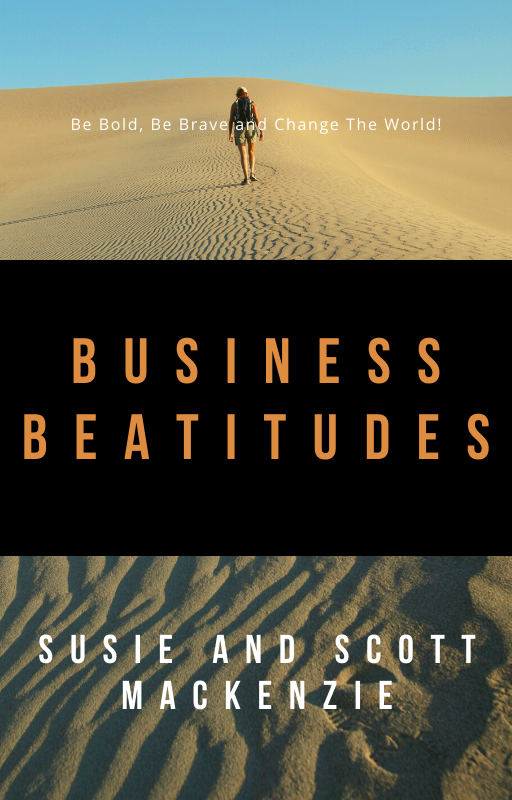
Do you desire a more joy-filled, deeply-enduring sense of accomplishment and success? Live your business the way you want to live with the BUSINESS BEATITUDES…The Bridge connecting sacrifice to success. YOU NEED THE BUSINESS BEATITUDES!
TAP INTO YOUR INDUSTRIAL SOUL, RESERVE YOUR COPY NOW! BE BOLD. BE BRAVE. DARE GREATLY AND CHANGE THE WORLD. GET THE BUSINESS BEATITUDES!
Reserve My Copy and My 25% Discount
Transcript
SUMMARY KEYWORDS
Industrial Talk, Workforce, Metallurgy, Engineering, Apprenticeship, Boot camp, Manufacturing, Robotics, Automation, Programming, Skills, Training, Technology, AI, Research
-:I would say so. Yeah, we've covered everything other than a few hiccups the first day with some instructors, but
it's always a hiccupish, right?
Sure, sure. This boot camp and the the work that we do here with the students, this is a very fluid curriculum, just because of we're sharing the space with two boot camps, actually, and so this this has been a smooth week by comparison to some of our other ones.
Yeah, but but you guys are getting it. But how long this is? Sorry, this goes to you, Josh. How long has this program been like metal? How long has it been around?
So I'm actually relatively new to the metal program, but it's been around for what the past couple years, Steven.
I think about two and a half years ago is when this program really started. Dr. Lynch here, who's a professor at Penn State Behrend, was tasked as the PI on this project to really develop this curriculum and get this program really started. So he developed the initial curriculum with in conjunction with a number of professors down at Penn State Main Campus University. Yep. Yeah. Along with some professors up here, and has slowly been growing the team, adding to the curriculum over time, I got brought in last year in February to help develop the forging curriculum and really add to all of the casting and metallurgy and material science that they had previously made the curriculum about.
And all of a sudden, I I don't have to worry about asking what Steve. Does, but I do have to ask what Josh, what made you get involved with metal?
So I was very fortunate when when I started here at Behrend. That was actually just last August. There were the ACE metal programs existed, but they did not offer courses for credit, and so they tweaked, they they pulled some strings, and I was able to take the ACE boot camp, the machining boot camp for credit as a transfer student. Yeah, and so the very first people that I met here when I moved up to Erie and up to Behrend were Chris and Andy, and then Dr. Mark Rubio and Dr. Paul Lynch, and so I fell in love with the program. Had a blast working with everyone, and it was great learning opportunity. I had some machining background at that point, so it was a fun refresher. But I said to Dr. Rubio one day, I noticed they had the robot in the labs. I said, "Well, can I help you program that that robot? It's a machine tenning robot. He said, "Well, better yet, I can have you. I can pay you to program. I said that sounds like something I'd be very interested in. I was going to
say yes, exactly.
And so that really snowballed, picked up speed from there. We realized there were a number of ways that I could contribute to the program. Obviously, as a student instructor doing some curriculum development as well.
Okay, Josh. Now, when he was talking about robotic programming, I was thinking about you because you did that, right?
Yeah, so I actually programmed industrial welding robots making aluminum railing.
See, that's come on, that's cool. Okay, I have to tell you the story. So I was at Fab, I think it was FabTech, another conference, and there was a company there, and it wanted-I can't remember the name of the company. However, the programming of the robot, the welding robot, was was easy in the sense that it's like, okay, I have to run a bead here, right? Whatever that is, the bead there. So I'm gonna, I'm gonna point there, make that a point, click, click, and then it would just intuitively, and I guarantee it's better now. But intuitively, know that I'm going to run a bead, whatever that is, right there to there. Anyway, there it is. Are you impressed with me now? I am. So I can I can talk about that. Okay. This is to you, Josh. You said you came up here. You had you transferred. Why?
So I my my academic career has been the product of chasing some scholarships and some some school layoffs. I started the University of Texas at Dallas. I spent two years there. One year in mechanical engineering. One year in supply chain management, project management. Yeah, worked as a student machinist while I was down there, and that really got me into the manufacturing space. From there, went up to Penn State Harrisburg. I figured out that the MET mechanical engineering technology degree that Penn State offers was really my wheelhouse and where I wanted to be. That systems implementation and manufacturing space, and I was settled into the program there. And unfortunately, some of the older professors decided to retire a little early with some of the tenure buyouts that Penn State offered. And so, at the time, there was some restructuring going on. And I said, I think it'd be best. It looks like I can do this quicker up at Penn State Behrend, and so I called the program head up here and said, "Hey, you know, you have any room? Can we make this work? And they were very generous, and they they they flexed some things around, got me up here, and got me graduated in one year. So that's been my my academic path. I'll say.
Well, I I'm I'm impressed with the perseverance. It was just sort of funny because when a professor says, "Well, that's I'm packing it in, going well,
and these were these were folks that have been dedicated to that program for a very long time, and you know, I mean, I think a lot of them, it was it was the opportunity. It was a little bit more money, you know, the opportunity to go spend time with their families and whatnot. I knew some of them, and so that was certainly can't blame them for taking the opportunity. Plus, some of the the way that the programs at Harrisburg were being shuffled. I will say, I think Barron has retained a little bit stronger of a capacity for the MET program specifically, which really played in my favor in graduating from here. So I really ended up being quite fortunate that I transferred up here. I've had a lot of opportunities that I wouldn't have had, and I can't say that I'm unhappy that it worked out the way that it did.
Steve, what what brought you up here?
So I have a little bit of a mixed background in a lot of things. So originally I went to school for forged architectural ironwork. So I'm a blacksmith by trade.
Yeah,
got an associate's degree at a school called the American College of the Building Arts down in South Carolina. Went and worked as a blacksmith professionally in Colorado for a little while. Found I really enjoy blacksmithing, but I don't enjoy the production side of blacksmithing, so I thought it was best to kind of leave it as a hobby. Moved back in with my folks for a little while after they moved to Tyonesta, PA. Ended up going to school for industrial maintenance in Meadville, and got halfway through the program, and kind of like with you, well, a little more seriously, the program entirely shut down. School didn't have enough students to keep their doors open. So, six months into a full year program, I was like, "Well, what the hell do I do now?
Yeah, yeah.
Wow. I ended up working for my landlord, who was a plumber at the time. Worked as a plumber for a little while. Went and programmed industrial robots because I wasn't making good enough money that with the plumbing and went. You know what? I think I really need to go actually get degree and make something a little more of myself than just a skilled worker.
Yeah, yeah.
So I looked into you know what colleges were in the area and ended up at Baron.
How did you guys know about metal, Josh? I mean, it just-I know how I know about it. I was approached, right?
Sure. So, so Ace and Metal are kind of tied at the hip, and so, like I said, the first thing I did when I got to Baron was go through the Ace program and said, "Man, this was fantastic. And they said, "Well, there's another one of these that you can take. I said, "Really? Please tell me more. And that was about the time that I was getting involved with potentially working for Doctor Rubio. So one thing led to another. They said, "Well, you know, we'll just send you through the your first metal boot camp as a training for you to come back then and continue working them. So last November, I think it was, I did my first metal boot camp, and that really was what brought me to the fold with Steven and with Dr. Lynch and the rest of the metal team. From there on out, I've worked every boot camp since. I will say, for the average student, we really, really try you know flyers, professor shoutouts, things like that. Especially now that we're able to offer course credit for these boot camps, we can offer students currently, you know, two out of three credits for a technical elective, and a lot of other students are involved.
You say this this five day program? Yes,
is
is credit?
Yes. So it's one course credit hour. We figure that it roughly equates to the amount of work that you would do over over a semester for a one credit class, just crammed into one week.
Yeah, yeah. And so
we we're able to help a lot of students that get into weird binds with course credits and whatnot. They said, "Well, gee, I can take the metal boot camp and I can come and get you know I can be trained in something new, hands on. It's it's almost a vacation for people because you know you're coming in here, you're hanging out with fun people, you're getting good food, you're learning a lot of fun stuff. It's all hands on, you know, not a lot of bookwork. So students will actually stay during spring and fall break and take these boot camps with us because it's such a unique opportunity for them to learn things, build credit. So for the average student, it looks a little different than how it went for me, but we try, especially like a lot of our friends, Steven and I have a lot of friends that have now taken the boot camps because they've heard us talk so much about well, I'm going into work and whatnot, and so it's growing, it's it's spreading and networking through the college just because more more and more people are hearing about it word of mouth, at least particularly on this site.
This is one thing that was really pretty cool, Steven. Is the fact that it is hands on. You know, we were doing that forging hands on, and and it's cool. And yesterday we were at some foundries. There it is, more hands-on, and and to me, I think that's critical. Has tremendous value when you're not in books all the time and you see the true real-life application of what that means. That's that's pretty powerful. The other thing I want to point out is that you guys you guys got a passion for it. I mean, this is this is pretty cool, and I I find the the instructors, the teachers, they're every bit as passionate, which is pretty cool. Do you agree with that, there?
Yeah, I definitely agree with that. You know, nobody is here involved with this program unless they're actually passionate about this stuff. It's something that they're taking on extra on top of all their already, you know, whether they're teaching classes or you know, grading exams, everything else. This is extra loaded on top of that. So they're here by choice. You know, they want to be here, and they really help encourage that same kind of passion within the students that come through these programs, get their chance to get some hands-on, some real-life experience. You know, do some really cool stuff, pour some metal, forge some stuff, do some material testing, and it's just absolutely invaluable.
Josh, here's here's one of the challenges, and I've had a number of conversations. You know, industries all around the world, and it's always the same thing about I can't find the right people. I can't find skilled individuals, trained skilled individuals, and I'm concerned. So I'm going to go down the road of automation as much as I possibly can, and so on. But I'm still struggling to find in you, and this is going to become you too, Steven. Why were you attracted? What what what's inside of you genetically of why you're attracted to something like this?
I have, from I think the earliest moments of my life been turning wrenches and tinkering. I was that kid that was always asking people if they had old VCRs that I could take apart. Yeah. So you know, always I was always into the Legos, anything like that. I've I've always been a builder and a tinkerer, and even to this point, I would argue I'm probably the handiest person in my family, so I kind of, by default, field all of the questions of, "Hey, this is broken. Can you fix this? Well, yes. Okay, fine. I always
go to eBay. Yeah. Yeah. I can find any part on eBay and get it up and running. It's like, yeah,
exactly.
Look at me.
So I think in that regard, this is just a natural extension of that. I, like Steven, have a pretty diverse background. I started working in the physical side of IT, running cables and troubleshooting equipment when I was like 14 at my high school, and so I've had a job every summer, either in a trade or an engineering sense, and so that of course includes my time as a student machinist and my time with the Ace of Metal programs. But yeah, this is just the next logical progression in my step of seeking to problem solve and make things. And along the way, I get to do it with really cool people.
Yeah, at Steven, give me that sort of the genetic background of, because I know why I got into industry, and that is just because I do the same thing. I had my '57 Chevy pickup. I would always fix that, and I would do this and that, and work here and do that. It was just a well, didn't know anything else. What about you?
Yeah, much like Josh, you know, I was always the kind of kid that was tinkering with different things, taking things apart. Didn't matter if I could put it back together, but I could take them apart. I enjoyed, you know, playing with Legos. I modded Nerf guns. You know, I was always trying to see if I could get them to shoot further, put my buddy's eye out. Yeah, of course.
Soft air, jeez.
Yeah, I got involved with robotics a little bit in high school, so built some robots, did a little bit of programming, and you know I've done a wide variety of things, as I've said, and it's just been an extension of just trying to learn more, trying to be able to do more with my hands, build the next thing. You know, I got all these ideas in my head. How do I get them from up there to on paper to something physical?
Changing gears a little bit again. Companies are constantly talking about how can I find quality young industrial professionals to truly nurture and and and continue to make this business, whatever it is, more resilient and move it forward because a lot of people are concerned that they they can't find anybody. You guys, just so that that we're clear, have sort of chosen a sort of a unique path that's not really typical of people of your age, how do we to you, Steven? Just and it's going to come to you, Josh. So think your answer. How do we inspire that inspire people more like you to get involved, to to reach out and do that? What what what would what do you think that that would look like?
I think, in a large part, honestly, looking at the companies, a lot of them aren't willing to take a chance and take a risk on, you know, younger people from our generation. I can speak from personal experience. Part of the reason why you know I hopped around being a plumber and do programming industrial robots, I came to that out of that school having quite a bit of experience with industrial maintenance. I could, you know, fix CNC machines. I could rewire cabinets. I couldn't find a job in it. I looked for three, four months, couldn't find anything. So you know, I kind of just hit something and had to do something out of necessity to make my way in life, be able to pay my bills, and if a lot of those companies were willing to take a risk and go, you know what? Maybe he doesn't have the exact thing we're looking for, but you know, he's a competent. He shows he's a competent individual. He's picked up skills in the past. You know, he can talk about it. He can engage. He can learn that. They'd find there are a lot more capable individuals out there than they want to give credit
to. Isn't that interesting? So I agree with you 100% I think that I always we we as a society I believe we get into trenches, and this is the way we always do it, and and there is an interesting problem, and that that exists in industry that we are in trenches sometimes. I would advocate finding young individuals for disruption, a positive disruption, but disruption nonetheless to rethink how you do business, case in point. Always fascinated by SpaceX, and the reason I'm fascinated by SpaceX is because it's young people that they might not have a degree or anything, but they just are looking at solving problems in a different way. And I think that that, to me, is where success happens, Josh. Do you agree?
I would agree with that. I would really agree with what Steven has to say as well. I was very fortunate. I was offered an opportunity in automation for a local manufacturer where I'm from in South Central Pennsylvania, and I at the time was not an engineering student even, and they took me on as a automation and controls intern, doing some proprietary machine commissioning, some robotics development, things like that. I did not have a skill set beyond I knew how to turn a wrench and do some basic fabrication that would have made me particularly desirable to that company. But they were willing to throw me into that role and throw me the keys and say, "Here, figure it out.
Yeah, that's pretty cool.
There is, I am incredibly fortunate to have had that opportunity because that is what led me down this path of continuing my engineering education. Obviously, I've continued to sharpen my automation claws, but that is that's what's led me here. And I think looking back, I have to agree with Steven. Finding opportunities for people our age that are really motivated is actually quite hard. I've been I network particularly well because I like to talk to people, but there are a lot of really competent students my age that are looking for a chance that aren't quite as much of they aren't blabbermouths like I am, to be completely honest. And I've been very fortunate for the opportunities that I've had because of that. But you know, there's so many other people that I work with that I say you guys are fantastic engineers. You're fantastic people. You're fantastic engineers. You have character. You have integrity. You have ingenuity. How are you not being snatched up? And I think largely, it's like what Steven said. There's there's an apprehension by these companies of we need someone that checks all of the boxes right off the bat. We don't want to hire young. We don't want to train to fit. I think the willingness of certain companies to bring people in and mold them is is crucial, and you see a big difference in in the stories that I hear. People going, okay, I was brought in, and I was brought in on a rotational program, and I went and did all these different things, and I found the thing that I really liked, and the thing I was good at, and the thing that spoke to me, and they placed me there, and now here I am. You know, five years down the road, and I'm a manager in that department. Right? These are the stories that I hear. These companies are going, okay, we're not sure quite what you're good at, but we know you're probably going to be good at something, and you have the soft skills and the character qualities that we're looking for.
Yeah, I'm a big fan on hiring heart, right?
Yes,
and and being able to have that conversation because I believe if the individual has the right heart, the right of spirit of wanting to learn, it's it's not that difficult. I mean, it really isn't. It's it's harder. You can't. I believe you can't just train that that it's hard to train integrity. It's hard to train a passion, but once you have that, it's easier to train. Like, all right, let's get you going on, and and the learning curve is much quicker and long term success. I I agree with you 100% I think I think as industry, as I do this podcast, industry has to, and you, and this is just my beef. I believe industry has to embrace and figure out how to tell the story in a way that appeals to you, younger people, that you consume information differently, and and sometimes in many cases we don't we don't get out of our way industry and tell the story that is that resonates with the next level or next generation of leaders. That's just my beef, and and that's. That's neither here nor there, but I just I believe that that's a case. I my my daughter works with me, and she's she's in marketing, so she works. And I all I always have this conversation. I said, Hey, what do you look at? And I'm I'm just interested. How do you consume information? So do you, Steven? This is this is always interesting. How do you get your information? Where do you go?
It really depends on the day. You know, just browsing the internet, look look see what pops up in my Google feed or on Reddit or you know what do I hear people talking about in the halls, and then I'm gonna go want to find out more more about. But I think to some extent people are a little too consumed with the social media aspect of everything. I think being a little more disconnected and being in the moment and you know living life a little bit more, even if it's slightly more ignorant in certain aspects, is not a bad thing, especially for a lot of people.
Josh, how do you how do you how do you get your information? Because I had this comment, and I'll share what my my daughter says. So just
so as I'm understanding your question, how I'm getting my information, my exposure to the world around me.
I'll back up just a quick. Here's here's the reality, at your fingertips, at your never in my lifetime. Sure, I can consume and get any piece of information I want. Sure, and do do I have to put my you know spidey senses on to make sure that it's it's reasonable or whatever. Yeah, okay. I but but you are naturally and and you just know how to navigate technology. But you you've got to consume information. You got to be hungry. That's that's where it's at. I'm I'm just constantly where where do I get that information? Right. AI'S killing me because I'll just okay. I'm better done
right. So I mean, AI obviously you you can ask pretty much any engineering student our age, and they'll tell you that AI has changed fundamentally how work is done and how research is done. Yeah, and and so that's a big part of it for me lately. The more I've leaned into that, recognizing that that is kind of going to be one of the biggest facets of the future. I will say that I think that approach requires some nuance for me personally. AI is a great starting point for research, but it is almost never the the finishing point of that research. Yeah, it's very easy for me to ask whatever AI I'm using. You know, I need an overview of this subject. Give me some forum results. Give me some you know technical publications. Give me X and Y and Z. Right references for the information that it's giving me in short form. I want to see the references. Yeah, yeah, yeah. And I can go down through and I can skim those references, and you know I go through and read their references, right? And so you start to build this network of on a topic. Okay, I'm going to work my way through from the starting point to the information that I actually want, based on broader or yeah, broadening nets as layers of information. Another thing that I'll do, I'm still a big fan of Google, right? You know, just real quick, throw something into Google. First couple hits, okay, my wording was wrong. Re Google, okay, first, you know, first couple hits. You work your way through it. I'm doing some research and and some work right now. We're doing a machine retrofit, and so a lot of what I'm doing, I know there's instrumentation out there to collect the data on this machine that I'm looking to collect. I'm not totally familiar with technical terminology yet. So between a combination of using AI, explaining what I'm trying to do, what information I want, and what I want to do with it, and then using some of the words from those summaries, you know, working my way to okay, this manufacturer manufactures the parts that I need to do this, and then you read through the technical documentation. There's kind of a a mostly linear progression through that, so that's how I you know consume information.
Yeah, see, and and it's so interesting because I work with some other companies, and and the the holy grail, to a certain extent, specifically when it's around asset management, like how do I maintain the operations of that motor or pump, and the systems, the technologies, the solutions that are wrapped around that are all geared toward ease of information. It's like and and accurate ease and accurate of the information, so that I'm not wasting my time. So there's this push. So if I'm on pump one. And I want to know the specs, the maintenance procedures, the history, all of that stuff. There is the information that's right there, right there. Done. Right. That's key. The second thing is the use of of technology such as AI to determine the overall health of that asset through diagnostics, real-time diagnostics, and then be able to place it into an algorithm that says, "All right, we've got your bearings heating up, or there's some there's some ultrasounds, whatever it is. What we what me AI has determined is that we've got a bearing failure? You need this wrench. You need this part. You need to go out here. This is the procedure of how you change it out, and there you go. All of the the points of success are right there, but it's compressed. I think you guys are living through a a remarkable time, a remarkable time that that truly achieves efficiency, which is cool, and then the the quality, which is going to be off the charts. I mean, it's it's just that to me is just spectacular. Okay, that was a soapbox, but I liked it because I think you guys get it. All right, if I was if I was interested in knowing more about you guys and just want to connect because you're about networking, Josh, what would be the best way for somebody to say, "Hey, let me reach out"
Feel free to shoot me an email by email. I get
it. I got it. It's right here.
Yep.
JJB 142 one@outlook.com.
Yep.
Steven, same thing. I want to know more about 4G.
You can look up my Outlook or my LinkedIn.
You got a LinkedIn?
I do have a LinkedIn. Shot. I don't have LinkedIn. I
do have a LinkedIn.
Okay. Well, I'm gonna I'm gonna go out and reach out on LinkedIn. See my daughter. I said, "How often do you check LinkedIn? Rarely. And she's got a she's got a following. It's just not a platform. But you guys were just stellar. You guys are the best. Thanks for having us. We're gonna have all the contact information for both Joss and Steven out on Industrial Talk. Their email address, their LinkedIn stat card as well, and yeah, you need these two young professionals in your network most definitely. Once again, we're broadcasting from Erie, Pennsylvania. This is Erie, Penn State's metal program-it's a mouthful, but man, it delivered! All right, we're going to wrap it up on the other side. Stay tuned; we will be right back.
You're listening to the Industrial Talk Podcast Network.
Wonderful conversation. That's Josh. That's Steven. And you know what? They're off to bigger and better things. I go out to their LinkedIn stack card, see where they're doing. I got to tag. I got to do that whole social stuff and tag. They're doing incredible work. They're going to change the world. They're changing the world, you need to be a part of this. Build freedom. That's ace. That's metal. They're all a part of the boot camp. Phenomenal program. Incredible instructors. Passionate about success. Passionate about that future workforce. Passionate about developing leaders. It's all there. We have to do it. You have to succeed. Don't come to me and say, Scott. I don't know what to do. I don't know how to be involved. Here it is. Build freedom. Everything is out there on Industrial Talk. Reach out to them. They're inspiring. Yep, most definitely. All right, Industrial Talk is always here for you, always, and we are passionate about your success. Please go out to Indus Real Talk. Reach out, say, Scott. I want to tell my story. You have to. It's all about that communication. All about putting a human face to what you do. You're doing incredible work. We depend on you. Success happens, so get out there, get on industrial talk. Let's have a conversation. I make it easy, I do, and I can I can be pretty confident about that. I make it easy, and I make it fun. Yep, I do that too. Let's have a conversation, most definitely. Again, that's metal. Ace, Ace was a part of that other thing, but it doesn't matter. Everybody, it's all hands on desk. Anyway, that's Joss and Steven moving on to bigger and better things, changing the world. Now, you need to change the world. So get in contact with me. We're going to have another great conversation shortly. So as always, stay tuned.