Robert “Bob” Voigt with Penn State University – METAL Program
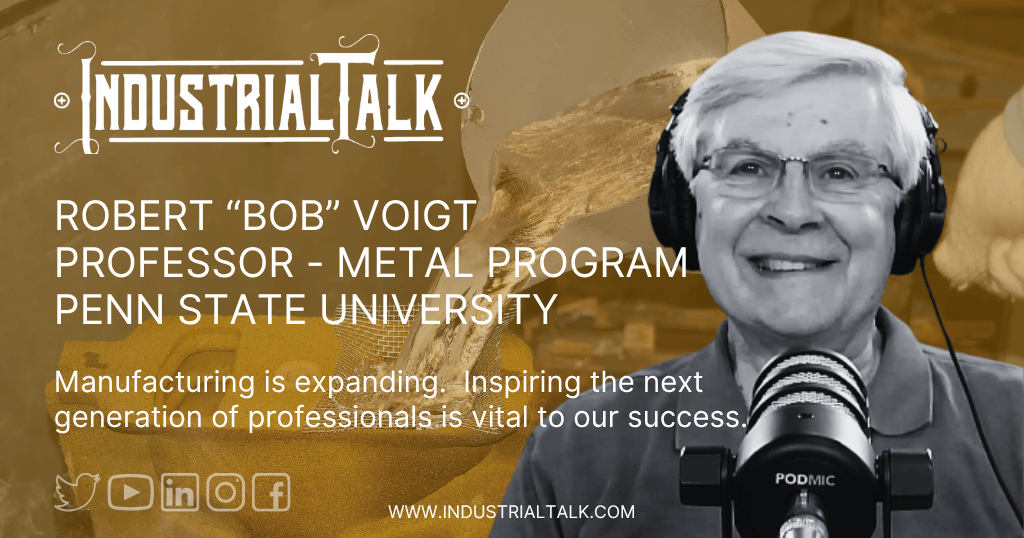
Industrial Talk is onsite at Penn State and talking to Robert “Bob” Voigt, Professor with Penn State University about “Educating the Future Manufacturing Leaders”.
Overview
The conversation highlights the importance of the Barcelona Cybersecurity Congress, scheduled for November 3-5, 2023. The Industrial Talk podcast, hosted by Scott Mackenzie, features an interview with Robert Voight, a professor at Penn State Behrend, discussing the Metallurgical Engineering Trade Apprenticeship and Learning (METAL) program. Voight emphasizes the hands-on experience provided to students, including foundry visits and practical metal casting. He also discusses the evolution of materials like austempered ductile iron and the integration of digital technologies to improve manufacturing efficiency and quality. Voight's contact information is available for those interested in learning more.
Outline
Barcelona Cybersecurity Congress Announcement
- Scott introduces the Barcelona Cybersecurity Congress, emphasizing its importance for cybersecurity professionals.
- The event is scheduled for November 3-5 in Barcelona, with networking opportunities and expert discussions.
- Scott mentions their own participation and encourages listeners to mark their calendars.
- Contact information for the event is available on Industrial Talk.
Introduction to Industrial Talk Podcast
- The podcast focuses on industry professionals and their contributions to innovation and problem-solving.
- Scott reiterates the podcast's mission to celebrate industry heroes and their achievements.
- The podcast is broadcasting from the Metallurgical Engineering Trade Apprenticeship and Learning (METAL) program at Penn State Behrend.
Introduction of Robert Voight and METAL Program
- Scott introduces Robert Voight, also known as Bob, and highlights his role in the METAL program.
- The METAL program focuses on metal-related education and business involvement.
- Scott praises the hands-on experience provided by the program, including foundry visits.
- Bob shares his excitement about teaching real-world skills to students.
Hands-On Experience at Foundries
- Scott describes the hands-on experience of pouring aluminum and working in foundries.
- Bob emphasizes the importance of practical experience in metal casting.
- The program includes business involvement, with foundries being accommodating and supportive.
- Bob discusses the excitement and passion that comes from working with metal.
Challenges and Solutions in Metal Casting
- Scott asks Bob about the challenges of metal shrinkage and quality control.
- Bob explains the process of solidifying metal and ensuring it meets specifications.
- Bob shares his background, including his education at the University of Wisconsin and his transition to Penn State.
- The importance of having talented people in the metal casting industry is highlighted.
Passion and Future of Manufacturing
- Scott and Bob discuss the passion and dedication required in manufacturing.
- Bob emphasizes the need for top talent to attract and retain employees.
- The conversation touches on the generational aspect of manufacturing and the importance of passing on skills.
- Bob shares his experience with internships and the benefits of practical training.
Evolution of Metallurgy and Material Innovation
- Scott and Bob discuss the evolution of metallurgy and the development of new materials.
- Bob explains the importance of balancing performance and manufacturability.
- The conversation covers the history of materials like steel and aluminum and their continuous improvement.
- Bob shares insights into the development of austempered ductile iron and its applications.
Digital Technologies in Metal Casting
- Bob discusses the use of digital technologies in metal casting, including computer simulations.
- The digital twin concept is introduced, where simulations help in achieving real-world success.
- Bob emphasizes the importance of a digital thread in connecting various manufacturing details.
- The conversation highlights the benefits of digital technologies in improving efficiency and quality.
Conclusion and Contact Information
- Scott expresses admiration for Bob's work and the METAL program.
- Bob provides his contact information for those interested in learning more about the program.
- Scott encourages listeners to support programs like METAL and get involved in the world of metallurgy.
- The podcast concludes with a reminder of the Barcelona Cybersecurity Congress and its importance for cybersecurity professionals.
If interested in being on the Industrial Talk show, simply contact us and let's have a quick conversation.
Finally, get your exclusive free access to the Industrial Academy and a series on “Why You Need To Podcast” for Greater Success in 2026. All links designed for keeping you current in this rapidly changing Industrial Market. Learn! Grow! Enjoy!
ROBERT “BOB” VOIGT'S CONTACT INFORMATION:
Email: rcv2@psu.edu
METAL Website: https://www.metalforamerica.org/
LinkedIn Profile: https://www.linkedin.com/in/robert-voigt-788487b/
Company Website: https://behrend.psu.edu/
PODCAST VIDEO:
THE STRATEGIC REASON “WHY YOU NEED TO PODCAST”:
OTHER GREAT INDUSTRIAL RESOURCES:
NEOM: https://www.neom.com/en-us
Hexagon: https://hexagon.com/
Arduino: https://www.arduino.cc/
Fictiv: https://www.fictiv.com/
Hitachi Vantara: https://www.hitachivantara.com/en-us/home.html
Industrial Marketing Solutions: https://industrialtalk.com/industrial-marketing/
Industrial Academy: https://industrialtalk.com/industrial-academy/
Industrial Dojo: https://industrialtalk.com/industrial_dojo/
We the 15: https://www.wethe15.org/
YOUR INDUSTRIAL DIGITAL TOOLBOX:
LifterLMS: Get One Month Free for $1 – https://lifterlms.com/
Active Campaign: Active Campaign Link
Social Jukebox: https://www.socialjukebox.com/
Industrial Academy (One Month Free Access And One Free License For Future Industrial Leader):

Business Beatitude the Book
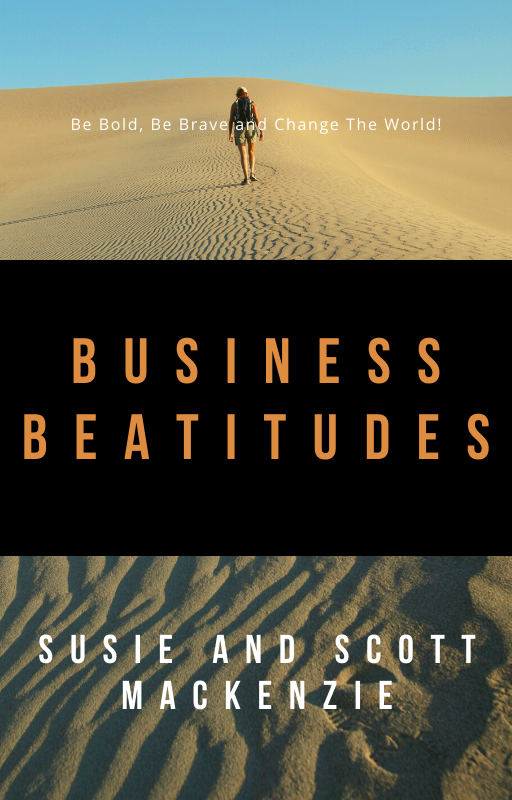
Do you desire a more joy-filled, deeply-enduring sense of accomplishment and success? Live your business the way you want to live with the BUSINESS BEATITUDES…The Bridge connecting sacrifice to success. YOU NEED THE BUSINESS BEATITUDES!
TAP INTO YOUR INDUSTRIAL SOUL, RESERVE YOUR COPY NOW! BE BOLD. BE BRAVE. DARE GREATLY AND CHANGE THE WORLD. GET THE BUSINESS BEATITUDES!
Reserve My Copy and My 25% Discount
Transcript
SUMMARY KEYWORDS
Barcelona Cybersecurity Congress, Industrial Talk podcast, Penn State Behrend, Metallurgical Engineering, Robert Voight, metal casting, foundry experience, digital twin, manufacturing innovation, workforce development, automotive applications, austempered ductile iron, digital thread, manufacturing challenges.
All right, before we get into the conversation, I want you to be aware of a conference that you need to put on your calendar, and you have time. It is the Barcelona Cyber Security Congress. It is necessary. You need to up your cybersecurity game. You're connected, you need to make sure that you're protected. Right here, this event, Barcelona Cybersecurity Congress. It is November 3 through the.. you have time, November 3 through the fifth this year in Barcelona. And I'm telling you right now, the team at Farah who put this particular Congress on the best. You will not be disappointed, and you know what else you get to do. You get to network with some of the best cybersecurity professionals from around the world. You need to do this. You need to put this one on your calendar. All of the contact, all of the information is out on Industrial Talk. I'm going to be there, I'm going to be broadcasting, I'm going to be talking cybersecurity with the best in the world, so be there. Put this one on your calendar, that is November 3 through the fifth. I'll see you there.
Welcome to the Industrial Talk podcast with Scott Mackenzie. Scott is a passionate industry professional dedicated to transferring cutting-edge industry-focused innovations and trends, while highlighting the men and women who keep the world moving. So, put on your hard hat, grab your work boots, and let's go.
All right, once again, welcome to Industrial Talk. Thank you once again for joining the number one industrial related podcast in the universe that celebrates you, industry professionals all around the world, you're bold, you're brave, you dare greatly, you innovate, you collaborate, you're solving today's challenges with a smile. That's why we celebrate you on Industrial Talk. That's why you are the heroes in this story. We are broadcasting Industrial Talk is broadcasting from Erie, Pennsylvania, and we're broadcasting from the program that is Metallurgical Engineering Trade Apprenticeship and Learning, or the acronym is METAL, as you can tell, and you can tell that they're focused in on metal here at Penn State University. What's the
Behrend, Baron State Behrend,
Penn State Behrend? There it is, right there. And we're highlighting this incredible program, and in the hot seat, his name is Robert Voight. However, he goes by Bob, so make a note of that. And we're going to talk a little bit about that program, a little bit about Bob's role in that program, and anything else that come popping into my mind. So, here we go. All right, Bob, nice. He was also, he was also the van driver, and you did a fabulous job. No, no, no stress, you were fantastic.
Google Maps, it gets you there.
Well, I got to tell you, it was.. I didn't know what to expect from that onsite. We did two on sites today. Listen up, we did two on sites today of foundries. Both were just an incredible experience, didn't know what to expect, but here is, here's a program, the metal program, and you can never ever underestimate the ability to be able to have hands-on experience in a specific environment, and here we are at a foundry, and we're, we're, they're pouring the students, the students are pouring aluminum, not just hot, putting it into forms, doing it, and there's Bob right in the middle of it, Bob is in the middle of just telling him what to do, anyway, he could tell, you can tell I was absolutely.. I was.. I couldn't.. I was jealous of your students, that's always.. I was jealous of you, jealous of anybody, because it just was absolutely spectacular. I really liked it.
Well, I get to teach real things to students, that's. that's exciting,
and it's real, it is, it's real, and it did, yeah, you can smell it, you can see it, you can feel it, you can, now it's, it's, it was a great experience, I really, what I do like about this program is the, the education and the business involvement, because you were able to do go over there, and each one of those businesses that both businesses just were so accommodating.
I have a lot of foundry friends that pour metal every day, and that. Excitement carries over to their employees, and it's happy to bring it to the students. It's spectacular.
Okay, so you touched upon it. You've got mad skills, and there was one incident that I, that I really caught my attention outside of all the other ones, is the fact that you create these forms, and then there's this metal shrinkage, and then, of course, in that metal shrinkage, I just, all I could think about is the quality. It's like, are you in spec or out of spec? How did you nail that shrink? How do you nail that shrink, anyway? Give us a background. We
have to take molten metal and make it do what we want it to do. Yeah, we have to get it to solidify correctly. We have to make it flow into the shape that we wanted to, and at the end of the day, be able to take it, sell it out the door, make it into a product that's something that you drive down the road.
I just, I don't go into your background, then we could talk about how that, how that happens, because I, it's, it's, it's a remarkable process. But tell us about Bob. What? Oh, man,
I grew up in a small town in Wisconsin, and went to school at the University of Wisconsin studying engineering. Are
you a Badger? You're Badger.
Oh, through and through.
Yeah, Badger. Except
now I work for Penn State University, so I'm sorry, my blood is blue, blue and white. Forgive me for that.
They don't like you now,
but I was a smart student in high school. I enjoyed school, I enjoyed learning, enjoyed reading, and so engineering sort of grabbed me, and wasn't sure what I should do in engineering, but eventually metals metal casting grabbed a hold of me, and I haven't looked back since then. And this industry that I work with is an industry that needs talented people at all levels, and just as it grabbed a hold of me as a young wannabe engineer, it can grab a hold of all sorts of people at all sorts of levels throughout the organizations to make metal do what you want
it to do. See what what I did observe when we went to the foundries today was outside of the fact that each, that everybody there, I maybe it's because I don't know, maybe it's because of the leadership, but everyone was just so passionate about what they do. The owners were just off the charts, like, get out of here. That to me is so important.
These are busy people running organizations, hiring people, making sure that the bottom line looks good for themselves, but taking the time realizing that their future depends on being able to attract top talent into the organization, and I have a simple T-shirt that I wear at these boot camps that we're in the middle of right now, training students, and it says I know stuff, and I can fix things. Just think, if your entire organization was filled with people at all levels that know stuff and can fix problems, you'd be the most successful company on the face of the earth.
Do you think this is just.. I digress. Do you think that, and I have my opinion, and I'm not going to share my opinion, but I want.. I want to share.. I want to hear what you have to say. I can't do it without revealing my opinion. I think.. I think this generation, the young, can absolutely.. if they capture the fire, if they capture that lightning, that that passion that exists in manufacturing, I think it will significantly transform your business to the next level.
Without question, it's become almost anti-cultural in the US. We raise children, we put them through public education, and and the things that they touch, the things that they do are on this very high level. You drive a car, you don't look under the hood of the car, you don't repair a car, no, you use a product, but when it doesn't work, you're not sure what to do, but yet that's what makes keep society going is having the people that can have that passion about designing things and making things, designing is easy, making is tough.
Yeah, and that's the, that's, you can sit there and on paper and do it all day long, but to be able to put it and execute on it, and being bringing it to the tactical, and doing it efficiently and repeatedly. I mean, it's one thing to do one-offs, whatever it might be, but, but to be able to do it from a manufacturing perspective, yeah, that requires some great capital up in the old noggin to be able to make that happen. And efficiently,
exactly, and when you're making things, you're using energy, you're using materials, sometimes it's hot, sometimes it's dirty, but you have to master that, make that happen on a regular basis, on a daily basis, in your company to put a product out the door that satisfies an important need and keeps our quality of life high.
I can't agree with you more. That's so true. How long you been involved with the metal program? Since the beginning, since the genesis of it,
at the very beginning, this program was an offshoot of another program where we were training people to do machining, CNC machining company across changing
has changed fast too, and a
very talented faculty member at the University of Tennessee developed a structure and a program to export what he knew and what others knew and send it across the country in training boot camps to inspire people and give them the basics, so that they want to machine parts, they want to work in manufacturing. We were approached then through the support of the Department of Defense, say, "Let's do that same thing in metal casting, and the rest is history.
See, what's what I like is, is the I like the principles and the concept behind the imagery of a boot camp. So we're here at a boot camp, it's a week, right?
Yes, it's a
week, and and the students are doing their stuff, and they're moving and they're shaking and everything, but what I like about it is that it's not just confined here up in Erie, it's not here, but it's a, it's a model that can be produced in other parts of the country, it really has legs and it can definitely impact that manufacturing base and inspire that next generation of manufacturers, that's what I like about it, that's what you're doing here, right?
lab, we melt the cast iron at:I like also I like the fact that you guys here at Metal do these trips, see it in action, talk to the owners and people that are doing it, and allow them to get, like you said, out of the lab, out of the computer, whatever it is, and see it in action, that to me is where the magic happens. That to me is where people are just inspired and saying, yeah, I, I like that.
What kind of job would you like to have? Some people perhaps want to sit in front of a cube computer all day and get things, get things done, or you can accept the job in the metal casting industry, and you take your shower, not at the beginning of the day, at the end of the day, you're on that computer, you're solving problems, dealing with the complicated systems that you have to work with, but you're, oh, yes,
yeah,
it's complicated.
Yes,
things wear out all the time. You have to continually upgrade your technology to stay current, and at the end of the day, you're working with that employee that's been out there on that machine, on those equipment, on that robotic work cell, or on that dimensional laser scanner that's looking at dimensions and you're making it work for you and you're getting it right. Come home at the end of the day, take your shower, and you're happy because you've seen that product that goes out the door and. Makes people's lives better,
I, I, you know, capturing that passion, I every time I have a conversation, and it happens all the time, I think from my perspective, based off of the conversations that I've had, that workforce, that workforce development, that inspiration of next generation of industrial leaders over and over again has been sort of that sticking point for many in industry. It's like, what are you going to do? How are you going to do it? How do you, how do you reskill or upskill or whatever skill? How do you bring new, new people in? And, of course, everybody gravitates towards, well, I'm just going to try to automate as much as I possibly can, that only take you so far,
exactly. Just is
so one of the things that stood out is this generational way of building that workforce. Case in point, we were at that one, we were at a foundry today, and I talked to the owner, and the owner said, "See that that boy over there, that's the son of that guy right there, and then that's that guy right there, his grandfather was worked at the same facility, and it's.. it was almost required, that's what was so unique. You had that level of trust, it was generational, but we've lost that because we're saying no, you're not going to do foundry work, you're going to do computer science, whatever.
Many of these companies are small and medium manufacturing companies, and if you're a company of less than 200 people, less than 100 persons, you know, your employees, you're running a company, but you have special relationships with every single one of those people that work with you and for you in that organization.
Yeah, I, I love it. I love it. So your role at how did you find, how did you know about, I mean, your, your foundry expertise is just pretty extensive. Were you in that business, or have you always been where
I began as an engineering student, and found metal casting accidentally. However, my father actually had been a part of that industry, and I never paid much attention to it. He was a pattern maker. He made the metal and the wood patterns from which we make molds and make metal castings. He didn't push that on me, but I sort of came in the back door, and as part of my studies, found out what my father did for a career. Met some talented people, and these were people that were teaching classes at the University of Wisconsin. These were people that were working closely with industry, solving problems. I said I could see myself doing that. So, the rest is history. I've had an opportunity to, as a student, do internships in manufacturing companies, but throughout my career, I've been a little bit of a different kind of university professor. I always done applied research, working with companies as part of research projects. They don't want the answer 10 years from now, they want the answer yesterday. Yeah, and I've had that wonderful opportunity to work with companies, industry trade associations that bring companies together with similar problems, and do a lot of the work, not in the university laboratory, but in the foundry itself, and I've had that privilege, I've been in hundreds and hundreds of hundreds of foundries over the years had the chance to work with top technical people, top management in a lot of these organizations as well, too. Their vision is amazing, though the direction that they move their companies and the vision that they have for taking a company who is in this location and in this product market and moving it here is just amazing, and I've learned from them, I've had wonderful mentors, not necessarily colleagues at the university, although I work with some really talented colleagues, as well, that can bring these new technologies, exciting technologies, into manufacturing, but manufacturing leaders that are they're turning the knobs and making things happen.
I'm going to shift gears, really. The the world of metallurgy is constantly evolving. You sort of mentioned that these these alloys, does it ever does it ever do you ever reached the point where you say we've got all the alloys,
started with the Bronze Age,:Oh, yeah, I have to ask this question, what is the most unique material that you were able to work with.
Well, I'm going to give you the second most unique material, because I don't think the Air Force would like me to talk about the first material.
I am in support of that
l that first developed in the:What's ductile,
bendable, malleable, sheeple? We learned to manipulate that material as before we cast it, so that it can be ductile and have properties more similar to steel. It bends rather than breaks. And then we learned this magical heat treatment that changes the microstructure of that material, and when we give it this heat treatment in a furnace, suddenly it's twice as strong as any other ductile iron we've ever had before in the world. I didn't invent it, but I've been part of teams that have worked with it and learned to not just make it happen in the laboratory, make it happen in this real world, and now it's everywhere.
Application for that particular material, there was a, there was a problem, or a challenge, because we had this iron, and it wasn't ductile, and yet we found the need within the market to be able to create a product that can satisfy these qualities, right? What, what, what was the application? What,
in many cases, automotive and otherwise, it's lighter weight.
There it is.
Make it stronger, you can make it lighter, whether it's automobile, agricultural equipment, construction equipment, we can now do with less material, make that thing lighter. If it's going down the road, it's going to consume less gasoline, and away we go.
See, that to me is fascinating, because, and it never stops, right? And now, of course, there's going to be a, a cost element to it, right, and say I'd love to be able to use that, however well it's that, and we, as it's a balance,
yeah, I, I don't work in that exotic high cost area, yeah, if it's expensive, I'd leave it aside. I'm working with the blue collar materials, the materials that we use in tonnages, the steels, the aluminums, the irons, and trying to improve them, because they're going to be the backbone of what we use for the future. Yes, we're going to add a little bit of cost, but we're going to come up with a high strength, easily formed material that can do that job, rather than the exotic, high cost solution that we have to set aside, because other people can undercut the price.
One of your conversations you had today at a foundry. Is the the effort to determine quality right, and when I say that you're going to take a casting, you've poured it, you've got, you've got your, you know, your forging ability, you melted material over here, you put it in that form, then you go and you cut it, and you're looking at how it's structured. You're, you're looking at it. That to me is fascinating, because you can say no, it didn't meet that need. It looks good, but it does. No. Tell me about that.
Well, like metal castings, a lot of things in life can look, look good on the outside, but when you get inside it, you can see the problems, and in fact, for melts and making metal castings, it's often that internal problem, that shrinkage cavity that we have to get rid of and solve that particular problem, and this is where new technologies come into come into play as well. We used to be half, we used to have to cut that casting open that we made in that first trial and see, is it sound or does that have a hole in the middle, and we try again, and we try again. Now we have computer simulation technologies that can actually take that metal casting shape that's new, and we can model it and watch it solidify on that computer screen in pretty colors, and find out, well, here's an area that I have to change the shape to be able to cast this successfully, and now we do that first work in the modeling world, and then when we make that first hard casting, we spend money on it, and it works the first time. That's the excitement of today. See, that sort of smacks of, in a certain way, a digital twin, because you're, you're twinning that process, but you're doing it in a digital world, and then coming up with, you have, you haven't, you haven't spent the, you know, the material or heated it up, or whatever, any of the expense, but you're able to simulate it into a digital world, and then achieve success in the real world, so
it's sort of that twinage, and say, all right, check it out,
that's a terminology that I don't care to use, but don't I, I'm
just saying, I
like the term digital thread, we are going to be connecting things that impact a product, how we make it, how we ship it, how we solve problems, what temperature we pour it at, all of those unconnected manufacturing related details. Now we're going to put them together in this digital thread that ties them together and locks them together. So, if we made this six months ago and suddenly we're trying to make it again and something's not working right, we have this digital thread of information, not only of the part but all the manufacturing characteristics that were in place at that time, so that we can very quickly get that information we need to get steered in the right direction. I
just, you know, you ever feel like maybe that you, I do, I feel like this, I feel like I don't know anything. It's like I feel like we're just scratching the surface, and I feel like this is a profession that has endless - I mean, maybe that's a hyperbole - but endless possibilities, and it just, it just feels that way. I feel like I've just.. I need more answers.
A metal casting, the metal casting technology to do this successfully requires so much expertise in all different eras, all coming together. In my career, have I had the privilege of working with the SMEs, subject matter experts, and I realize I don't know a heck of a lot. At least I don't know enough, but if I can know a subject matter expert, I can often get the answers that I need, and now we have that digital opportunity to attach that expertise to things that we never had before.
Say you're, you're tying it up. Yeah, that's exactly right. You got that, that old guy that's been around the block a number of times, right? Wealth of knowledge, being able to sort of take that and be able to bring it in. To a sort of a digital world to be able to maintain or improve quality. I'm all in, Bob. Me
too.
How do people get a hold of you, Bob?
You can get a hold of me with my email address, RCV two@psu.edu
Right there. Are you out on LinkedIn?
I am
there, you go. We'll have that too. All right, you are absolutely spectacular. Thank you, Bob. I love what you guys are doing. It's, it's, it's amazing. All the contact information for Bob will be out on Industrial Talk. You need to reach out to him to find out more. You need to be in the world of metallurgy. You need to,
amen.
Yeah, see right there, he's the guy. So, anyway, check them out. Go out to their website, which is also out on Industrial Talk. Find out more, see how you can get involved. You need to be a part of this particular program, because they're doing remarkable work. And I gotta tell you, the students are passionate. All right, we're gonna wrap it up on the other side. Stay tuned, we will be right back.
You're listening to the Industrial Talk Podcast Network.
Robert Bob Voight. Yeah, you need to reach out to him. Contact information out on Industrial Talk. You also need to support Penn State, their efforts of inspiring that next generation of industrial leaders, manufacturing. They are amazing. It was an absolute honor to be at in Penn State talking to these leaders that are absolutely passionate, passionate about helping and solving the challenges of manufacturing, but man, we were, we were doing hands-on stuff. It was great, and you, if you haven't seen it, you got to go out to whatever my social networks, you'll, you'll see all of that stuff, we were pouring melted, you know, aluminum and brass. It was, it was cool, right? That's Penn State, that's Bob. You need to reach out, everything's out on Industrial Talk. You need to support this program or programs like this that are truly committed to inspiring that next generation, this is non-negotiable. We need to do that, be a part of that solution, and that success. Industrial talk again is here for you. A part of that, you need to tell your story, you need to get that message out. We are a full-fledged marketing company, we are a full-fledged media company. We want you to succeed, and we've been there, done that, been in the trenches. We know exactly what to do. We know how to help you get that message out and get eyeballs, eyeballs into your solutions of how you are succeeding. And we just want you to succeed. That's about it. All right. One last comment. I mentioned it in the beginning. Barcelona Cybersecurity Conference, Congress. Sorry, it's not, but anyway, you need to put this on your calendar. First part of November, it's a must. They're all connected. CNC machines are connected, everything is connected, and it's getting more connected, and you need to protect it. You just do it, sort of rhymes, but I'm trying to work with it. All right, you're absolutely wonderful. Thank you very much for your continued support of Industrial Talk. Be bold, be brave, dare greatly. Hang out with Bob, hang out with Team Penn State, hang out with all of these individuals, and you will be changing the world and the future. We're gonna have another great conversation shortly, but stay tuned.