Roger Simonson with One Eye Industries
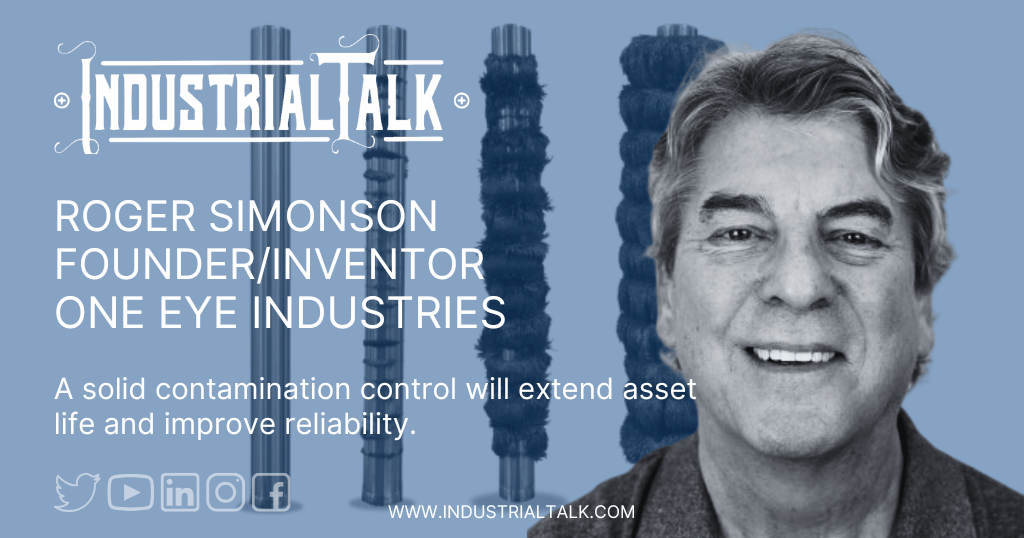
Industrial Talk is talking to Roger Simonson, Founder/Inventor at One Eye Industries about “Industrial Magnetic Filtration”.
If interested in being on the Industrial Talk show, simply contact us and let's have a quick conversation.
Finally, get your exclusive free access to the Industrial Academy and a series on “Why You Need To Podcast” for Greater Success in 2026. All links designed for keeping you current in this rapidly changing Industrial Market. Learn! Grow! Enjoy!
ROGER SIMONSON'S CONTACT INFORMATION:
Personal LinkedIn: https://www.linkedin.com/in/roger-simonson-6808266/
Company Website: https://oneeyeindustries.com/
PODCAST VIDEO:
THE STRATEGIC REASON “WHY YOU NEED TO PODCAST”:
OTHER GREAT INDUSTRIAL RESOURCES:
NEOM: https://www.neom.com/en-us
Hexagon: https://hexagon.com/
Arduino: https://www.arduino.cc/
Fictiv: https://www.fictiv.com/
Hitachi Vantara: https://www.hitachivantara.com/en-us/home.html
Industrial Marketing Solutions: https://industrialtalk.com/industrial-marketing/
Industrial Academy: https://industrialtalk.com/industrial-academy/
Industrial Dojo: https://industrialtalk.com/industrial_dojo/
We the 15: https://www.wethe15.org/
YOUR INDUSTRIAL DIGITAL TOOLBOX:
LifterLMS: Get One Month Free for $1 – https://lifterlms.com/
Active Campaign: Active Campaign Link
Social Jukebox: https://www.socialjukebox.com/
Business Beatitude the Book
Do you desire a more joy-filled, deeply-enduring sense of accomplishment and success? Live your business the way you want to live with the BUSINESS BEATITUDES…The Bridge connecting sacrifice to success. YOU NEED THE BUSINESS BEATITUDES!
TAP INTO YOUR INDUSTRIAL SOUL, RESERVE YOUR COPY NOW! BE BOLD. BE BRAVE. DARE GREATLY AND CHANGE THE WORLD. GET THE BUSINESS BEATITUDES!
Reserve My Copy and My 25% Discount
Transcript
SUMMARY KEYWORDS
Asset management, Magnetic filtration, One Eye, Roger Simonson, Engine oil, Contamination removal, Industrial innovation, Reliability, Maintenance, Predictive maintenance, Asset life, Fluid filtration, Power generation, Equipment longevity, Industrial technology
Yep, I'm thinking about it. You're thinking about it. Everybody is thinking about it. What do we do to rebuild America's workforce? Restore America's capability? It's all hands on deck. We need solutions, and everybody needs to be part of the solution. Here's an event right there, right behind me, as you can tell, that's Build Freedom Summit. Yep, October 20 to the 21st. It's in Galveston Island Convention Center, Galveston, Texas. You just go out to BuildFreedomSummit.org, find out more. Be a part of the solution. Don't just sit on the sidelines and just complain because you can't find anybody. You need to be a part of it. I'll be there. I'll be broadcasting. I'll be speaking with some of the most passionate individuals that are focused on rebuilding America's workforce. Again, October 20 to the 21st, Galveston, Texas. You got to be there because I'm going to be there, and I want to talk to you. See you there. Yep, this is on everybody's mind. Power generation. How do we satisfy the power generation requirements in a market that's expanding? In a market that's focusing on data center. In a market that needs power yesterday. Power Gen is the event for you. You get to collaborate. You get to collaborate with some of the best in the world. It is January 18th through the 21st. It is in Salt Lake City. All the contact, all the information is out on Industrial Talk. It is a must. I will be there. I will be broadcasting. I will be having the conversation from leaders that are shaping the future. That's Power Gen, January 18 through the 21st, Salt Lake City. See you there.
Welcome to the Industrial Talk podcast with Scott Mackenzie, Scott is a passionate industry professional dedicated to transferring cutting-edge, industry-focused innovations and trends while highlighting the men and women who keep the world moving. So put on your hard hat, grab your work boots, and let's go! All
right, once again, welcome to Industrial Talk. It's always great to have you on board celebrating industry professionals all around the world? That's you. You're bold. You're brave. You dare greatly. You innovate. You collaborate. You're solving problems each and every day. That's why we're here for you, because you're the heroes in this story. That's why we at Industrial Talk celebrate you because you're you're that cool. This is where all the industrial cool kids hang out. Just FYI, if you're if you're not hanging out, of course you're not hearing it. But if you're not hanging out, you're not with the cool kids. All right, we have a great conversation all around asset management, but from a filtration perspective, not just any filtration. We've got magnetic filtration, really focused in on those truly small particles that are impacting your operations. One Eye Industry, great name by the way, great story behind it. Yeah, it's yeah, it's all great, right? We have Roger Simonson. He is the inventor. He is the founder. One Eye Industry. It's a great conversation. Loved it. Let's get cracking. Yeah. Just speaking of asset management, here's a plug. I'm gonna pull this up on my handy dandy computer, which you have, but I have two screens. Many of you have more screens, but I just have two. I'm not. I'm not as as special as you are. But anyway, speaking of asset management, reliability, maintenance, all of the stuff that keeps that operations going, SMRP 34th annual conference is right around the corner. It is September 28 through October 1, Raleigh, North Carolina. I'm going to be there. I'm going to be broadcasting. I'm going to be talking to all of those incredible industrial professionals, those reliability managers and engineers, and and even that next generation, because it's a great profession to get involved in. That's right. September 28, October 1, Raleigh, North Carolina, and I'll be doing a couple of closeout roundtable conversations. It's going to be great. You still have time. You still have time. Be there. You get to be hanging out with more of the cool kids. All right. Yeah, I'm. I'm always into anything that deals with reliability and keeping that asset up and running and keep that uptime of your. Your your business, yeah, it's it's all good. Before we get into the conversation with Roger, I am here to tell you that, and I'm going to reiterate this: we Industrial Talk wants you to succeed. We just do, and that's what we're all about. And of course, Industrial Talk is a a media company. Here we are, right there, media, and we're also a marketing company, industrial marketing specific. We're not going. We're not venturing out into other, you know, whatever non-industrial type of marketing and PR because you have to get that information out there. You have to paint that picture that you are solving problems each and every day. That's what we're all about. That's what's industrial talk? Now, here's something: is I call it the four-legged stool. It could be a three-legged stool; it'll still work. But I, I have four. Might as well. I, I don't want to have five. Maybe I could do five, but I'm. This is this is a four-legged stool. One companies That succeed companies that I believe going forward, they've got this youth, this young potential leadership, industrial leaderships coming in, and they consume information a specific way, not the old way, a new way. They they get their information by various sources, and you have to you have to be on those platforms. But anyway, I digress. You have to tell your story. You have to create that human connection. You have to be able to paint that picture. You have to say, Hey, look at me! I've got a high beer factor because I'm talking to you, you want to hang out with me in a bar, drinking beer and chatting, and that's a good thing. That that creates that connection, and you need to tell your story. Of course, I started podcasting because of my other business, and it worked. I was able to open doors. I was able to have conversations. Two, that's that's that's one. Is still not being able to on that that stool. You only have one right now. Now two, two, you need to be able to have this conversation with your clients.
It's always great to be able to talk about yourself without being an infomercial, but it also it's even better, more betterer to be able to talk about your clients that are succeeding, and they might be succeeding because of your solution, or they just might be succeeding because they're just really a great company. That's a great story. Help them. It's win-win. They win because you're telling their story and you think they're great. You win because you're telling their story, and you think they're great, and they they like you because you're doing that, cementing that relationship. You know, bringing it closer together because you're truly helping them succeed. If you're doing that, yeah, you're in like Flynn. Three. Say have prospects. You have prospects. Ah, there's Acme over there. I want. I want to be able to talk to Acme. And the reality is, is that maybe sometimes it's hard to talk to Acme, but with a media podcast platform like this, I can approach anybody, and I can approach them and say, "Hey, I like what you do. Let's have a conversation. And nine times out of 10, even higher than that, by the way, they'll say, "Hey, that's great. Yeah, I'll do it. And then they'll look. They'll say, "Wonder who Scott is. They'll just do that naturally. They'll go out to LinkedIn. They'll go out to whatever platform that they use, and they'll find out more. Ooh, that's that's good news. So now they're finding out about you, and you're going to say, "Let's have a conversation. And then they say yes, and then you have that conversation, and then you create the the friendship and the relationship because you're all talking about their stuff, which everybody likes to talk about their stuff. You're talking about their stuff. There it is, again cementing. Here's the biggest one. You go to conferences. You're saying at the beginning of the year, or whenever you guys decide when you're going to go to conferences, and you tag, and you're going, we want to go here, we want to go there, we want to go there. Here's the team. This is what we're going to do, and this is the way it always rolls. One, I have a booth. I, I'm forking out money to get that booth, and then I sit around, and then I just sort of, here, here's my card. Here's my card, and you hope, just hope, that in that effort, you'll be able to sort of flip over an opportunity, and that's fine. Here's the problem: everybody's busy. You go to that conference, everybody's busy. Then when the conference and everybody's fine at the conference, yeah, hey, all right, buddy, buddy, buddy, and all that good stuff. But then when they go back to the salt mine, they go back to what they do. They just naturally do. That's what humans do. We just naturally do and go and do what we normally do, and that's not bad. It's just the reality of what's taking place. Just is. I mean, I can't. How about being able to have a podcast on site identifying the targets that you want to connect with again, put them in the seat, do the podcast, boom, right off the bat, thumbs up. Then all of a sudden, you've created a sticky situation. They're not going away. They want their podcast. So after the conferences, you have that you have that connection. You're adding value to them. They go back and they say, "Yeah, I was on a podcast. We're going to be able to create that marketing stuff. It's it's great. I was talking about my company and it was fantastic, and we were getting more and more attention. We are doing the most we can for our companies. There it is. You need to do that. That's four legs. There's other, and I and here's here's a bonus. Now all of a sudden you have content. You got the social platforms. Many of you has don't use YouTube, which is a problem. Which is a problem. But I digress. But you have content. It's it's dumped right in front of you. You can do that. Now all of a sudden you can market. You can market just because you're telling everybody's story. There it is. That's the reality. That's what we do. All right. You need to do it because you need to succeed.
I'm off my soapbox now. All right. Let's get on with the conversation. One Eye Industries, great name. We're talking about filtration, but not just any filtration. Next level filtration. Roger Simonson is in the hot seat, and you need to connect with him, and you need to connect with everybody at that company. Fantastic stuff. Let's get cracking. Hey, Roger, welcome to Industrial Talk. Thank you very much for finding time in your busy schedule because you have what a half a century of experience at your company. Thank you very much for finding times. How are you doing today?
Doing well, and I appreciate the opportunity to share some information with you, Scott.
I'm all I'm all excited. All right, we're going to be talking about One Eye Industries, and I have to. I just have to. I don't mean to catch you off guard, but I have to. What is the genesis of that name?
It. It. I come from the the East Scottins in the Rocky Mountains in British Columbia.
Yeah.
And when I was starting this company, I went out fishing at a lake, and this old timer come down and joined us for a cold beer, and told us a story about a grizzly bear at that lake that took the back door off of the camper and was going to have hors d'oeuvres, and the guy inside the camper, shot the bear and took his eye out, but didn't kill
him. And
then they went hunting him, and the stories about him got he got bigger, and he ate more people, and all kinds of things. We thought he was a pretty clever bear to survive all that, and we named our company after him for his luck and his tenacity and and cleverness.
That didn't stink. That that surpassed my expectations on where you came up with that name. That's why it was sort of funny. I'm looking at your logo and I'm going. I get it. I get that one eye, but there has to be something that goes on with that bear, it has to be, and I'm thinking that's that's lore, baby. That's good stuff, man. I I don't have any problem with that one. All right, before we get into the conversation about your company, we need to know a little bit about Roger. What? Who is Roger? Give us a little background, just a little, a smidge, a scott.
ins that my my family did for:years.
Operating equipment, falling trees, and all that fun stuff. And along the way, I come up with this magnetic filter idea and designed a few and tested them, and they were amazing how much contamination they would remove from engine oil. So I started started the company, and we've never looked back.
Did did you when you were doing the logging thing. Were you were you jumping on the logs? A buddy of mine who's from that area was doing some logging, and he would give me tell me stories about it. And yeah, that's that's that's next level. Were you doing all that? Like
yeah, back back years ago. It was all done by hand, bucking on a landing, falling the trees, and all that fun stuff. And now it's all done by machine.
Do you miss those days?
Sometimes, yeah. At 35 below, and and throwing a parachute over a a skidder, and then warming it up so we could start the engine was fun.
See, you come to the table with some mad gravitas, some skills. That's amazing. So here you are. You're in. Yeah, yeah, you're logging. That's next level. That's interesting, big time. And then you say, "Hey, I've got this idea. Take us through One Eye Industry. Take us through the genesis of you saying, 'Hey, this magnetic. This would be great. Take us through that. Like what lightning bolt hit you across the head.
Try and do a short version. When we were youngsters, we rebuilt a number of engines and blew them up and rebuilt them, et cetera, et cetera. And a friend of mine was rebuilding an engine, and I said, "I'd give you a hand. I've done it before. So dropped the pan, and it was just full of iron filings, metal filings. Oh
yeah!
So I had a bunch of free time on my hand, and I went and researched magnets. I researched traditional oil filters. So I come up with a combination of the two to try and address the the contamination values that were in engine oil.
See, this is interesting because I've been there, done that, and you don't want to see that in the oil pan. You you just don't. You try to filter it out, but if it's there, you know that it's that's not good. That's that's not good stuff. How how? I mean, okay. So you're saying, hey, I need I need a magnet. Had from from that you know idea to saying, hey, I I think I can do it. What? Tell us about that journey because we'll get into the, you know, you've seen a lot of changes, and when you did it for the first time, I mean, I'm just, I'm intrigued. Talk to us.
Well, that was before there was internet, so you had to do all your research in the library.
Yeah, one
one of the things I found that engine oil filters by the majority of the manufacturers, they don't rate them, and they they run a from my research around a 20 to 30 or 40 micron capability, and they need that because they have to have lube oil flow to lubricate the engine. Yeah,
yeah, yeah. Because I was going to say, if it's too tight, if it's too small, then it impacts that flow, that that that engine. So it is exactly.
So I wanted to come up with a compromise, create a magnetic filter that doesn't have flow restriction that can clean this contamination down to the lowest possible particle size.
Okay, so I'm picturing this. I mean, I can be be completely off base, Roger, and you call me out on this because I'm used to it, so you're going to you're going to take that that idea. You you you're you're tapping into the oil filter market. It's there. It happens. We've all changed them out, and they screw them, and sometimes they have a problem. But you're trying to capture the filings. You're trying to capture the contamination before after where where are you capturing that and then once you say yeah I've I've installed it I've done it it's capturing it's doing what it needs to do it's like now it's time for me to change that out clean it up stick it back in because it's just magnets is that how you? Is that
it? Kind of the first magnetic filter I designed. I wanted it to be universal and not have any issue with warranties or anything. So I designed a flexible magnetic filter pad, and it attaches to a traditional filter magnetic. and it projects fields through the skin of the filter, and collects all the contamination and traps it on the inside skin of that filter. Then you come around to your oil change interval. You take the magnetic filter pad off. You put another. New filter in there, and you put the magnetic filter back on, and and now you've covered the the flow issue. No problem with flow, and you removing all the fine contamination.
Brilliant! See, that's innovation. That is amazing because it's reusable, and then you're extending the life of that asset, you just are. That's that's amazing. How how from that that original prototype, like I see it. I picture in my head. How long did they last? I mean, there's they're not spinning. They're not doing anything. So I would imagine it's just like it lasts a long time.
Well, unfortunately, our our all of our different types of magnetic filtration, we use the highest quality magnetics to get the best effect and to have resistance to vibration and temperature. That's what kills a magnetic field. Ah. So because we use the highest quality, they last 25 plus years.
I was getting ready to hear the the shoe to drop. Well, we've got to change it up. 25 years. How do you build a business model around a 25 year just asset? I mean, that's amazing. That's amazing. Okay, let's fast forward. So you you sit there and you go, okay, I got this great idea. I I design it. It works. Yeah, I think I think it has potential in the marketplace. So now you then proceed and then you start to design, and then you start to build out a more. I mean, it goes. I've been on your website. You're you're in everything. It makes sense. It's you're you're in everything. How are you? How are you responding to that market? I'm going to be talking about magnets because that has changed too. How do you begin to just just respond to that market and the demands of that market? It just seems like a no brainer that companies need to deploy this.
Well, change is a a big challenge. Going from standard to a new technology takes years of playing the game and fighting against the the wall to win.
Explain what do you mean by that? I I think I understand, but I want you I wanted you to
industry standards are what people follow because it's comfortable to follow them. Yeah, and if if you go back in a little history of of our ISO standards for oil cleanliness, they were done in the 70s, 80s, and 90s. And back then, tolerances we'll talk say engines tolerances on bearings under load were above four micron, and the filters back then could handle that, but since then, the manufacturing processes, machining, all that fun stuff, and better materials have created a much tighter tolerance, where your wear contamination that causes wear in your engine is under four microns, down to and under one micron. So now you have your analysis report that you judge your your equipment management by looking at four microns and higher, not looking at four microns and lower. Hence, you have premature wear of all your components inside that engine.
Yeah, I have to ask the question, or just in general. Just in general, let's say I have a motor, I'm an engine. Engine has oil, whatever. Let's say, let's say I'm in the the power generation market. I've got a reciprocating engine that is spinning or whatever. I'm here, big old engine. If if I just did a conventional filter, oil filter, plop it in, turn it on, all is fine, whatever. But that thing's going to fail eventually. That thing's going to require you know how many hours of operations. But two, how long can your solution extend the life of that particular asset, because they're always going to just the OEMs are always going to say, "Well, it ran 24 hours, whatever, whatever the runtime is. I don't know. I'm sort of spitballing here, but what are we talking about? How do you get the OEMs to say, "Hey, you got you got one eye on him. Oh yeah, go another. You know, another 500 hours. I don't know.
Well, you have to look at the the start of the engine, the machining processes, the assembly processes, the parts washing of those. Parts that has to go into the assembly, how clean are they? And then the other place you have to look for wear contamination is the actual engine oil itself is full of wear contamination from pipeline erosion and corrosion that gets into your engine oil and goes right through your engine oil filter because it can't take out that fine stuff. So to give you a little understanding, we we focus on large, expensive industrial equipment for mining, for oil and gas, all that sort of thing because they cost a lot of money, and our magnetic filters are much more expensive than a traditional one-time throwaway filter. So, to give them an understanding how we can protect their investment, we've got customers 234, times the life of the traditional engine.
See, that's that's significant. That's that's a positive asset sweating strategy, right? I don't have to sit there and crack it open and and introduce challenges if I have a good reliability process. That makes sense. Okay,
we we just we worked with this sawmill company up in a place called Smithers, British Columbia, and the maintenance manager fell in love with our technology and put it on all the rotating equipment.
Yeah,
they reduced their consumption of hydrocarbon fluids, lube oils, coolant, transmission fluid by 50% over the year
begs the question, which is pretty doggone. That's significant. That's that's a big deal. Are you is One Eye Somewhat agnostic. Can you filter any type of fluid? Because you said coolant. You got the lubes. You got got other fluids that are impacting the business. Are are you have you designed something that satisfies that too?
Well, anything that flows, whether it's a liquid or even grease or or solids, powders, we can filter them all.
That's pretty. That's a that's a bold statement, Roger. That's good stuff. Well,
we're we're filtering flour. We're filtering chocolate. We're all kinds of weird things.
Thank you, but but would that require if say okay, Phil over here, down in Louisiana, we got it used to be Cargill was Dreyfus. I don't know what it is, but it's a grain elevator, right? And in that grain elevator, there, there's yeah, I'm sure that, yeah, there's going to be metal. I mean,
it's everywhere.
It's everywhere because it's wear and tear. Things are spinning. Things are moving. It just is what it is. Wow. See, that's that's pretty doggone cool. Okay, let me venture into something. So now we've we've established the fact that yep, one eye leader got it, two yes you need a filter outstanding Moss magnetic solution right on the money I like it because I'm not going to have chocolate that has metal in it I don't want it now we have things that are impacting the market today. Well, first, the first one. Well, I'll postpone that last question. How have you seen the magnetic market change from the time you started and saying, "Hey, that's a good magnet, to where we are today?
Our experience. I'm going to say in in the last five to eight years, industry has accepted our technology as something real, not snake oil or anything like that. It actually works. It brings value, and it's saving the money. and And right now, it's it's growing for us. The the problem in the world is to get a new turbine or a new compressor, a new big engine. You're looking at five to seven years. Parts is also another issue. So now everybody's going to the mindset: How do I keep my existing equipment operating? And they're calling us from all over the world to help do that now,
and it it's absolutely topical right now. I was broadcasting from a an event called Power Gen. Power Generation. It's like everybody's talking about. I need more power. I need it yesterday. You know, if I'm a data center, I need it. I you know, they're all they're all. Chirping about it left and right, the biggest challenge was that supply chain. Just is I can't. I mean, I want the I want the generator, but I need all of the all the parts coming together to create that solution. Right, that's where the challenge is. And yes, I want to extend my existing asset base. What are strategies around that? Nah, that's what makes sense to me. I like that. All right. Here's the question. You know as well as I do that in the world of managing assets, data is king. I want. I want data. I want. I want to see it, and then I want that thing over here called AI. You know, whatever, and I'm going someplace with this. Are you progressing, or have you progressed from the the point of view where your filters have and provide data that says, yeah, that filter's good. Oh, that filter needs to be cleaned out. I'm not going to say replace; just needs to be cleaned because it's saying it needs to be cleaned. So let's let's plan on doing it the next outage, whatever. Are you guys dipping your toe into that?
We're we're starting to. Yeah, it's difficult to get the data because the the problem is most of your oil analysis again reports four microns and higher. We're not getting the understanding of what's under four microns, which is causing the actual wear. So it's it's finding that vehicle to to gain the data.
Yeah, see, that would be brilliant, and and it's in good hands because you're the one that created this old magnetic field. I I think I I have high confidence in your ability to be able to sort of you know have that connectivity to that filter. And the reason I say that is that many years ago, many years ago, I had hair. No, I didn't. Many years ago, I worked for this utility, Transformer Oil. Transformer has the dissolved gasses. They didn't have they didn't have the particulates. It's mostly dissolved gas, which causes problems for transformers. There was a way of being able analyze that oil, and then be able to sort of say, "Hey, hey, there's something going on with that asset, without cracking it open, draining it, whatever you need to do. Be able to do it in a in a way so that that would just be ideal.
Well, it's it's a good point. Our magnetic filter elements are, in one way, the best predictive maintenance tool you can have in your business.
Yes,
you pull out that magnetic filter any time and view it. If it's just light dusting on it, you're okay. But if you've got pieces of bearing or gear. Now you can start predicting when you're going to have a failure and plan it rather than fixing it, rather than letting it fail.
Yeah, yeah. See, that's what that's brilliant. And what I like about your solution versus maybe some other diagnostic tools that exist out there-the the the ultrasound, the vibration, all and say infrared, whatever, are the the fact that this is real. You can see it. I mean, it it makes sense, and then you can then back in and say, hey, come next outage, we need to replace this, do whatever, whatever it needs to be done. I like it. Where do you see it going, Roger? I mean, I see one. Is that one in the back? Why is that one in the back? That green guy. I see it in his. And why is that one so important? It
was just put in. It's in our in our boardroom, so we keep a few filters as conversation pieces, and we can hold them and and actually get an understanding of the of the technology.
Okay, so back to the original question. There, there are two. I'm going to start with one. Where do you see it going? How how do you see in this market evolve, I mean it's it's it's got to be bright. Come on, it
filtration's been around for:Yeah, that's that's good. That is good. I you don't want to have something installed and it doesn't work right. No, I don't like that. Not very many people do like that. Okay, how do you manufacture? Are you vertically integrated? Do you guys manufacture there in Calgary?
Yes, this is our our manufacturing facility here in Calgary. We of course get parts from all over North America
to
bring together, and we fabricate and machine and all that fun stuff.
Yeah, see that that that would be a great visit. I would like to see that.
Well, you're welcome anytime to to drop up.
That was a shameless plug. I'll set up my studio, and that was shameless. I I'm sorry about that. And one last question. This sounds great. I like it. I get it. I understand it. Makes sense. Why not? What, what, what? What's the reason why somebody says, "I don't want that filter. I want the tradit. Why would anybody want that? What's the pushback?
People have been educated and trained to rely on the OEMs to give them direction how to do their maintenance program.
Yeah, yeah. No, I I hear you. I hear you. Yeah, that's changing. FYI, I believe that's changing. So do I. Yeah, I I I don't think that that's really sustainable. I think I think from my perspective, extending that life of the asset, whatever it might be, your operation, making it more resilient. You need the strategies and tools and the insights to be able to do that. You're down. You're not making money. Yep. Yeah. Hopefully making money, but that's the reality of it. And have some level of predictability to it. Yeah. No. Makes sense. It just makes Sense
condition-based monitoring is something that everybody should be doing, and our our magnetic filters help them do that.
Yeah, no, it's a no-brainer. So there's no no pushback, listener. You need to look into this. No pushback whatsoever. I I I give it the the seal of Scott Mackenzie's approval, whatever for whatever reason for that. I mean, I mean, it makes sense. Take that for what it's worth. All right, two things. One, I keep on adding. One, are you going to go to SMRP Society of Maintenance and Reliability Professionals in Raleigh, North Carolina? They're all about this, all about
it. I be honest with you. I haven't. I have not had any contact with them.
Well, fortunately for you, I'll be broadcasting there, and I know them real well. And I think that there's a. This is an interesting solution that, you know, I I I wander the floor. I see it, and I pretty much know everybody.
So, what? When
is this? End of September, Raleigh, North Carolina. End of September. You know, good people walk around. Doesn't matter, but they're they're all very, you know, reliable. These are the individuals that are the maintenance professionals, the reliability professionals. They're the ones that's in.
You have a you have a date?
Yeah, we'll we'll talk about it offline. How's that? Plus, I'll probably plug it in our conversation anyway. Shameless again, again shameless. And if if I if I need to get a hold of Roger, yeah, how would I get a hold of you? What was the best way to get a hold of Roger and saying, "I need more of this. I need I need to do this. So how how would somebody you you say LinkedIn?
LinkedIn is a tool that we use all over the world. We're in contact with people, so it's quite valuable for us.
I love it. Well, yeah, yeah, yeah, you got to be out there. So we're gonna, we're gonna, we're gonna pump you, whatever that means. We're gonna make sure that people know about you. Well, you were wonderful, Roger. Absolutely wonderful. I love it. I love the story. That's cool. That's what makes industry so great, people like you. Yeah, I'm not blowing. I'm not blowing smoke up here.
All good, Scott. I I appreciate your candor.
Yeah, no, it's that's all. I I it never ever ceases to amaze me to have conversations with just innovators like you. Always, I love it. All right, thank you very much for being on Industrial Talk, Roger. That was great.
Thank you for the opportunity.
Shut up. All right, we're going to have all the contact information for Roger out on Industrial Talk, so fear not. You need to connect with them and Team One Eye Industries because, yeah, they're they're the gold standard. All right, we're gonna wrap it up on the other side. Stay tuned. We will be right back.
You're listening to the Industrial Talk Podcast Network.
you believe it? It's gonna be: