Tara Holwegner with Life Cycle Engineering
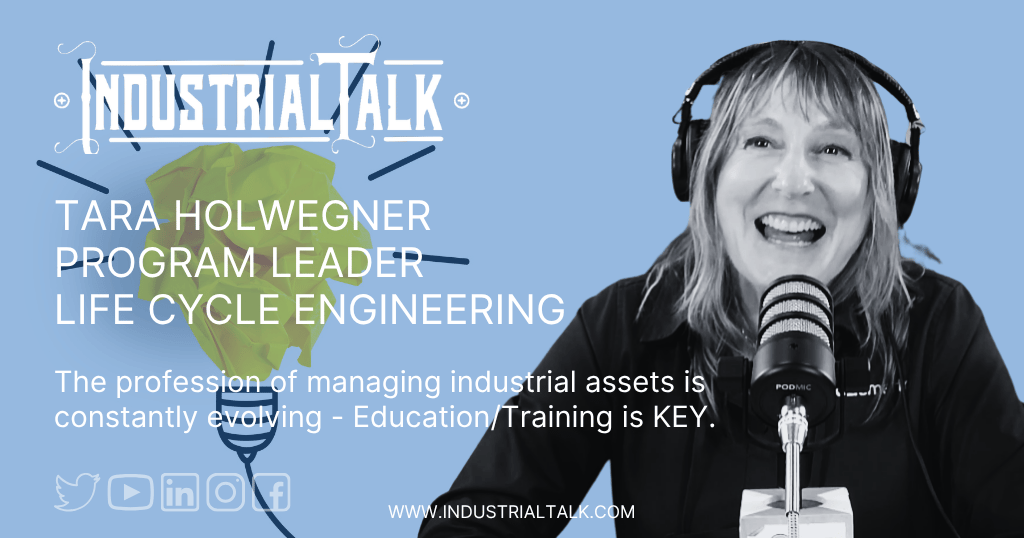
Industrial Talk is onsite at SMRP 2025 and talking to Tara Holwegner, Program Leader at Life Cycle Engineering about “Training is key to reliability success”.
Overview
Scott Mackenzie from Industrial Talk interviews Tara Holwegner at the SMRP conference, highlighting IRISS electrical maintenance safety technologies and Lifecycle Engineering's 20-year history in training industrial professionals. Tara discusses the importance of upskilling, reskilling, and training, noting that 25% of respondents to her poll prioritize these issues. She emphasizes the need for a balanced approach to people, process, and technology. Tara also promotes Lifecycle Engineering's Smarter Playbook, which offers resources in five languages and six work streams, aiming to standardize best practices in maintenance and reliability.
Outline
Introduction and Welcome to Industrial Talk Podcast
- Scott Mackenzie introduces himself and the Industrial Talk podcast, emphasizing its focus on industry professionals and innovations.
- Scott welcomes listeners to the podcast, highlighting the importance of celebrating industry professionals.
- Scott mentions being at the SMRP conference and introduces Tara Holwegner, a recurring guest on the podcast.
- Tara expresses her excitement about being back at the SMRP conference and shares her background with Lifecycle Engineering.
Tara's Background and Lifecycle Engineering
- Tara explains her role at Lifecycle Engineering, an engineering, maintenance, and reliability consulting firm.
- She mentions the Lifecycle Institute, which has been training industrial professionals for 20 years.
- Tara shares her certifications: CMRP, CRO, PMP, and her role as a certified instructional designer.
- She discusses the importance of building products and services to help professionals reach their full potential in the industry.
Challenges and Focus Areas for 2025
- Tara shares the results of a poll she conducted about the challenges and struggles professionals will face in the new year.
- The poll results indicate that upskilling, reskilling, or training is a significant concern for 25% of respondents.
- Standard work and process optimization, technology additions, and CMMS data integrity are also key areas of focus.
- Scott and Tara discuss the importance of addressing these challenges to improve reliability and efficiency in the industry.
Importance of People, Process, and Technology
- Scott and Tara emphasize the need to focus on people, process, and technology to achieve reliable operations.
- Tara highlights the importance of getting the people and processes right before implementing technology.
- They discuss the role of technology in attracting new talent and the need for public-private partnerships to build interest in the industry.
- Scott and Tara agree on the importance of storytelling to inspire the next generation of industry professionals.
Lifecycle Engineering's Smarter Playbook
- Tara introduces the Lifecycle Engineering Smarter Playbook, which provides best practices for maintenance and reliability.
- The playbook includes resources in five languages and covers six work streams with over 400 online resources.
- Tara mentions the expansion of the playbook to include eight online courses by the end of the year.
- She explains the playbook's role in helping organizations understand the value of reliable operations and standard work.
Operational Readiness and Capital Projects
- Tara discusses the importance of operational readiness, especially for organizations undertaking large-scale capital projects.
- She explains the need for designing reliability into new assets and having maintenance plans for the life of the asset.
- Tara highlights the role of Lifecycle Engineering in helping organizations achieve operational readiness.
- Scott and Tara discuss the challenges of sustaining reliability and the need for active leadership and commitment.
The Role of Leadership and Collaboration
- Scott and Tara discuss the challenges of leadership churn and the need for consistent commitment to reliability.
- They emphasize the importance of collaboration and finding trusted advisors to help organizations succeed.
- Tara shares her experience of Lifecycle Engineering's commitment to helping clients even after projects are completed.
- They agree on the need for a broad understanding of reliability and maintenance across different roles within an organization.
The Importance of Education and Training
- Tara stresses the importance of continuous education and training for professionals in the industry.
- She highlights the increased demand for certification programs and the need for organizations to invest in their employees' growth.
- Scott and Tara discuss the role of technology in enhancing training and education.
- They emphasize the need for a comprehensive approach to training, covering all levels of an organization.
Conclusion and Call to Action
- Scott and Tara wrap up the conversation by emphasizing the importance of the SMRP conference for industry professionals.
- They encourage listeners to connect with Tara and other industry experts to learn and collaborate.
- Scott highlights the role of Industrial Talk in helping organizations tell their stories and succeed.
- They conclude by encouraging listeners to be bold, brave, and daring in their approach to industry challenges.
If interested in being on the Industrial Talk show, simply contact us and let's have a quick conversation.
Finally, get your exclusive free access to the Industrial Academy and a series on “Why You Need To Podcast” for Greater Success in 2026. All links designed for keeping you current in this rapidly changing Industrial Market. Learn! Grow! Enjoy!
TARA HOLWEGNER'S CONTACT INFORMATION:
Personal LinkedIn: https://www.linkedin.com/in/taradenton/
Company LinkedIn: https://www.linkedin.com/company/life-cycle-engineering/posts/?feedView=all
Company Website: https://www.lce.com/
PODCAST VIDEO:
THE STRATEGIC REASON “WHY YOU NEED TO PODCAST”:
OTHER GREAT INDUSTRIAL RESOURCES:
NEOM: https://www.neom.com/en-us
Hexagon: https://hexagon.com/
Arduino: https://www.arduino.cc/
Fictiv: https://www.fictiv.com/
Hitachi Vantara: https://www.hitachivantara.com/en-us/home.html
Industrial Marketing Solutions: https://industrialtalk.com/industrial-marketing/
Industrial Academy: https://industrialtalk.com/industrial-academy/
Industrial Dojo: https://industrialtalk.com/industrial_dojo/
We the 15: https://www.wethe15.org/
YOUR INDUSTRIAL DIGITAL TOOLBOX:
LifterLMS: Get One Month Free for $1 – https://lifterlms.com/
Active Campaign: Active Campaign Link
Social Jukebox: https://www.socialjukebox.com/
Industrial Academy (One Month Free Access And One Free License For Future Industrial Leader):

Business Beatitude the Book
Do you desire a more joy-filled, deeply-enduring sense of accomplishment and success? Live your business the way you want to live with the BUSINESS BEATITUDES…The Bridge connecting sacrifice to success. YOU NEED THE BUSINESS BEATITUDES!
TAP INTO YOUR INDUSTRIAL SOUL, RESERVE YOUR COPY NOW! BE BOLD. BE BRAVE. DARE GREATLY AND CHANGE THE WORLD. GET THE BUSINESS BEATITUDES!
Reserve My Copy and My 25% Discount
Transcript
SUMMARY KEYWORDS
Industrial Talk, SMRP conference, electrical maintenance safety, infrared and ultrasonic inspection, Lifecycle Engineering, reliability engineering, upskilling and reskilling, technology integration, operational readiness, maintenance best practices, predictive analytics, workforce development, asset management, industry professionals.
Hey, it's Scott Mackenzie with Industrial Talk. Iris is the global leader in electrical maintenance safety, delivering technologies that let team inspect energized equipment safely, using closed panel condition-based monitoring to reduce risk and downtime. Their patented infrared and ultrasonic inspection windows make it possible to detect issues early, boosting reliability and protect the people who keep the operations running. If improving safety and avoiding unplanned failures is your mission, Iris has the solution to get you there. Learn more@iris.com.com
Welcome to the Industrial Talk podcast with Scott Mackenzie. Scott is a passionate industry professional dedicated to transferring cutting-edge, industry-focused innovations and trends, while highlighting the men and women who keep the world moving. So, put on your hard hat, grab your work boots, and let's go. All
right, once again, welcome to Industrial Talk. Thank you very much for joining the number one industrial-related podcast in the universe that celebrates industry professionals all around the world. You're bold, brave, you dare greatly snacks are coming out right now. We're on the floor at SMRP, and that's why we celebrate you. But I'm also looking at snacks. I got distracted by the snacks, but anyway, we're here at SMRP on the floor, talking to incredible professionals, and not to mention one that has been on the show a couple of times. I've been on her show too.
That's right,
yeah, which is very cool. Jared's in the house. Let's get cracking. How you doing?
Hey Scott, it's good to be at SMRP again. After we, you know, we had to skip last year in beautiful.. I know Fort Worth is charming, though. It is just a charming place. It is, you know, it's a little Dallas. It's a little Dallas, but it's got a vibe, it's got a vibe, and, and it's been, you know, it's been very welcoming to, to all of us convention goers, by the way. Yeah, so like Scott said, this is Tara Hole Wegener back on the Industrial Talk podcast. Love being with you guys with
it, man. You just roll. I know. Love
being with you. So, I work with Lifecycle Engineering. We're an engineering maintenance and reliability consulting firm, but we also have the Lifecycle Institute, which is.. we're about to celebrate our 20th anniversary of training industrial professionals. I
have to ask, so keep going. Yeah,
in the core, in, you know, core functions like work management, maintenance, work management, reliability engineering, store management, maintenance management, and you know, we've been doing it longer than anybody, like 20 years, right? This professional, now we have four certifications. It's very exciting to talk a little bit about that, but for my street cred, so I am a certified instructional designer. So me and my team build all of those learning products, products based off of our subject matter expertise. I'm also CMRP, go SMRP. I'm also a CRO and a PMP, so that's my street cred.
I don't compare, I
's already October, right? So:are you responding? I'm
not gonna talk about that, but it was, it was under 50, doesn't matter, but close, and you know, just for a random poll, I thought that was close to 50, let's just say, but it was spread out to where the most, like 25% of the respondents said that upskilling, reskilling, or training was like their one of their biggest concerns. 22% discussed the need for like standard work and process optimization, and you know, standard operating procedures enhancement, etc. And then the remainder, it was equally split between technology and CMMS data. Is that any surprise to you? Like, no.
I, I think specifically, I think the world of upskilling, skilling, and reskilling, and I think just finding people capable to be able to do the work, I think that that that's the challenge of our time, yeah, in industry, yeah, I think the technology is the technology, and from my perspective, will always be challenged by setting it up right, or connecting it right, or getting the data right, but the technology, if you do it right, it's at work, it's the people
right. Well, and that's what we believe too. So we believe, you know, people process and then technology, right? Get the people in the process right, and then put the technology on top. There is a lot of exciting stuff out here, you know, at the conference this year. What we are focusing on, and what I'm seeing, kind of a lot of sessions on, are a couple core things. So, obviously, we are focusing on making sure that our existing workforce has the skills and knowledge that they need to overcome some of the challenges, you know, that we're seeing today, but also the new workforce, as you suggested, and trying to get creative about how to entice people into, and the technology can actually maybe help with that, because they are
better, start selling it, you better start chirping on it, you better say we're pretty cool, because we got this cool technology, it should attract you, should
attract you, yeah, right, but also, you know, I think I think people are getting a little bit tired of where they're always going to be the people that just don't want to necessarily have their, you know, work in cybersecurity or have their face in the screen or be in high tech, and this is a good way to meet the middle, right? So you have your manual trades, which are from in South Carolina, at least we're starting to build a lot more programs with the local technical universities, etc. I
can't go fast enough.
I know it can't go fast, can't it? Sorry, it just can't, but, but, but, you know, we're trying, and you know, with some public-private partnerships, and, and just to get people, you know, interested in what what's happening now, but what's also going to happen, and if you want a job, they always talk about, oh, it's so hard to find a job, it's so hard to find a job, if you want a job, there's a great industry to get into, yeah, and it's really rewarding, like you said, it's, it's the what did, what did your intro say, the people, the people who are moving us, and well, again,
I, I listened to it:It's, it's,
yeah, but it's true.
It is true. It is true. I think people are, I'm hoping people are starting to listen. At least we're seeing a little bit of that. You know what it is.
You know what we have to do as an industry, as a, as a collective. We need to be able to tell that story,
tell a story, and be
step out, that guy needs to step out, who this person over here needs to step out and tell the story. I guarantee you, there's a cool story there.
Yeah, it
can be inspiring for the next
firing. Yeah, I mean, that's why I've been working, honestly, in this, that's why I've been, has been working at Lifecycle Engineering, and you know, coming to this conference for a long time, like decades now. Don't tell anybody, but, but yeah, I mean, because it is inspiring to see working hard and building great things, and I mean, it's, it's, it's important. So, what we, another area that we are focusing on, we are doing the, so we do have the LC Smarter Playbook, which
with an R, not E R, and if
you want it, okay, if you want to go by, go to LC smarter.com free trial, free assessments, but, but we've expanded a lot since the last time. You and I talked a couple of years ago. Yeah, now we have five languages, we have six work streams, over, you know, 400 like online resources, six courses. We're about to have eight by the end of the year, like online courses, just in these core areas of maintenance and reliability to the way that we are kind of positioning it now is like maintenance and reliability best practices, preaching the good word from the shop floor to the top floor, so that the whole organization understands the value of reliable operations of executing standard work of, you know, knowing what RCM is all about, and what role do you play, you know, in your organization's performance? So,
are you seeing an uptick in your, your business, meaning it's like our people saying, I need to educate myself, I need to keep up with all the changes that are taking place. Are you seeing something? Because I see a sense of urgency. Yes, and I don't know how you guys keep up with the latest and greatest in technology, and I don't know how you do it.
From, you know, honestly, there are.. we have had a lot more. I mean, we've, we've, we've tripled the number of organizations and the size that of organizations, you know, that are using us, because they do see the value of everybody across the world speaking your same language of reliability and maintenance, and what does that mean to us as a company, like as an organization. So we have seen that from an individual perspective, you know, we do get increased, especially with the certification programs, right? So people realize that they're that they need to keep, you know, growing their skills and getting better. That's important. We're also really, and actually, there's a couple sessions about, about this, about operational readiness. So, there has been a lot of, I mean, the past couple years have been all about capital projects for a lot of organizations, there's been a lot of merger acquisitions, there's been a lot of closings in pharmaceuticals, but there's also been a lot of capital expansions, not only in pharmaceutical, but I'm talking about like metals and mining, I'm talking to, oh yeah, no, you know, like, yeah, railway, you know, extensions for, you know, sugar companies, stuff like that, yeah, so to the operational readiness is the idea of going in to your capital projects, designing in reliability, having your maintenance plans, you know, for the life of that asset already defined, you know what they are, you know what you're supposed to be able to do with your equipment maintenance plan, so just go ahead and start off on the right foot, and so we've been trying to identify those organizations that are having these large scale, either large scale improvement initiatives or just large scale builds, and just try to give them the resources to start off right, so that they're starting off reliably, and those assets are going to optimize their whole life cycle cost.
So, this is so interesting, because I, we've had this conversation, I've had it a number of times. I understand the challenges that exist within the world of maintenance, and one of the challenges is sustaining it.
Yeah,
it's one thing to start out great, he's like, yeah, yeah, and then sustain it.
I mean, you said the magic words. I was just talking to, you know, Bob Fye, our president, the CEO, about this, and he says, you know, even we, as an organization, I don't know, decades ago, we were focused on the transformation, right? We were focused on teaching you to fish, so you can fish for yourself, and once we get you started off right, you're gonna be doing great. Not so, not so. It's the backslide is so significant, it requires it requires active leadership, it requires commitment, it requires accountability, so you know,
so much in the, in the leadership equation, there's so many, there's so much churn, so
hard,
like I'm all in, and I'm a leader, and I'm the tip of the sword, and it's all good, and then hey, I found a new opportunity, I'm gonna go and be head honcho over here,
yeah, or you know the organization that switches CEOs like every couple years. How can you? Yeah, I don't have the answer.
I don't either. It's way above my pay grade, and it has to start. We don't have the luxury of inefficiencies, especially now, because we're having challenges finding people, so we have to, whatever workforce we have in place, make them as efficient as possible, and give them the information and tools that they need to be successful, and just, and, and then try to fill, backfill, and train, and all that stuff, but we have to be efficient, we, we don't have the luxury of, oh, maybe we just don't,
well, and I think it, it. Well, it does require to, and it's, it's just hard. It's hard when there's so much churn, you know, at the high sponsorship levels, but I still do, I still do believe in the power of, you know, reliability leaders at whatever, and maybe not only reliability leaders, but just trying to do the right thing the right way at whatever level in the organization you are, and what we try to do with, as life cycle, you know, engineering, once we complete, which you never really complete, but you know, once we've ended a project, we're really trying to keep in touch, and, and just,
yeah, just
be that guy by the side, because sometimes you just need somebody outside of your organization that you could call and just be like, this is unbelievable, I can't believe this happened,
yeah,
you know, like, do you have any help for me, what can we do, and you know, that's not the stuff that we're gonna be, this is sounds so cheap, but that's not the stuff that we're going to be charging you for, like we're really, we really want to help, that's part of our, that's part of what we do as experts, and all of our experts want to give back, so you know, we just like to open up the community, if we can help you big, we can, if we can help you small, we will,
but I think that, that, that's that's part of the puzzle for success. I think that finding trusted sherpas,
yeah, advisors, yeah, is
key. I just think it's vital, and, and, and it helps deal with some of the inefficiencies or the limitations, maybe organizations have internal. I just think if you continue to push for education, which you do, and if you continue to recognize the necessity to collaborate, because you don't have all the answers, not you, you guys are fine, but you guys are fine, but companies need to collaborate and feel good about that, and then things start to work a little bit better, and be persistent, and try to sustain it. I think so, and you don't
feel like you're off on your own, right? Oh, you're
not all island,
and that's another reason why, why we actually, why we developed the Smarter Playbook is so that people can have everything they need at their fingertips. Yeah, and when, and, and it's, it's there, they, it's there, it's the library, it's the interactive guide, it's, it's the education, and in those times when you're like, whoa, I, okay, things are getting crazy. I don't know what to do. You know what I think I need to do. I think I need to reassess, you know, this storing process. I think I need to take another look at this, and you can kind of, you can kind of get out of the day to day and go back to what is the best practice or the standard or whatever, and be like, how far have I varied? You know, what's my variation here? Yeah, I
think that if, and it just sort of dawned on me that YouTube mindset, like, if I have something, I have a problem. I go to YouTube, and I find a video that somebody put somebody produced it, and you're, you're okay, you're okay, you're okay, you had
a problem, but you're not the only one, and that's
right,
you can get some, you can help
thing can exist in industry, same thing. Now, YouTube can be very simple, but, but companies like yours, you can dive into that level of detail to be able to say, oh, I am okay, yeah, there's
a tool for that, there is,
yes,
but also, you know, I think you said something too about, you know, advocating for training, and I'm probably.. am I going over my time, Scott? Okay,
it's a podcast, I don't know. Well, the
other thing is to take kind of a big, a big picture view, if you can, in your organization to say, like, where what are it takes a little bit of thought, but like what are the roles, and like how much about reliability is and maintenance, and their role do they need to know about how important they are to the success of this, like how much they need to know, like take a broad brush. Who just needs the broad brush introduction? Who needs the dedicated, like, you know, who are my core roles that need, like, you know, probably extended, maybe certification, maybe not, maybe just a dedicated program that's dedicated to help equip them, senior leaders, what they need, like 30 minutes, one hour, two hours, something like that's just gonna get them to understand the value of, you know, people, process, and technology, and reliable operations, and what's in between, and not take it piecemeal. But think about the whole, you know, the whole pyramid. Yeah, okay.
I'm all in. I think your organization, what you do, is vital. I think it's just absolutely vital, especially today.
Yeah,
I think it's just a.. it's so needed, and it's.. it's good to be there, but you're right in the middle of it. You're, yeah, I mean, you're in the trenches, you're in the information trenches, and you, and you need to succeed. You do,
yeah. I mean, we, I mean, it's the struggle is real, you know, out there, and some of them are different, some of them are the same that have been for decades, and we're here to help.
All right, she's out on LinkedIn, and all the LinkedIn conference information is out on Industrial Talk, right? Because you've already been there. I'll have that link again. Just that card will be there again.
Yes, LC smarter.com is new, though, so you'll have to add that
with an R. Don't put ER with an R. Thanks, Scott. No problem. All right, we're gonna once again have all the contact information for Tara out on Industrial Talk, so fear not. Connect with her. You need to educate, you need to collaborate, and you need to innovate as much as you possibly can, and you need to find trusted individuals, and that's what she brings to the table. She's amazing. All right. Once again, we're broadcasting from SMRP. It's a great event. I've said it over and over again. If you're in the world of asset management, should be
here. There
it is, right there. I can't add to it. You need to be here. You need to contribute. You need to be a part of the community. There you go. We're gonna wrap it up on the other side. Stay tuned. We will be right back.
You're listening to the Industrial Talk Podcast Network.
You know, Tara never disappoints. She's got a lot of energy, and she loves asset management liability. It's always great to see her at SMRP. You need to reach out there. I'm looking at her stat card. If you're out on video and you're saying, Scott, what are you looking at? I'm looking at her stat card, and it's just chock full of just information. She's amazing. Yep, that's a must connect, Tara. The contact information is, you're just saying Scott, I want to, but I just go out to Industrial Talk.com and you click on that link, and it pops up, and you just say connect, and that's how you want to do that. You want to put her on definitely on your to-do list of being able to connect Tara, she's amazing. All right, we have SMRP coming up, and if you're in the world of asset management, liability, maintenance, technology, training, all the stuff that's vital to to asset management, to reliability, all of that, you need to be at SMRP. Get people like Tara, you get just an absolute sea of individuals that are just passionate about your success, and it is important this day. It just is. It's just important stuff. Also, Industrial Talk is here for you. Here's the reality of your business, one, we want you to succeed. Industrial Talk wants you to succeed. Yeah, you need to succeed. It's not, it's not one of those, you don't need to succeed. Yeah, you need to succeed. You need to tell your story. You need to tell your story. You need to put that human face on the story of what you do. It's not an infomercial. It is truly a way of being able to communicate. You need to go out to Industrial Talk. We're a marketing company, we're a media company, and we're doing it all for you. You need to know we've got the street cred to be able to communicate definitely your who you are. It just is that Industrial Talk. We want you to succeed. Tell your story. It is vitally important. I'll make it, I'll make it easy on you. So, don't, don't, don't fret, don't, don't agonize over it. Just, you know, I'm an easy guy, anyway. Industrial Talk.com All right, be bold, be brave. Dare greatly hang out with Tara. See you at SMRP. You gotta put that event on your calendar, and then we're gonna change the world. So, we're gonna have another great conversation shortly. So, you know, stay tuned.